

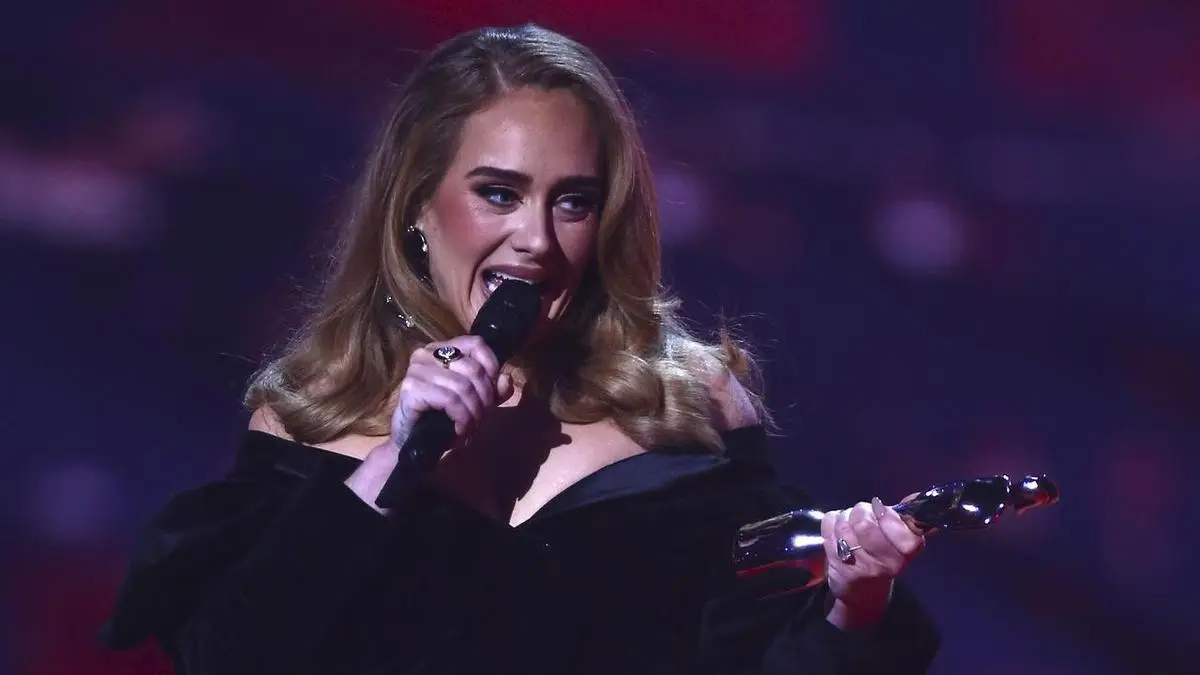
Adele, the globally renowned singer and songwriter, found herself at the center of a heated online debate after her acceptance speech at the Brit Awards on Wednesday, February 10, 2022. The ceremony marked the first time the awards had adopted a gender-neutral format, eliminating separate male and female categories and instead awarding a single Artist of the Year honor. Adele took home the top prize and, in her remarks, expressed pride in her identity as a woman and a female artist. The comment, meant to be empowering, was quickly labeled as 'transphobic' by some social media users, igniting a firestorm of reactions that spanned from accusations of exclusion to passionate defenses of her right to celebrate womanhood.
The Context of the Gender-Neutral Brit Awards
The Brit Awards’ decision to merge gendered categories was announced in November 2021, with organizers stating the move was intended to be more inclusive and reflective of the diversity within the music industry. The change meant that artists like Adele, Ed Sheeran, and Sam Fender competed in the same category for the prestigious Artist of the Year award. Adele, whose album '30' had been a commercial and critical triumph, was named the winner. In her speech, she acknowledged the change in the award’s name but added, 'I really love being a woman and being a female artist. I do! I’m really proud of us, I really, really am.' Her words were met with applause inside London’s O2 Arena, but online, the interpretation was starkly different.
Online Backlash and Accusations of Transphobia
Within hours of the broadcast, Twitter users began criticizing Adele for what they perceived as a dismissal of non-binary and transgender identities. Some called her a TERF—a trans-exclusionary radical feminist—a label often applied to individuals who advocate for women’s rights in a way that excludes trans women. One tweet read, 'Please, no, Adele, don’t be a TERF.' Another user wrote, 'Who’d have thought Adele was a transphobe and would use her platform to call for the destruction of the trans community? Especially the confused teenagers.' A third user, who initially criticized Adele, later claimed they were just joking, but the damage had been done. The hashtag Adele began trending, and articles from outlets like Page Six covered the division among fans.
Some commenters threatened to boycott Adele’s music, stating they had 'lost respect' for the singer. The intensity of the reaction was notable given Adele’s typically uncontroversial public persona, known for her emotional ballads and relatable commentary on love, heartbreak, and motherhood. The controversy also tapped into a broader cultural rift between those who view gender as a spectrum and those who hold a biological binary perspective.
Defenders Rally Around Adele
Not everyone agreed with the criticism. High-profile figures quickly came to Adele’s defense. Piers Morgan, the controversial British television presenter, posted on Twitter: 'How dare Adele have the brass-neck audacity to ignore gender-neutral bulls and take pride in being female? She’s clearly an evil TERF who must be cancelled immediately.' His sarcastic tone highlighted what he saw as an overreaction. Author Jane Symons tweeted, 'A decade ago, if someone had said a woman would be criticised for the thought-crime of saying she liked being a woman, I would have laughed at such a ludicrous suggestion.' Another user wrote, 'So basically, proudly defining you’re a member of a specific sex is transphobic? It’s utter nonsense.'
Writing in The Spectator, teacher and trans woman Debbie Hayton argued that Adele’s message had been twisted. 'Here was a woman—who has sold tens of millions of albums—telling the world she was proud to be a woman. That’s something to celebrate, not condemn.' Hayton’s perspective was especially striking because she herself is a trans woman, suggesting that the controversy may not represent the views of the entire transgender community. The debate underscored the complexity of discussing gender in a way that respects both cisgender and transgender experiences.
History of Similar Controversies
Adele is not the first public figure to face backlash for expressing pride in being a woman. In 2021, author J.K. Rowling was heavily criticized for tweets about biological sex, leading to accusations of transphobia and a wider debate about free speech. Similarly, musician and actress Bette Midler faced backlash for a tweet that said 'Women are being stripped of their rights' in the context of transgender issues. These incidents reflect a growing tension between the push for inclusivity and the desire to preserve language that celebrates biological womanhood.
The term 'TERF' has become increasingly common in online discourse, often used to shut down conversations about sex-based rights. Some argue that the label is applied too broadly, discouraging women from speaking positively about their own experiences. Others maintain that any celebration of womanhood that excludes trans women is inherently harmful. The Adele incident illustrates how quickly a statement intended as a simple expression of pride can be drawn into a larger, polarized debate.
Adele’s Career and Cultural Impact
Adele Laurie Blue Adkins, known mononymously as Adele, rose to fame with her debut album '19' in 2008. Her powerful contralto voice and emotionally raw songwriting struck a chord with audiences worldwide. Subsequent albums '21', '25', and '30' each broke sales records and earned numerous awards. Her 2021 album '30', inspired by her divorce and journey of self-healing, was particularly intimate. The Brit Awards victory capped a triumphant return to live performances after a hiatus. Adele has often spoken about her identity as a woman and mother, and her comments at the Brits were consistent with her public persona—she has never shied away from expressing her femininity and pride in her gender.
Her fan base is vast and diverse, ranging from teenagers to older listeners. The controversy over her speech highlights the challenge of navigating public discourse in an age where every word is scrutinized. For many fans, the accusation of transphobia seemed out of proportion, while for others, it revealed a blind spot in how cisgender celebrities understand gender identity.
The Reaction from the Trans Community
It is important to note that not all transgender individuals or allies condemned Adele. Some trans activists acknowledged that her statement was not malicious. As Debbie Hayton pointed out, celebrating womanhood does not necessarily diminish the validity of trans identities. However, others argued that in a gender-neutral context, highlighting being a 'female artist' could be seen as signaling opposition to the very concept of gender neutrality. The lack of a unifying voice within the trans community itself reflects the ongoing evolution of gender discourse.
Adele has not publicly responded to the furore. Her team has remained silent, and she has not issued any clarification or apology. This may be a strategic decision to avoid further escalating the controversy, or perhaps she sees no need to explain a statement she believes was innocuous. Given her history of staying out of political and social debates, it is likely she will let the storm pass. Meanwhile, the Brit Awards organization has not commented on the backlash, standing by their inclusive format.
Broader Implications for Gender-Neutral Awards
The incident raises questions about the future of gender-separated categories in award shows. The Brits’ decision was praised by many as progressive, but Adele’s speech highlighted the challenge of celebrating individual identity within a framework that explicitly rejects binary labels. Some argue that gender-neutral awards can still honor women by acknowledging their unique experiences, as long as the language is inclusive. Others feel that the move erases the specific achievements of women in fields where they have historically been marginalized. The debate is unlikely to be resolved soon, and other awards bodies—including the Grammys—have been considering similar changes.
As of early 2022, the music industry remains divided on the matter. Adele’s comments, whether intentional or not, placed her at the center of this cultural crossfire. For her, the episode serves as a reminder that even beloved icons are not immune to the shifting tides of public opinion. For the audience, it underscores the need for careful language and perhaps a willingness to give the benefit of the doubt. The conversation continues, but one thing is certain: Adele’s love for being a woman will be remembered as one of the most talked-about moments of the 2022 Brit Awards.
Source: 7NEWS News