

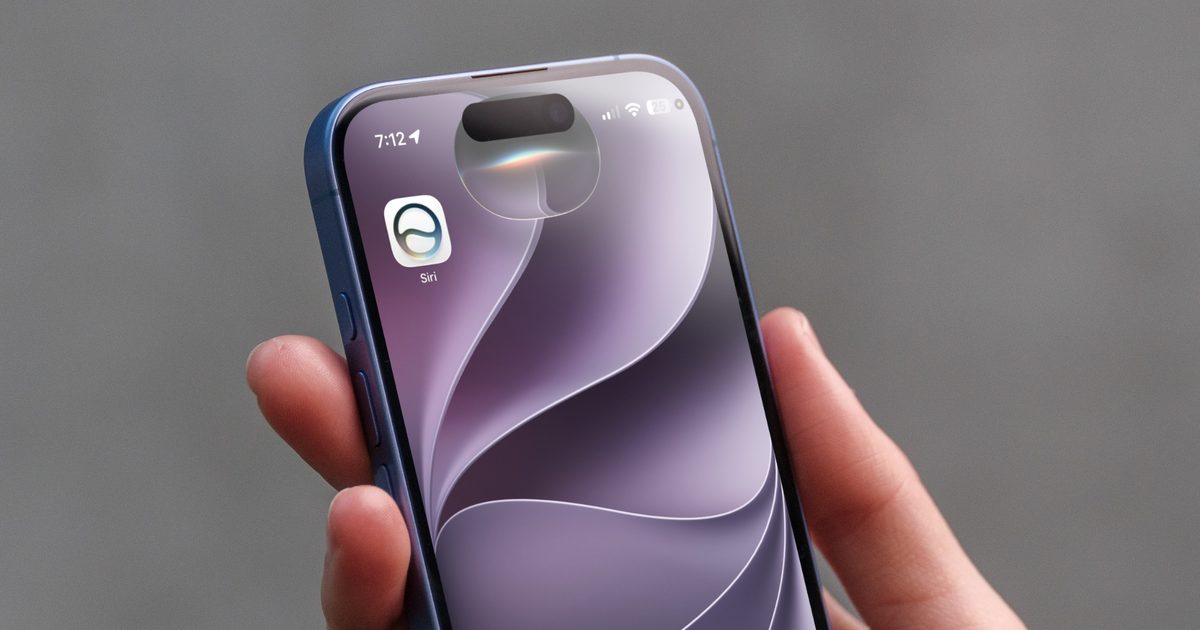
Apple’s recent earnings call was packed with good news. The company posted record iPhone revenue, celebrated a record June quarter, and executives could not stop talking about Siri AI. There was plenty of optimism about Apple’s move into generative artificial intelligence. Yet one detail from the analyst Q&A portion of the call did not get as much attention as the headline numbers: Apple essentially confirmed that heavy Siri AI users may eventually need a larger iCloud+ plan to keep using the service comfortably.
That may sound like a small footnote in a long financial presentation, but it could have major implications for how Apple’s AI features are adopted. The company has positioned Apple Intelligence as a key reason to buy new iPhones, iPads and Macs. Siri is the centerpiece of that experience. If the most useful parts of Siri AI are artificially limited by a storage subscription, the meaning of “free AI” becomes more complicated.
Key Facts at a Glance
- Apple reported record iPhone revenue and a record June quarter.
- CEO Tim Cook confirmed Apple is planning iCloud+ upgrade tiers for heavy Siri AI users.
- Apple Home AI features are currently limited to the 2TB iCloud+ plan, setting a precedent.
- No official pricing, usage caps, or timeline have been announced.
Apple’s Comments on Siri AI and iCloud+
During the call, an analyst asked how Apple intended to recover the compute costs behind Siri AI. The question was timely because Apple has rolled out Siri AI in beta, and reports suggest usage has been strong. That kind of popularity is good for engagement but expensive for a company running large language models and serving AI-generated responses to millions of users.
Apple CEO Tim Cook did not avoid the question. He acknowledged that Apple expects some users to rely on Siri AI heavily. According to Cook, the company will roll out “some kind of upgrade possibilities on iCloud+ where people can buy up the stack.” In other words, if you want to use Siri AI relentlessly, Apple wants you on a higher iCloud+ tier to help cover the computational cost.
The answer was not isolated. Later in the call, when asked whether Siri AI would change Apple’s capital spending plans, Cook returned to the same concept. He said that heavy usage gives people “the ability… to move up on an iCloud plan as well.” He also admitted that the balance between Apple absorbing AI compute costs itself and passing them on to users through iCloud+ upgrades is “a bit uncertain at the moment.”
That uncertainty is important. Apple has not announced exact pricing, storage thresholds, or a date for these changes. There is no public documentation describing what qualifies as heavy Siri AI use. But the executive’s repeated references to iCloud+ send a clear message: the company sees its subscription storage service as the financial mechanism for AI growth.
Why AI Compute Costs Are So High
Running modern AI features is expensive. Unlike a traditional server request that sends a small amount of data, an AI model may need to process a request through billions of parameters, generate tokens, and deliver a response in real time. Each query uses processing power and memory. When millions of users ask Siri to summarize texts, compose emails, identify objects, and answer complex questions, the infrastructure bill can grow quickly.
Apple is not new to this challenge. The company has invested heavily in data centers and custom server chips designed for AI workloads. It has also developed a hybrid approach that combines on-device processing with private cloud compute for more complex requests. On-device processing reduces some costs, but the most impressive tasks likely need cloud servers. If a user constantly asks Siri AI to analyze long documents, rewrite paragraphs, or generate creative content, those requests will inevitably require additional resources.
This is not a problem unique to Apple. Companies like Alphabet and Microsoft have made massive capital investments in data centers for their AI products. OpenAI charges subscription fees for ChatGPT Plus and other premium offerings. Google has experimented with AI overviews and cloud services. Apple’s approach appears to be different. Instead of launching a separate Siri AI subscription, the company may bundle these costs into iCloud+, a service users already understand.
The Existing Precedent: Apple Home and 2TB iCloud+
Apple has already taken a step in this direction. The new AI features in the Apple Home app are not available to everyone with an iPhone. They are restricted to the 2TB iCloud+ plan, which costs $9.99 per month in the United States. That means Apple has already established a pattern of gating advanced AI features behind a higher storage tier.
If Apple applies the same logic to Siri AI, the free tier could remain available for everyday tasks, but heavy users might be asked to move from a 2TB plan to a 6TB or 12TB plan. Those higher tiers already exist in Apple’s iCloud+ lineup. The 6TB plan costs $29.99 per month, and the 12TB plan costs $59.99 per month. Apple could introduce a new mid-tier or add AI-specific features to existing plans.
It is also possible that Apple will create a threshold based on usage rather than a hard paywall. For example, a user might be allowed a certain number of Siri AI requests per month. After crossing that threshold, the user would need to upgrade to maintain the same level of access. This kind of model would be similar to how cloud computing services meter usage.
What This Means for Regular Users
Nothing is locked in yet. Apple has not announced usage caps, pricing tiers, or a timeline for any of this. But reading between the lines, it sounds like the free tier of Siri AI could come with some sort of ceiling. Once you hit that ceiling, Apple would love for you to upgrade your iCloud+ subscription.
If you are already paying for iCloud+, the extra cost might not sting much. A family sharing a 2TB plan may already have enough storage for backups, photos, and documents. Adding a heavier AI tier could be a reason to upgrade, especially if you rely on Siri for daily productivity. On the other hand, users who are not interested in paying more may feel frustrated. Many people have grown accustomed to free assistants from Google and Apple, and any move toward paid AI features could change how those assistants are used.
There is also a privacy angle. Apple has repeatedly said that Apple Intelligence is built with user privacy in mind. Some tasks are processed on device, while others use Private Cloud Compute. Apple says data is not stored to train models. However, if the most advanced AI features require an iCloud+ plan, users may wonder whether their data and storage space are being used as leverage to sell subscriptions. Apple will need to explain the relationship between AI compute, storage, and plan tiers carefully.
What Could Happen Next
Apple has several options for the future of Siri AI pricing. One option is to keep the core experience free and introduce a separate premium tier for advanced features. Another is to create usage-based limits that encourage iCloud+ upgrades. A third option is to take a stricter approach and require a certain storage plan to activate Siri AI at all.
The company’s wording suggests that it wants flexibility. Tim Cook mentioned “some kind of upgrade possibilities” and said the balance remains uncertain. That suggests Apple has not finalized the model. It may be testing the beta program to understand how much compute power is actually needed, how often people use certain features, and what kind of plan structure would make financial sense.
For now, the most practical advice is to keep an eye on your iCloud+ plan and your Siri AI usage. If you are using Siri to draft long emails, summarize articles, or generate images, you may eventually need to pay for more storage. Apple’s current pricing for iCloud+ is tiered at 50GB, 200GB, 2TB, 6TB, and 12TB. The likelihood is that future Siri AI tiers will be attached to the higher end of that spectrum.
Apple’s earnings call also showed that the company is thinking about AI capital spending more broadly. Cook’s answers suggest that AI costs will not be hidden forever. They will be reflected in the services that customers buy. That does not mean Siri AI is a failure. It simply means the era of free unlimited AI may be coming to an end, at least for Apple’s most compute intensive assistant features.
If Apple follows the path it has already established with the Apple Home app, Siri AI heavy users could see similar restrictions. The exact tier, pricing, and enforcement mechanism remain unknown. What is clear from the earnings call is that Apple views iCloud+ as the natural lever for managing AI costs. Siri AI may be free to start, but it will likely require a subscription upgrade for those who actually use it heavily.
Source: Digital Trends News