

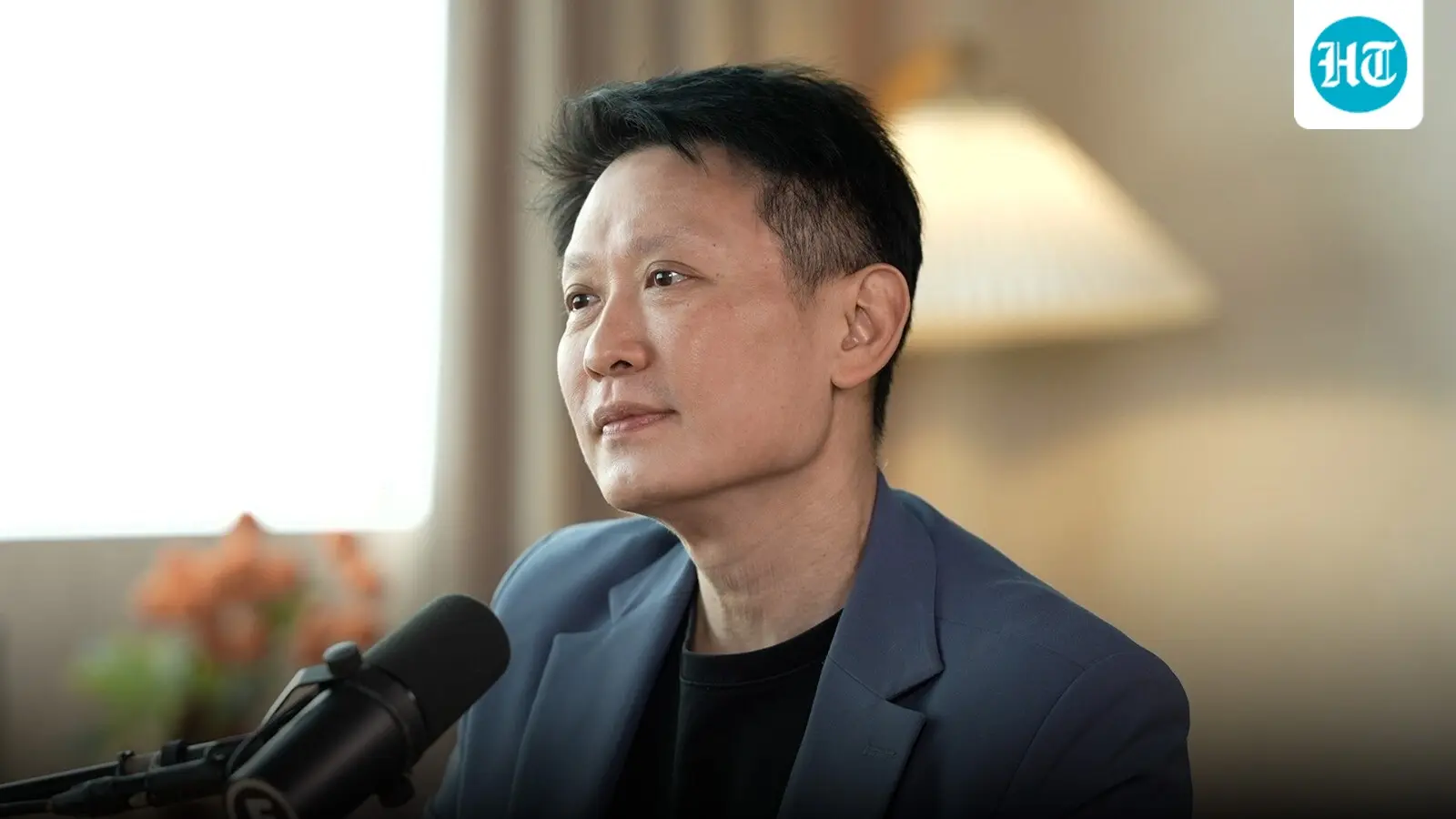
Binance Co-CEO Richard Teng recently shared his perspective on the foundational elements that will determine the long-term success of the cryptocurrency industry. In his view, infrastructure, education, and regulation are not just supporting pillars; they are the very scaffolding upon which the future of finance will be built. With thousands of digital assets in circulation and millions of new users entering the ecosystem each year, these three areas require urgent attention from both the private and public sectors.
Who Is Richard Teng?
Richard Teng brings over two decades of financial regulatory experience to his role as co-CEO of Binance. Before joining the crypto exchange, Teng served as the CEO of the Abu Dhabi Global Market (ADGM) Financial Services Regulatory Authority, where he played a pivotal role in developing one of the region's most advanced digital asset frameworks. He also spent 13 years at the Monetary Authority of Singapore (MAS), reaching the position of Director of Corporate Finance. His transition from regulator to industry leader gives him a unique vantage point on the challenges facing crypto markets today.
Teng has often emphasized that his regulatory background was not an obstacle to embracing crypto, but rather a motivating factor. He has seen firsthand how poorly designed rules can stifle innovation, and he has also seen how the absence of rules can leave consumers vulnerable. This dual perspective informs his belief that infrastructure, education, and regulation must evolve together if blockchain technology is to reach its full potential.
The Backbone of Crypto: Infrastructure
Infrastructure is the invisible layer that makes everything else possible in cryptocurrency. Scalability, security, network reliability, and interoperability are the core components of a healthy digital asset ecosystem. When infrastructure is weak, transactions slow down, fees spike, and users lose confidence. When it is strong, millions of people can transact in seconds with minimal cost, regardless of their location or economic background.
For Binance, infrastructure is not only about maintaining high-performance servers and matching engines. It also involves the development of decentralized networks, custodial and non-custodial wallet solutions, stablecoin rails, and the on-ramp and off-ramp connections between fiat and digital currencies. As Teng has pointed out, the crypto industry has matured from a niche hobby into a system that must support global payment flows, institutional investing, and even government-level adoption.
One of the biggest infrastructure challenges is the connection between different blockchains. The rise of multi-chain ecosystems has created fragmented liquidity and user experiences. Bridges and interoperability protocols have improved, but they also introduce security risks. High-profile bridge hacks have shown that infrastructure needs to be built with a security-first mindset. Teng argues that the next wave of innovation will come from projects that solve these technical hurdles, making it simpler for everyday users to move assets seamlessly across networks without even thinking about the underlying blockchain.
Another aspect of infrastructure is energy efficiency. Proof-of-work blockchains have been criticized for their carbon footprint, and the industry has responded with a shift toward proof-of-stake and other energy-saving consensus mechanisms. As institutional capital flows into crypto, environmental, social, and governance (ESG) criteria are becoming more important. Teng has noted that clean and scalable infrastructure is not a luxury but a necessity for long-term adoption.
Education as the Great Equalizer
Education is the second pillar that Teng highlights, and it is perhaps the most underrated. Cryptocurrency and blockchain technology are notoriously difficult to understand. Terms like public keys, private keys, gas fees, decentralized autonomous organizations, and smart contracts can intimidate new users. Without proper education, people are likely to make mistakes that cost them money or fall victim to scams.
Financial literacy is already a global problem, and crypto adds a new layer of complexity. Teng believes that every industry participant, from exchange executives to individual investors, has a responsibility to promote clear and honest education. Binance has launched various initiatives, including beginner guides, video courses, and webinars, to help people navigate the space. The company has also partnered with educational institutions and non-profits to bring blockchain knowledge to underserved communities.
Education is also about understanding regulatory requirements. Many users do not realize that crypto transactions can have tax implications or that there are legal distinctions between tokens, securities, and commodities. Governments are still catching up, but the industry cannot wait for regulators to act. Private-sector educational campaigns can help bridge the gap, empowering users to make informed decisions.
Teng has often said that education is a two-way street. Regulators also need to learn about technology, and the crypto industry must learn about the concerns of policy makers. By fostering open dialogues, both sides can work toward a framework that protects consumers without hindering innovation. This mutual education process is essential for building trust in a system that many people still view with skepticism.
Smart Regulation Over Rigid Rules
Regulation is the most debated pillar in the crypto world. Some advocates argue for a completely free market, while others demand strict oversight. Teng belongs to the growing camp that supports smart regulation: rules that are clear, consistent, and tailored to the risks of digital assets. Smart regulation does not try to force crypto into an outdated financial box; it recognizes the unique properties of blockchain technology and adapts accordingly.
One of the main benefits of smart regulation is that it can provide legal certainty. Businesses need to know if they can operate, what licenses they require, and how they should handle customer funds. When rules are ambiguous, companies often relocate to more favorable jurisdictions, leaving consumers unprotected and governments without tax revenue. Binance has been on a journey to improve its relationship with regulators, and Teng has been a key figure in that effort. He has led the company's push for compliance, including the establishment of global advisory boards and the recruitment of former regulators.
Smart regulation should also focus on the activities that create the most risk. Money laundering, terrorist financing, and market manipulation are serious concerns that deserve rigorous oversight. But not every token or decentralized application requires the same level of scrutiny as a systemically important bank. A risk-based approach allows regulators to devote their resources where they matter most, while allowing low-risk innovations to flourish.
International coordination is another crucial element. Crypto is borderless, and a fragmented regulatory landscape can create arbitrage opportunities and loopholes. Teng has called for global standards that are harmonized across jurisdictions, such as the recommendations from the Financial Action Task Force (FATF). The Basel Committee and the International Organization of Securities Commissions have also begun to address crypto assets, but progress is slow. Regulators need to work together to create a level playing field, and exchanges need to cooperate by sharing data and best practices.
Financial Inclusion and Responsible Innovation
At the heart of Teng's vision is the use of blockchain to promote financial inclusion. Around 1.4 billion adults worldwide remain unbanked, according to the World Bank. Many of them lack access to basic savings accounts, credit, or insurance. Crypto can provide an alternative because it only requires a smartphone and an internet connection. Stablecoins, for example, can offer a safe store of value in countries with hyperinflation, and decentralized lending protocols can extend credit to people without a traditional credit history.
Infrastructure and education are the tools that make inclusion possible. Without reliable and affordable internet infrastructure, the unbanked cannot reach the digital economy. Without education, they cannot protect themselves from fraud. Regulation is what gives them confidence that the system is safe. Teng often highlights projects that demonstrate this synergy, such as peer-to-peer markets in emerging economies, remittance corridors powered by stablecoins, and micro-insurance products built on smart contracts.
Responsible innovation means not just building flashy products, but building products that solve real problems. It means conducting thorough risk assessments, implementing strong governance, and being transparent with users. Teng believes that the crypto industry has matured enough to embrace these values. The initial years of wild speculation and opaque exchanges are giving way to a more professional sector, one that attracts talent from traditional finance, technology, and law.
The COVID-19 pandemic accelerated the digitization of finance, and many governments are now exploring central bank digital currencies (CBDCs). Teng sees CBDCs as a positive development that can coexist with decentralized cryptocurrencies. He argues that both public and private digital money can be part of a layered financial system, with each serving different needs. The key is to ensure that the underlying infrastructure is interoperable so that users can seamlessly switch between fiat, CBDC, and crypto assets.
Looking Ahead: The Future of Finance
The convergence of infrastructure, education, and regulation will shape the next decade of finance. In the near future, we may see blockchain-based identity systems that enable instant verification, tokenized securities that trade around the clock, and corporate treasuries that hold diversified portfolios of digital assets. These possibilities will not become reality overnight, but they are already moving from theory to practice.
Binance's co-CEO has been transparent about the challenges. Infrastructure needs continuous investment to handle growing traffic and new threats. Education needs to scale as crypto reaches the mainstream. Regulation needs to keep pace with technological change, neither rushing to impose overly restrictive rules nor standing idle while risks emerge. Teng's message is one of balanced pragmatism: the industry and its regulators must work together to build a financial system that is open, secure, and fair.
He has also urged policymakers to avoid blanket bans, which often drive activity underground and create greater risks. Instead, they should focus on regulating specific activities and protecting consumers. The most successful jurisdictions will be those that offer clear pathways for legitimate businesses to operate, with strong compliance requirements but also reasonable flexibility. Teng often points to jurisdictions like the United Arab Emirates and Singapore as examples of this approach, both of which have crafted dynamic crypto regulations in consultation with industry leaders.
As the industry matures, the role of exchanges like Binance will continue to evolve. They are no longer just trading platforms; they are becoming custodians, banks, and even educational institutions. This shift carries enormous responsibility. Teng embraces this responsibility, seeing it as an opportunity to build trust and demonstrate that crypto can be both innovative and trustworthy.
In the end, infrastructure, education, and regulation are not separate silos; they are interconnected. Solid infrastructure makes it easier to educate users, and educated users demand better regulation. Good regulation encourages institutional investment, which funds further infrastructure development. This virtuous cycle is the foundation for the future of finance. Richard Teng's remarks remind us that the path forward will not be smooth, but it is achievable if all stakeholders remain committed to the same principles.
Source: Hindustan Times News