

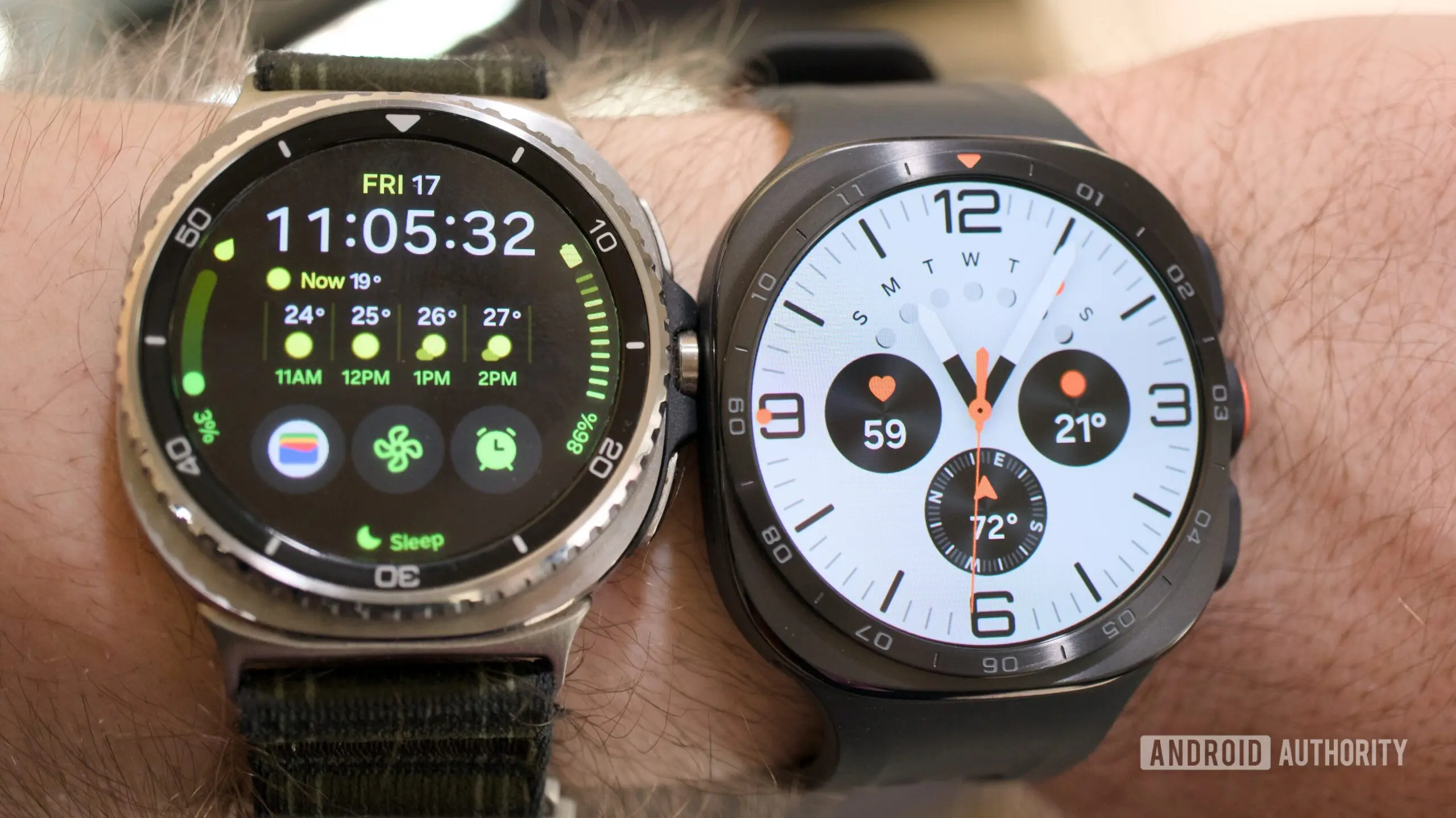
Samsung's latest Unpacked event introduced the Galaxy Watch Ultra 2, a device that promised significant upgrades over its predecessor. Chief among them was a switch from Samsung's own Exynos W1000 chip to Qualcomm's Snapdragon Wear Elite SoC, coupled with a substantial 35% increase in battery capacity—from 590mAh to 800mAh. However, early spec sheets reveal a perplexing detail: the official battery life estimate remains unchanged at "up to 60 hours with Always-On Display." This discrepancy has sparked debate about whether the Snapdragon Wear Elite's efficiency offsets the larger battery, or if Samsung simply recycled outdated figures.
Battery Capacity vs. Runtime: A Closer Look
Battery life in smartwatches is influenced by a complex mix of processor efficiency, display brightness, sensor usage, and software optimization. The original Galaxy Watch Ultra, launched with a 590mAh cell and the Exynos W1000, was rated for 60 hours with AOD. Doubling the battery capacity by 35% would normally yield a proportional increase—potentially reaching 81 hours if all other factors remained constant. Yet the Galaxy Watch Ultra 2 claims the same endurance, suggesting that the new components consume significantly more power.
Display and Resolution Changes
The Galaxy Watch Ultra 2 features a Super AMOLED display that peaks at 5,000 nits, up from 3,000 nits on the original. While peak brightness is only sustained on a small portion of the screen for brief moments, the overall power draw could still be higher, especially when the watch is used outdoors or during workouts. Additionally, the resolution increased from 480x480 to 498x498 pixels—a modest 3.75% bump, but enough to require more pixel processing. However, these changes alone cannot fully explain the disappearance of a 35% capacity gain.
Comparing the Galaxy Watch 9 Lineup
The same pattern emerges in the standard Galaxy Watch series. The Galaxy Watch 8 offered 325mAh (40mm) and 435mAh (44mm). The Galaxy Watch 9 increased these to 390mAh and 445mAh, respectively—roughly a 20% increase for the 40mm and a 2.3% increase for the 44mm. Yet Samsung lists identical battery life estimates for both generations: "up to 40 hours without Always-On Display." Once again, the migration from Exynos W1000 to Snapdragon Wear Elite appears to negate any gains from larger batteries.
Wear OS 7's Promised Efficiency
Further complicating matters, the Galaxy Watch Ultra 2 and Watch 9 series ship with Wear OS 7, which Google and Samsung explicitly promised would deliver better battery efficiency than Wear OS 6. Updates to the operating system include smarter background app management, improved sensor batching, and enhanced Doze modes. If those optimizations were truly effective, we should have seen at least a modest improvement in runtime—even without hardware changes. The fact that they appear to have no impact raises questions about either the software implementation or the processor's power draw.
Possible Explanations
- Outdated marketing specs: Samsung may have simply copied battery life figures from previous models without retesting. This is a common practice in consumer electronics to simplify specification sheets, but it would be misleading for buyers.
- Snapdragon Wear Elite efficiency deficit: Despite Qualcomm's claims of improved performance, the new chip might consume more power than the Exynos W1000 under real-world loads. Early reports from industry leakers suggest that the Snapdragon Wear Elite prioritizes raw compute capability over power conservation.
- Increased baseline power draw: The Galaxy Watch Ultra 2 may have additional sensors or features (e.g., brighter flashlights, more frequent GPS polling) that inherently drain the battery faster, offsetting the larger cell.
Historical Context: Exynos vs. Snapdragon in Wearables
Samsung has a long history of using its own Exynos chips in wearables, with the Exynos W1000 being a purpose-built wearable SoC that emphasized efficiency. The switch to Qualcomm's Snapdragon Wear platform marks a strategic shift, likely driven by software optimization advantages and the need for consistent performance across Android smartwatches. However, this may come at a cost. Snapdragon Wear chips have historically received mixed reviews for battery life, especially when compared to Apple's S-series chips or Huawei's Kirin A1. The Wear Elite is Qualcomm's latest attempt to compete, but the Galaxy Watch Ultra 2 data suggests it still lags in efficiency.
What This Means for Consumers
If the official figures are accurate, users upgrading from the original Galaxy Watch Ultra to the Ultra 2 will not see any improvement in battery endurance, despite paying for a larger battery and a new processor. This could be a significant disappointment for power users who rely on multi-day battery life. Potential buyers should wait for independent reviews to verify real-world performance before making a purchase decision.
We have reached out to Samsung for clarification on these battery life estimates and will update this article when we receive a response. In the meantime, the smartphone and wearable community continues to question whether the Snapdragon Wear Elite's performance gains justify the apparent lack of battery improvement. Ultimately, the Galaxy Watch Ultra 2 may still be a powerful device, but its battery life remains a critical unknown that could determine its success in a competitive market.
Source: Android Authority News