

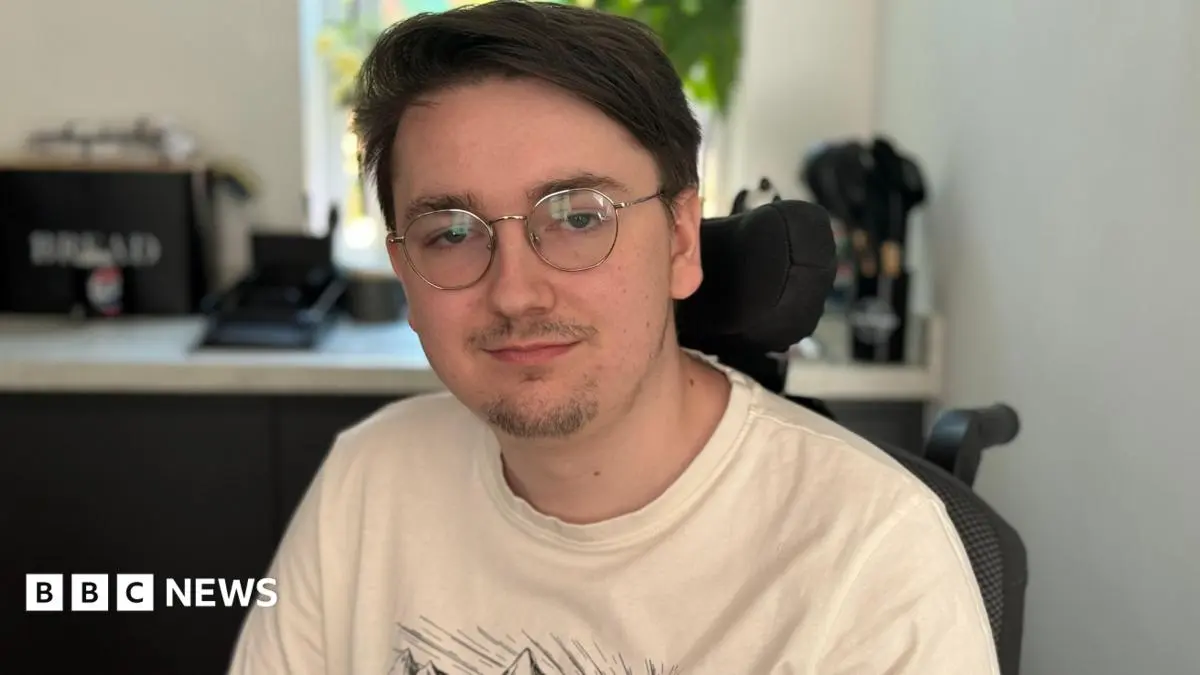
When Jack Tolley left home to go to university, he thought it would be the next chapter of his life. Even after he was diagnosed in his first year with severe epilepsy, he knew regular medication should allow him to manage it. But shortages of those key medicines left him struggling. "It should just be so simple to get hold of," he said, and the shortages were among the main reasons why he had to leave university and return to the family home.
He added: "I really struggled with leaving university because of the friendships that I'd made there, because of the people that I had to leave behind, because of this lack of medications."
Key facts
- Jack Tolley, 20, from Stourbridge, left university in Bournemouth partly because medicine shortages made life unsafe and difficult.
- He has severe epilepsy, takes 17 tablets a day of four different medicines, and cannot drive because of seizures.
- His mother, Rachel Murphy, sometimes has to drive around different chemists to find the drugs he needs.
- The National Pharmacy Association says recent shortages are at record levels and include painkillers, blood pressure drugs and epilepsy medicines.
- Coroners have issued prevention of future deaths notices after two young men with epilepsy died when they could not get their prescribed drugs.
Struggle to stay independent
Tolley's epilepsy is very severe. On one occasion he had to be put into an induced coma by doctors after multiple seizures. To manage the condition, the 20-year-old takes 17 tablets every day, of four different types of medicines. Even at home in Stourbridge, in the West Midlands, his life had become increasingly difficult because of short supplies.
When he was at university in Bournemouth, a major issue was having to travel between pharmacies to hunt down medication. Because he is unable to drive due to his epilepsy, he relied on public transport. "I rely on public transport to get to these places but you're also fighting that with the risk of having a seizure," he said.
The fear of having a seizure in public was ever-present. "I wasn't able to go out by myself very often at all because there was too much risk of me collapsing in public or collapsing on a bus and the effects of that could be catastrophic," Tolley explained. The combination of trying to source medicines and managing the danger of travelling alone eventually forced him to move back to his family home earlier this year.
Families left frightened
His mother, Rachel Murphy, said she ordered his medication weeks in advance. The 40-year-old said her local pharmacy was good, but she still sometimes had to drive around chemists to find the different medicines her son needed.
"As a parent our job is to protect our children and if I can't get that medication that I know can save my son's life, it's a horrible feeling
Source: BBC News News