

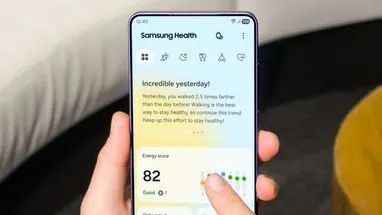
Samsung has long been a dominant player in consumer electronics, but in recent years the company has made a strategic pivot toward health technology that goes far beyond step counting. In exclusive remarks to trusted media, Samsung executives outlined an ambitious vision: to use artificial intelligence to preemptively manage health, effectively keeping people away from doctors. The goal is not to replace physicians, but to reduce unnecessary visits by empowering individuals with actionable insights drawn from continuous data monitoring.
The Vision Behind Samsung's AI Health Push
Hon Pak, Samsung's head of digital health, articulated the company's mission succinctly: 'We want to keep people away from doctors.' This provocative statement is at the core of Samsung's health strategy. The idea is that by leveraging AI to analyze biometric data from wearables like the Galaxy Watch, users can catch early warning signs of conditions such as atrial fibrillation, hypertension, or sleep apnea before they require medical intervention. Samsung hopes to transform the Galaxy Watch from a fitness tracker into a preventative healthcare platform that gives users a clear picture of their baseline health and flags anomalies.
The company's investment in health AI is not just a philanthropic endeavor; it is a key differentiator in the crowded wearable market. With competitors like Apple and Fitbit also pushing health features, Samsung needs a compelling narrative. The 'keep you away from doctors' mantra is both a marketing hook and a product philosophy. It implies that Samsung's devices will be so effective at monitoring and predicting health issues that users will avoid the anxiety, cost, and inconvenience of medical appointments for minor concerns.
How Samsung Hopes to Keep Users Away from Doctors
The technological backbone of this initiative is Samsung's proprietary AI algorithms, which run on the device itself—a move that emphasizes privacy. By processing data locally, Samsung can offer real-time insights without sending sensitive health information to the cloud. For example, the Galaxy Watch 6 series can now measure blood pressure after a calibration process, compute an electrocardiogram (ECG), and analyze sleep stages. These features are then combined with AI models that can detect irregular heart rhythms, alert users to potential strokes, or suggest lifestyle changes based on activity patterns.
One of the most touted features is the BioActive sensor, which monitors heart rate, body composition, and stress levels. Samsung is also working on non-invasive glucose monitoring and sleep apnea detection. The long-term goal is to predict health events before they happen. Pak noted that 'the greatest value is not in telling someone they have high blood pressure, but in predicting that their blood pressure will spike tomorrow and suggesting they take a walk or meditate today.'
The company is also opening up its health platform, Samsung Health, to third-party developers and researchers. This creates an ecosystem of apps that can deliver personalized coaching, medication reminders, and nutrition plans. Samsung's AI can correlate data from multiple sources to provide a holistic view. For example, if a user's heart rate variability indicates poor recovery, the AI might recommend reducing workout intensity.
Another key pillar is the integration with Samsung's broader ecosystem. The Samsung Health app can now show data from SmartThings-enabled smart scales, blood pressure monitors, and even connect to medical providers through the 'Samsung Health Partners' program. This interoperability is crucial for making AI-driven health insights actionable.
User Trust: A Key Hurdle
Despite the sophisticated technology, Samsung faces a significant challenge: convincing users to trust AI with their health. A 2023 survey from the Pew Research Center indicated that only 30% of Americans trust AI to provide accurate health information. The fear of false positives, misdiagnoses, and data breaches looms large. Dr. David Rhew, Samsung's chief medical officer, acknowledges this: 'Trust is not given; it must be earned. We need to be transparent about what our AI can and cannot do, and we must provide validation through clinical studies.'
Samsung has attempted to build trust through partnerships with respected health institutions, such as the American Heart Association and the University of California, San Francisco. These collaborations lend credibility to the algorithms. The company has also submitted its EC app for FDA clearance, and some features, like the irregular heartbeat notification, have received regulatory approval. However, the majority of Samsung's health recommendations are not yet regulated, meaning they are intended for informational purposes only.
Another trust issue is the black-box nature of AI. Users may be uncomfortable receiving health advice from an algorithm they do not understand. Samsung is addressing this by providing clear explanations for its recommendations, such as 'Your breathing rate is high. This could be due to stress or caffeine intake before sleep. Consider a wind-down routine.' By making the reasoning transparent, Samsung hopes to build confidence.
The role of the doctor is also evolving. Many physicians are skeptical of consumer health tech, citing concerns about over-diagnosis and unnecessary anxiety. Yet some forward-thinking doctors see the potential. A cardiologist interviewed for this piece noted that 'Samsung's alerts could prompt patients to seek timely care, but only if the data is accurate and the threshold for alerts is calibrated to minimize false alarms.' Samsung executives counter that the AI is designed to be conservative—it would rather miss a minor fluctuation than trigger panic.
The Technology: From Wearables to AI Insights
To deliver on its promise, Samsung has amassed a vast amount of biometric data. The Galaxy Watch collects over 1,000 data points per second, including heart rate, skin temperature, accelerometer readings, and galvanic skin response. These streams are fed into deep learning models trained on millions of user sessions. The models identify patterns that correlate with health outcomes. For instance, a sudden change in resting heart rate combined with a spike in activity might indicate the onset of a cold, prompting the user to rest.
Samsung is also exploring generative AI to provide more natural interactions. Instead of a set of static charts, the Samsung Health app could offer a conversational assistant that answers questions like 'What was my average sleep quality last week?' and 'How can I improve?' This is part of the broader Galaxy AI suite.
The hardware is equally important. Samsung has invested in sensors that can measure blood pressure without a cuff—a technology that required years of development. The new BioActive sensor uses an optical array to analyze body composition through bioelectrical impedance. The company is even working on a smart ring, the Galaxy Ring, which could provide even more discreet health monitoring.
Data Privacy and Security Concerns
Health data is among the most sensitive types of personal information. Samsung's approach of on-device processing is designed to minimize privacy risks, but it has limitations. For instance, many AI features require continuous data storage, and some insights may be shared with the cloud for research or to comply with legal obligations. Samsung's privacy policy states that health data is encrypted and only shared with user consent, but trust in tech companies is at an all-time low.
In 2022, Samsung faced a data breach that exposed some customer data, though not health information. The incident highlighted the inherent vulnerability of any connected device. To mitigate fears, Samsung offers features like a 'Health Data Vault' that allows users to delete all stored data with a single tap. The company also supports technical standards like the Fast Healthcare Interoperability Resources (FHIR) to ensure data portability.
Regulatory compliance is another battleground. In the European Union, the Medical Device Regulation (MDR) requires that any product that claims to diagnose, prevent, or treat disease must be certified as a medical device. Samsung's blood pressure monitoring app is classified as a medical device in some regions, but many of its wellness features fall outside regulatory scope. This gray area could lead to legal challenges if users rely on inaccurate AI recommendations.
The Future of AI Health at Samsung
Samsung is betting that consumers will increasingly want proactive health management, especially as healthcare costs rise and access to doctors becomes more difficult. The company plans to expand its AI capabilities to cover mental health, stress management, and chronic disease prevention. We may eventually see features that predict diabetic episodes or detect early signs of depression through voice and behavioral analysis.
However, the road ahead is not without obstacles. Competitors like Apple are also heavily investing in health AI, and regulatory hurdles continue to mount. Moreover, the fundamental question remains: do users truly want to be 'kept away from doctors'? Many people value the human touch and professional judgment that only a trained physician can provide. Samsung will need to walk a fine line between empowerment and overreach.
Executives remain confident. 'We are just scratching the surface of what AI can do for human wellness,' Pak said. 'Our goal is to create a personalized health companion that learns and adapts, helping you live better every day.' Whether the public will embrace that vision—and trust it—will ultimately depend on Samsung's ability to deliver accurate, secure, and genuinely useful health insights without crossing the line into playing doctor.
Source: TechRadar News