

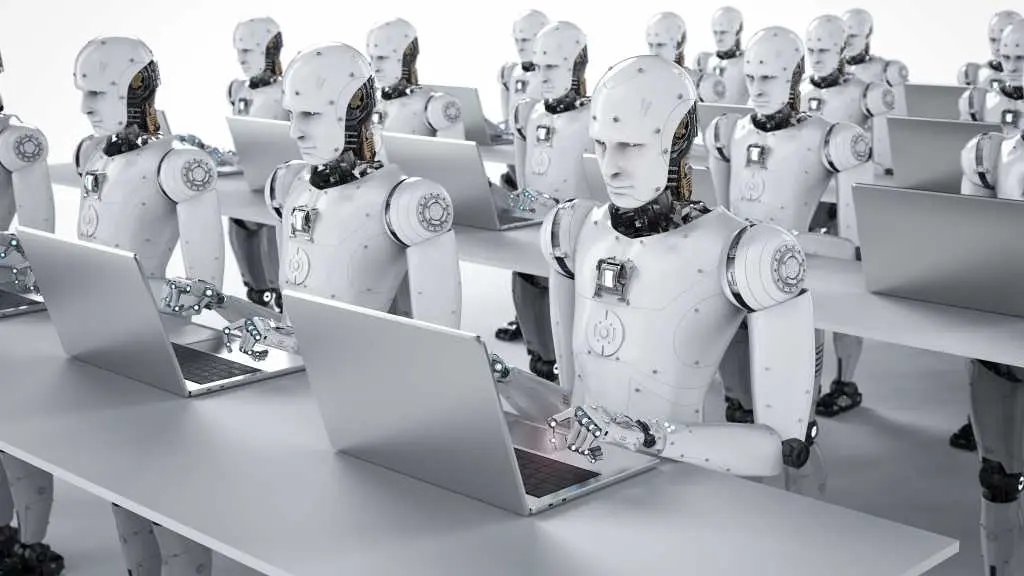
Open source has always depended on a small, dedicated core of contributors. Recent research from Brookings confirms that most essential software is maintained by just one or two volunteers, a system that worked when contributions required effort and care. But AI is dismantling that equilibrium. Large language models and coding agents now generate plausible patches effortlessly, flooding repositories with what maintainers call "slop PRs." The result is a structural crisis that threatens the open source model itself.
Mitchell Hashimoto, founder of HashiCorp and a respected figure in open source, recently announced he is considering closing external pull requests entirely. He is not abandoning open source, but he is drowning in AI-generated submissions that lack context and quality. Flask creator Armin Ronacher describes the phenomenon as "agent psychosis," where developers become addicted to agentic coding and unleash agents that generate masses of code without understanding the project's history or trade-offs. These pull requests feel plausible because they come from statistical models, but they often break obscure edge cases or violate long-standing design decisions.
The asymmetry of review economics is at the heart of the problem. It takes a developer 60 seconds to prompt an AI agent to fix typos across a dozen files. It takes a maintainer an hour to carefully verify those changes, ensuring they align with the project's vision and do not introduce new bugs. Multiply that by hundreds of contributors all using personal LLM assistants, and the system collapses. The recent OCaml community incident is a stark example: maintainers rejected an AI-generated pull request containing more than 13,000 lines of code, citing lack of review resources and long-term maintenance burden.
GitHub, the host of the world's largest code forge, is responding to maintainer fatigue. As reported by Anirban Ghoshal, GitHub is exploring tighter pull request controls and even UI-level deletion options. When the platform itself considers a kill switch for pull requests, the problem is no longer niche. We are witnessing a fundamental shift in how open source is produced.
This shift hits small open source projects hardest. Nolan Lawson, author of the blob-util library (millions of downloads), wrote about the fate of small libraries. In the past, developers installed blob-util because writing the utility functions themselves was tedious. Now, with Claude and GPT-5, they can simply ask the AI to generate a function in milliseconds. The incentive to maintain a dedicated library vanishes. Small, low-value utility libraries are becoming obsolete as AI generates on-demand code.
Something deeper is lost when libraries disappear. They served as educational tools, where developers learned by reading the work of others. Replacing them with ephemeral AI snippets trades understanding for instant answers. Ronacher suggests a retreat toward self-reliance: use AI to help, but keep the code inside your own walls. This creates a paradoxical situation where AI reduces demand for small libraries while simultaneously increasing the volume of low-quality contributions to the libraries that remain.
The result is a bifurcation of open source. On one side, massive, enterprise-backed projects like Linux or Kubernetes have resources to build AI-filtering tools and ignore the noise. On the other side are provincial projects run by individuals or small cores who simply stop accepting outside contributions. The open future once promised by "anyone can contribute" is giving way to radical curation. Only verified humans—those with proven judgment and context—will be allowed to participate meaningfully.
The irony is that AI was supposed to make open source more accessible. It has, but by lowering the barrier, it lowered the value. When everyone can contribute, no single contribution is special. When code is a commodity produced by machines, the only scarce resource is human judgment required to say no. Open source is not dying, but the definition of "open" is being redefined. The era of the drive-by contributor is ending. The future belongs to projects that are hardest to contribute to—ones that demand human effort, human context, and human relationships. The bazaar was a fun idea while it lasted, but it could not survive the arrival of the robots. The future of open source is smaller, quieter, much more exclusive, and that may be the only way it survives.
Source: InfoWorld News