

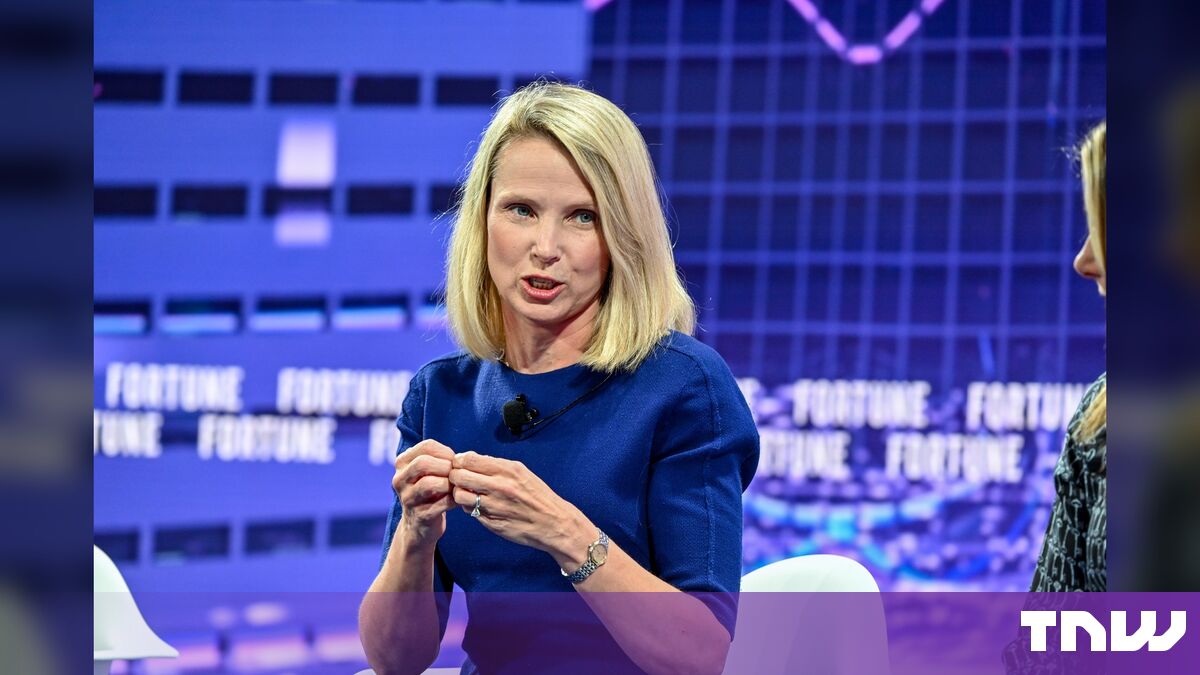
Marissa Mayer has publicly defended her decision to use Dazzle, the artificial intelligence assistant built by her startup, to help describe her own daughter for a school project. The former Yahoo chief executive became the focus of online criticism after a profile described how she turned to the AI tool when a teacher asked for three bullet points explaining what made her daughter special. According to Mayer, Dazzle responded that her daughter was empathetic, creative and an animal lover.
The anecdote quickly spread across social media, where some users questioned why a parent would delegate such a personal task to an AI system. Mayer responded in a post on social media on Monday, saying she wanted to provide more context about the episode and explain why she had tested Dazzle in that moment.
Key facts
- Marissa Mayer used Dazzle, her startup’s AI assistant, to help describe her daughter for a school birthday slide.
- Mayer said Dazzle identified her daughter as empathetic, creative and an animal lover, then distinguished her identical twins and surfaced forgotten kindergarten projects.
- Critics questioned delegating a personal family task to AI; Mayer said she was testing an early prototype, not avoiding the slide.
- Dazzle reads camera roll photos to answer questions and make suggestions; it launched in late September and competes in the personal AI agent market.
- Mayer is the former chief executive of Yahoo and an early Google hire; her startup previously scrapped Sunshine Contacts and Shine.
The birthday slide that sparked the debate
Mayer said the request came from the fourth-grade teachers of her daughters Marielle and Sylvana, who are twins. The teachers emailed asking for a slide celebrating each girl for their December 10 birthday. Mayer pasted the email into Dazzle, which was still an early prototype, to test its limits.
She said she did not use the tool because she was overwhelmed by the task of making a slide. Instead, she argued that summing up a child in a few bullet points feels laughably limiting, and she wanted to see whether the AI could find deeper threads in her family’s photo history.
Mayer also said she expected Dazzle to struggle. Most facial recognition systems cannot reliably tell her identical twins apart, she noted. Yet the tool not only distinguished Marielle from Sylvana, according to Mayer, but also surfaced forgotten kindergarten projects such as a ‘snake denomizer’ and a ‘sandcat playground.’ Dazzle then connected those old projects to who Marielle is today.
Mayer said she combined the AI’s insights with a few of her own and showed the resulting slide to a colleague. The colleague was surprised that she remembered such details, she wrote, and she admitted that the Dazzle prototype had found them. The exchange, she said, illustrated what AI can unlock from years of camera roll photos.
What Dazzle is designed to do
Dazzle launched in late September. It reads the photos in a user’s camera roll to answer questions, carry out tasks and make suggestions. The product is part of a growing market for personal AI agents, which aim to use personal context to provide more tailored help than general-purpose chatbots.
Mayer said Dazzle competes with services such as Meta’s Muse, a personal AI agent with 10 million users. Her startup has 10 engineers, according to the profile that triggered the debate. Despite its small team, Mayer said early user engagement and response have been terrific.
In her social media post, Mayer listed several examples that she said had stunned Dazzle users. For personalized learning, the tool offered custom spelling lists and grammar concepts based on photos of a child’s schoolwork. For home inventory, it found a book a user already owned and noted two others by the same authors after being given a book club reading list; the information came entirely from the backgrounds of the user’s photos. For design intuition, Dazzle noticed a new sofa in a living room photo and recommended artwork to hang above it. For wardrobe suggestions, it recommended clothes a user already had for an esoteric costume party, based on outfits in past pictures.
Mayer framed those examples around a broader idea about attention and memory. She referred to the foundational paper on transformers, titled ‘Attention Is All You Need.’ What makes photos and AI so powerful, she argued, is that camera rolls are a decades-long record of what people pay attention to. By analyzing that visual history, an AI agent can connect dots that users did not realize they were documenting.
She noted that people take about 5 billion photos a day, often wondering whether they will ever look at them again. AI, in her view, can turn those snapshots into deep, personal context.
A personal AI agent with personal data at its core
The debate around Mayer’s birthday slide goes beyond one family anecdote. It touches on a central question for personal AI agents: how much of ordinary life should be handed to an automated system, and what happens when that system is asked to interpret intimate family moments?
Dazzle’s approach depends on access to a user’s photo library, one of the most sensitive stores of personal information on a phone. Camera rolls contain children, homes, friends, travel, medical details, receipts, documents and private moments. An AI assistant that can read and reason across those images may offer useful suggestions, but it also raises concerns about privacy, consent and the boundaries between convenience and overreach.
For parents, the question is especially delicate. Schools often ask families for short biographies, birthday slides or introductions that celebrate a child’s personality. Those requests can be time-consuming, but they are also personal. Using an AI assistant to draft them may save effort, yet it can also feel like outsourcing a task that is supposed to reflect a parent’s own attention and affection.
Mayer’s response tried to reframe the episode as a product test rather than a parenting shortcut. She said she used Dazzle because the task felt limiting and because she wanted to see what the prototype could find. That explanation did not satisfy every critic, but it highlighted a tension that is likely to follow personal AI agents as they move deeper into family life: the same tool that can surface forgotten memories can also make intimate decisions feel automated.
From Google and Yahoo to a new AI startup
Mayer is one of the most prominent executives in Silicon Valley. She joined Google in 1999 as its 20th hire and led search there for a decade. She ran Yahoo from 2012 to 2017, becoming one of