

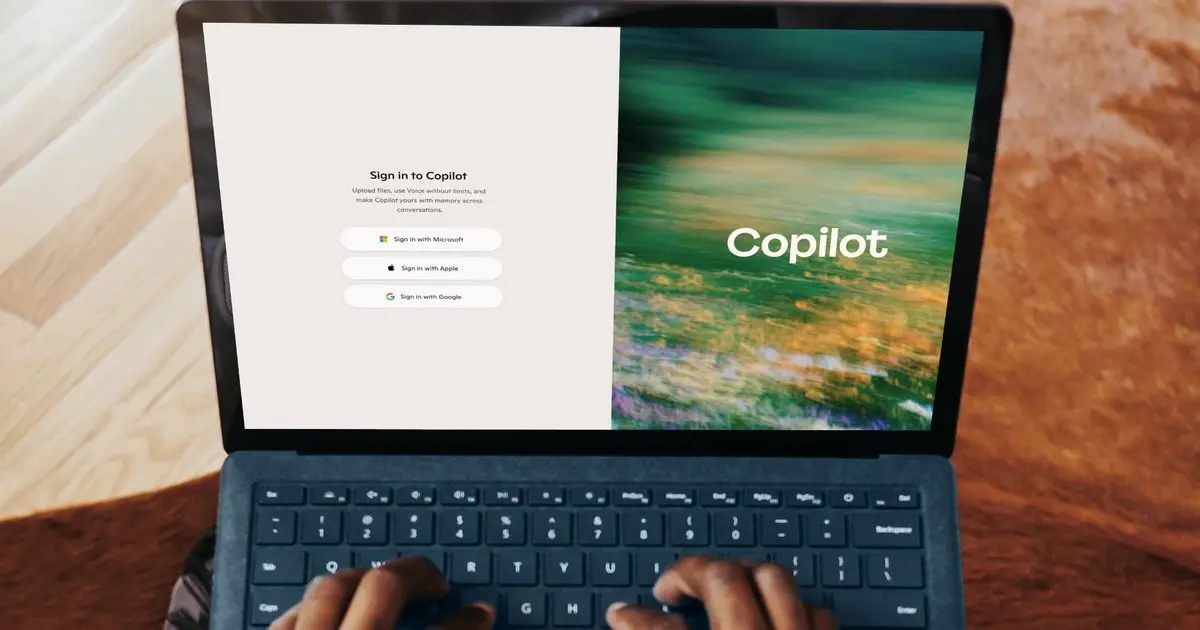
Microsoft is preparing to consolidate its rapidly expanding lineup of Copilot tools into a single application. CEO Satya Nadella confirmed during the company’s most recent earnings call that Microsoft is building what he called a “super app” that will house every Copilot experience in one place.
The announcement comes as Microsoft has been embedding artificial intelligence across its products at a remarkable pace. Copilot now exists in chat, office productivity, coding, and autonomous agent workflows. Instead of forcing users to hop between different apps and interfaces, Microsoft wants to create a unified destination that can handle everything from drafting an email to deploying a software fix.
What exactly is Microsoft building?
Nadella explained that Copilot has evolved quickly from a simple chat tool into something far more ambitious. The company has already introduced Cowork, a team-oriented workspace, and is now pushing forward with what Microsoft calls Autopilots. These are autonomous agents capable of executing long-running tasks without constant human oversight.
According to Nadella, the super app will combine all of these capabilities into one integrated product. It is being designed for both regular consumers and business customers, which is a key distinction. Many AI products tend to target one group, but Microsoft is attempting to create an experience that works for both an individual at home and an enterprise team sharing a workspace.
Nadella did not reveal an exact release date beyond saying the super app is expected to arrive “this year.” He described the project as a major step forward and expressed confidence about the direction the company is taking.
The evolution from chat to Cowork
Microsoft’s Copilot journey began with a relatively simple chatbot experience. It was originally branded under the Bing umbrella and later rebranded as Copilot as Microsoft began integrating AI assistance into Windows, Edge, and Microsoft 365. The tool quickly became a flagship feature for the company, signaling a broader shift toward AI-first computing.
The introduction of Cowork represented the next logical step. Instead of focusing on individual productivity, Cowork is designed for teams that need to collaborate on projects with AI support. It integrates with documents, spreadsheets, and presentations, allowing team members to generate content, summarize data, and coordinate tasks in a shared environment.
Now Microsoft is going even further with Autopilots. These AI agents are designed to work in the background, performing complex workflows that may span hours or days. A sales team, for example, might use an Autopilot agent to research prospects, prepare reports, and follow up with clients without needing a human to manage every step.
One app for everyone
The plan to create a super app suggests that Microsoft wants to eliminate the fragmentation that currently exists in its AI offerings. A user might open Copilot in Windows for casual questions, switch to Microsoft 365 Copilot for document work, and then open GitHub Copilot for programming tasks. Each experience is useful on its own, but switching between them can be tedious.
Nadella described the super app as the flagship application that different roles across a company can use every day. That would mean a marketing manager, a software developer, and an operations lead could all start their day in the same place. The app would route them to the tools and agents most relevant to their jobs while maintaining a consistent interface and conversation context.
Why should you care about another AI app?
At first glance, another AI app might seem unnecessary. The market is already flooded with chatbots and assistants, each promising to become the default interface for artificial intelligence. But the super app argument is not about adding another option. It is about reducing the need to switch between applications in the first place.
For someone who uses Copilot for writing, GitHub Copilot for code, and a separate agent tool for routine work, the appeal is obvious. One app instead of three or four means less friction. It also means that context can be shared between workflows. A morning conversation about a project could directly inform the code generated later in the day without requiring the user to re-explain the situation.
Microsoft says it already has more than 30 million paid Copilot seats. That installed base gives the company a significant advantage as it tries to build a loyal audience around a single app. Many of those users are already embedded in Microsoft’s ecosystem, using Windows, Office, and Azure. A super app would give them a reason to stay inside that ecosystem even longer.
The competitive landscape is heating up
Microsoft is not alone in this ambition. The race to become the default AI hub is intensifying across the industry. Anthropic’s Claude already offers an application that combines multiple tools and capabilities. OpenAI recently unveiled ChatGPT Work, an app that merges ChatGPT with the Codex coding assistant. Both companies are chasing the same goal: becoming the one AI destination people open first.
Google is also moving in a similar direction with its Gemini assistant, which is being integrated into Workspace, Android, and cloud services. The super app trend is being driven by the realization that people do not want to manage dozens of standalone AI tools. They want a single surface that understands their context and can call upon the right model or agent when needed.
Microsoft’s advantage lies in its depth. It has a massive consumer base through Windows and a massive enterprise base through Office and Azure. It also has a broad portfolio of AI models, including its own Maia chips and partnerships with OpenAI. The super app can draw on all of these resources to deliver an experience that feels native to the Microsoft ecosystem.
There are still many unanswered questions. Microsoft has not shared details on pricing, rollout, or what will happen to standalone Copilot apps once the super app launches. It is unclear whether existing Copilot subscriptions will include the new app or if it will require a separate premium tier. It is also unknown how the company plans to handle privacy and security for autonomous agents that have access to sensitive business data.
These are significant concerns. Businesses will be hesitant to trust autonomous agents with critical tasks unless Microsoft can demonstrate robust safeguards. The company has been pushing enterprise security as a major selling point, and its experience running Azure gives it some credibility. Still, the execution will matter as much as the vision.
The bigger picture
The super app is part of a broader strategy to position Microsoft as the leading AI platform provider. The company has invested heavily in OpenAI, integrated AI across its product lines, and built a cloud infrastructure capable of supporting large-scale AI workloads. It is now trying to turn that investment into a cohesive user experience.
Nadella’s comments suggest that Microsoft sees the super app as more than just a product. It is a bet on the future of how people will interact with AI. Instead of navigating multiple tools, users will rely on an orchestrator that can handle routine tasks, automate workflows, and assist with complex projects.
The company is likely to face challenges as it tries to balance the needs of individual consumers with the demands of enterprise customers. Consumer users may want a simple conversational interface, while business users may want deep integration with SharePoint, Teams, and other collaboration tools. Finding a common ground will be difficult, but Microsoft has experience building products that serve both audiences, such as Windows and Office.
For now, the technology world will be watching closely. The AI app market is still young, and no single company has managed to establish itself as the definitive destination. Microsoft is making a bold move to claim that position. If the super app delivers on its promise, it could change the way millions of people use AI every day.
Expect more details to emerge in the coming months. Nadella’s tone suggests that Microsoft is eager to show what it has been working on. With the launch window set for this year, the company does not have much time to finalize its plans. The wait may be short, but the stakes could not be higher.
Source: Digital Trends News