

Key facts
- Miro co-founder and CEO Andrey Khusid says adding AI to existing teams and processes will not deliver full productivity gains.
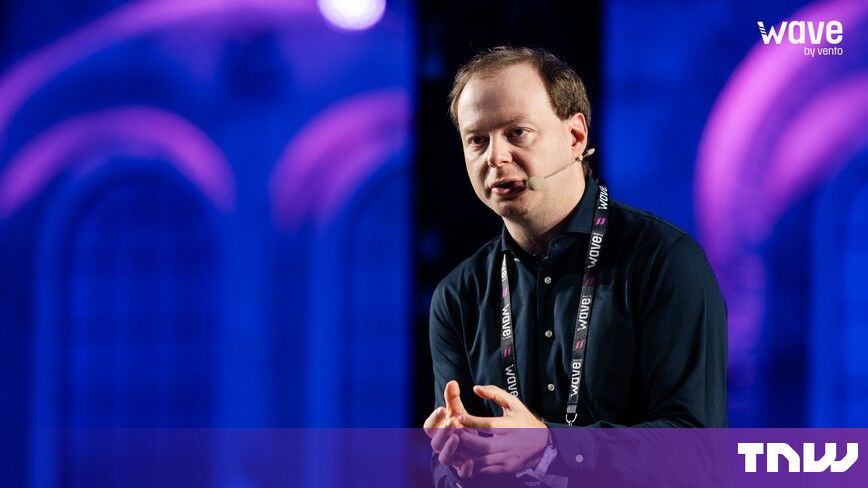
- He spoke at a technology conference in Turin, Italy, during a session on thinking together in the age of AI.
- His remarks came a month after a Milan-based software group agreed to buy Miro for $1.355bn, with the deal expected to close in the fourth quarter subject to approvals.
- Miro has about $600m in annual recurring revenue and was valued at $17.5bn in January 2022 after raising $400m.
- Khusid says companies need to redesign workflows from first principles and then add humans where they add value.
- He warns that more AI-generated content can overwhelm teams unless each person takes accountability for what they bring.
- He expects voice, conversation, and visual decision-making to shape how Miro and its customers work over the next three years.
Miro co-founder and chief executive Andrey Khusid has a blunt warning for companies trying to capture the productivity promise of artificial intelligence: do not simply layer AI on top of the teams and operating systems you already have.
Speaking at a technology conference in Turin, Khusid said the harder and more valuable work is to redesign workflows from first principles, then add people where they can contribute judgment, creativity, and accountability. The session, titled Thinking Together in the Age of AI, focused on how organizations can collaborate when AI becomes a constant presence in daily work.
His argument challenges a common corporate reflex. When a new technology arrives, businesses often buy tools and distribute licenses, hoping that individual gains will add up to company-wide transformation. Khusid suggests that math rarely works. The real bottleneck is not access to AI but the structure of work itself.
The productivity trap
Most knowledge workers now use generative AI tools every day. They draft emails, summarize documents, generate code, brainstorm ideas, and turn rough prompts into presentations or prototypes. Those personal gains are real. They can save minutes or hours on individual tasks. But Khusid argues that the larger prize, a measurable jump in how an entire company performs, remains elusive when the underlying workflow is left untouched.
The reason is that companies do not operate as collections of isolated tasks. They operate through complex workflows in which work passes from one person to the next. A product manager defines a problem. A designer explores options. An engineer builds a solution. A marketer explains it. A sales team sells it. A support team answers questions. At every handoff, context is lost, reinterpreted, or stored in a different place. Each person holds a different piece of the puzzle, and that puzzle is rarely assembled in one view.
AI can generate text, images, code, and analysis at remarkable speed, but it cannot automatically repair a fragmented operating model. If the context is scattered, AI will produce outputs that are plausible but disconnected from the real state of the business. If decision rights are unclear, AI will accelerate confusion. If teams are rewarded for individual output rather than shared outcomes, AI will produce more noise rather than more value.
Why individual AI gains do not add up
Khusid's central point is that spreading AI across an existing operating model will not give organizations the gains they expect. It is not enough to give every employee a chatbot and hope for a compounding effect. The first job is to bring context together so that teams can work from a shared understanding.
That means mapping how work actually flows, identifying where decisions are made, and determining what information each person and each agent needs at each step. Only then can AI be inserted in a way that improves the whole system rather than speeding up isolated fragments. In some areas, Miro set up parallel teams that did the same work with AI. It built the process around those teams, measured what changed, and then scaled the model to the rest of the company.
This approach is deliberately experimental. Instead of forcing AI into legacy processes, it creates a clean room where new ways of working can be tested. The parallel team can discover which tasks AI should handle, which tasks humans should keep, and where the handoffs need to be redesigned. Once the workflow is proven, it can be replicated. That is very different from buying a tool and announcing a transformation.
More voices, more noise
Khusid also sees a cultural benefit in AI. It gives quieter people a better way to share their ideas. Someone who hesitates to speak in a meeting can quickly turn a prompt into a prototype, a diagram, or a draft that others can see and react to. That can flatten hierarchy and bring more perspectives into the room.
But the same capability creates a new problem: far more content. If everyone throws AI output at their team, the team becomes overwhelmed. More documents, more summaries, more suggestions, and more half-finished ideas can slow everyone down. Business research has warned about AI-generated workslop, a kind of low-quality output that looks polished but adds little value. The risk is that teams confuse volume with progress.
Khusid's answer is accountability. Each person has to own every piece of what they bring. AI can help produce a draft, but a human must stand behind the claims, the analysis, and the recommendation. Accountability is what separates useful collaboration from an avalanche of synthetic noise. Without it, AI becomes another channel for passing work around rather than a tool for making better decisions.
Intelligence at the centre
Organizations were built around people and hierarchy, with knowledge held by individuals. The manager knew more than the junior employee. The expert knew more than the generalist. Information moved up and down the chain, and power often came from controlling access to it. Khusid argues that AI changes this foundation.
In new companies, a central intelligence can know almost everything that happens. It can see the documents, the decisions, the customer conversations, and the operational data. People tap into that intelligence to decide and move fast. The organization does not need as many layers whose main function is to gather and relay information. It needs people who can ask better questions, interpret context, and take responsibility for outcomes.
Established companies have to rebuild their own intelligence infrastructure. That means consolidating systems, cleaning data, and creating a shared layer that both humans and AI agents can use. It also means rethinking which roles are still needed and which new roles should be created. Startups built this way move faster and decide better, which creates urgency for everyone else. Recent figures have shown that businesses have tripled their AI adoption, though most still use it only lightly. The gap between light use and deep integration is where competitive advantage will be won or lost.
Building Miro around AI
Miro is 15 years old, so it is not a young startup experimenting in a garage. Much of its code is already written with AI help, Khusid said, and the company has merged systems to give AI better context. He added that there has been little disruptive change in models lately. It is already clear what they can do over the next three years. So Miro builds around that rather than chasing every release.
That is a notable strategic choice. Many companies react to each new model launch with a scramble for features. Miro is placing its bets on a more stable set of capabilities. It expects humans and AI agents to work side by side in startups and large companies, but people stay accountable. Miro is building a system where people and agents work on the same canvas.
Within three years, Khusid expects Miro to rely more on voice and conversation, with visual decision-making as the main way teams decide. Instead of typing into forms and moving cards through a rigid process, teams may talk through problems while AI agents update the canvas, surface relevant context, and help visualize trade-offs. The canvas becomes a shared thinking space for both people and machines.
Acquisition and growth context
Khusid's appearance in Italy came a month after a Milan-based software group agreed to buy Miro for $1.355bn. The deal is expected to close in the fourth quarter, subject to approvals. Miro has about $600m in annual recurring revenue, according to the acquirer. It was valued at $17.5bn in January 2022, when it raised $400m.
Khusid said he could not talk about the acquisition yet. He was happy to be in Italy, describing it as maybe a new home for Miro. The combination of a large valuation, substantial recurring revenue, and a pending acquisition gives his comments additional weight. He is not speaking as a detached futurist. He is running a company that is trying to redesign its own work while preparing for a new chapter.
Advice for founders and the road ahead
Khusid said Miro started in 2011 but only saw meaningful traction in 2016. That gap of several years is a reminder that overnight successes are rarely overnight. His advice to founders is to work on something they love and to listen to their own intuition.
That advice connects to his broader argument about AI. Tools will keep changing. Models will improve. Hype cycles will rise and fall. The durable advantage comes from loving the problem enough to redesign the work around it, and from trusting your own judgment when the market is noisy. For Khusid, the future of work is not about putting AI on top of teams. It is about rebuilding the workflow first, then adding humans where they can add value.