

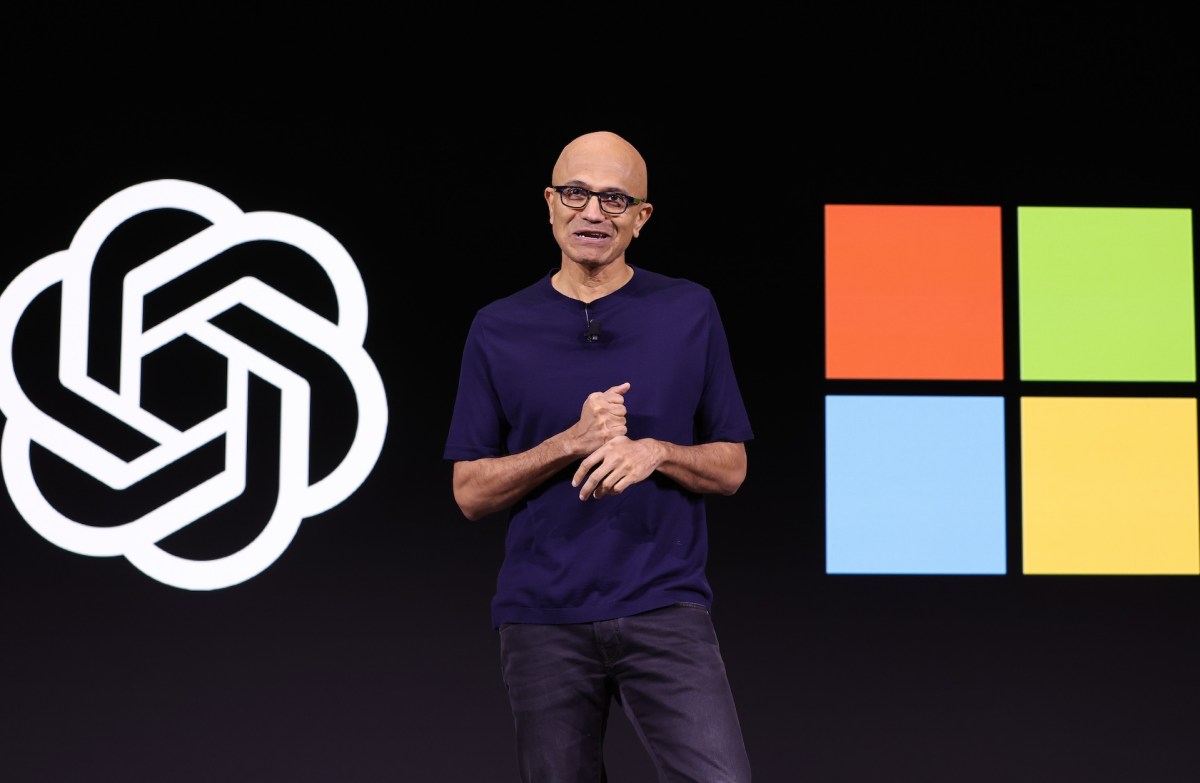
Satya Nadella's Warning: The Hidden Cost of Proprietary AI Models
In a move that has sent ripples through the tech industry, Microsoft CEO Satya Nadella has published a blog post cautioning enterprises about the risks of using proprietary AI models from companies like OpenAI and Anthropic. Nadella argues that businesses are effectively paying twice for AI intelligence: first through token usage fees, and second by surrendering their most valuable proprietary data. This critique comes amid growing concerns that large AI labs operate as Trojan horses, gaining unfettered access to corporate knowledge that could be used to compete against their own customers.
The Data Dilemma: Why Enterprises Should Be Wary
Nadella's primary concern centers on how AI models learn from user interaction data. Every prompt, every correction, and every tool an agent uses becomes what he calls "exhaust"—data that trains the model further. As enterprises feed these models with business-specific nuances, they inadvertently teach potential competitors about their internal operations. "You essentially pay for intelligence twice, once with money, and again with something even more valuable: the proprietary knowledge you must reveal to make that intelligence useful," Nadella writes. He emphasizes that corrections made by users are especially valuable because they distill institutional know-how—knowledge a competitor could never buy but can now obtain from the AI provider.
The Distillation Debate: Fair Use or Hypocrisy?
Nadella also takes aim at the asymmetry in AI model training. While model makers freely scrape the public internet to train their models, they often restrict others from doing the same through distillation—a process where a model's outputs are used to train a new, often cheaper, model. In February 2026, Anthropic accused Chinese open-source models of sending millions of prompts to Claude for this purpose, calling for export controls. Nadella finds this hypocritical: "While the great innovation that comes from model providers having fair use rights to train models on public data is needed, I find it ironic that the status quo is to then turn around and impose restrictive terms on distillation." He argues that if AI companies can learn from the world's data, enterprises should be able to learn from AI models in return.
A Solution from the Cloud Provider
True to his role as CEO of a major cloud provider, Nadella proposes a solution rooted in cloud infrastructure. He urges enterprises to "retain ownership" of their data—including prompts, feedback, and interaction logs—and to build "proprietary learning environments" on the cloud. This naturally aligns with Microsoft's Azure platform, where many businesses already store their data. He also recommends implementing "orchestration layers" that allow companies to seamlessly switch between AI models from different providers, avoiding vendor lock-in. Tools like AI gateways, which function as intermediaries, have become increasingly popular for this purpose.
While Nadella stops short of explicitly endorsing open-source models, the subtext is clear: by using open-source AI, enterprises can keep their data local and maintain control over the training process. Large companies are already moving in this direction, opting to run open-source models on their own premises rather than relying on proprietary APIs. Idit Levine, founder and CEO of Solo.io, a company that provides networking and security software for AI management, confirms this trend. She notes that after experimenting with proprietary models, her clients often ask: "Can I take an open-source model and run it on-prem? It will do almost 90% of what the big one's doing. It will cost way less." Her company's technology underpins the Linux Foundation's Agentgateway project, serving enterprises like T-Mobile, ADP, and SAP. She sees on-premise open-source AI as the next major wave in enterprise adoption.
The Rise of Open-Source Alternatives
Independent data supports Levine's observations. Vercel, a platform for building and hosting websites that has added AI model-switching tools, reports that open-source models accounted for 29% of all traffic routed through its gateway last month. OpenRouter, a company that helps developers route requests across AI models, has also seen a surge in demand for open-source options. These trends indicate that enterprises are increasingly valuing data sovereignty and cost efficiency over the convenience of proprietary models.
Background: The Evolution of Enterprise AI Concerns
The debate over AI data usage is not new. Since the explosion of generative AI in 2023, numerous voices—from venture capitalists like Jason Calacanis to Palantir CEO Alex Karp—have warned about the risks of handing over sensitive information to model makers. However, Nadella's intervention is particularly significant because Microsoft is a major investor in both OpenAI and Anthropic, the two most prominent proprietary AI labs. His public stance suggests a strategic pivot within Microsoft itself, balancing its investment portfolio against the needs of its enterprise customers. Microsoft has been aggressively integrating AI into its own products, from Azure AI to Copilot for Office, yet Nadella's warning implies that even the largest cloud provider sees potential dangers in unchecked data sharing.
Historically, similar concerns have arisen with cloud computing migrations, where companies feared losing control of their infrastructure. Over time, hybrid and multi-cloud strategies emerged to mitigate vendor lock-in. Now, a parallel pattern is emerging in AI: businesses want the power of advanced models without surrendering their core intellectual property. This shift is driving investment in on-premise and open-source solutions, as well as in technologies that facilitate model switching. The Linux Foundation's Agentgateway project, for example, aims to create a standardized interface for AI agents across different providers, reducing dependency on any single lab.
Implications for the AI Industry
Nadella's warning comes at a critical juncture. The AI industry is grappling with regulatory pressures around data privacy, the ethics of training data, and the potential for monopolistic practices. If enterprises heed his advice and move toward open-source, on-premise deployments, it could reshape the market. Proprietary model makers may be forced to offer more transparent data policies, lower prices, or even hybrid models that let customers choose whether their data is used for training. Conversely, open-source communities could see increased commercial adoption, accelerating development and competition.
However, the transition is not without challenges. Running AI models on-premise requires significant computational resources and expertise, which small and medium businesses may lack. Cloud providers like Microsoft, Amazon, and Google are likely to offer managed services that balance data sovereignty with ease of use. The orchestration layers Nadella advocates could become standard middleware, analogous to how Kubernetes simplified container management across multiple clouds. Startups specializing in AI security, model monitoring, and data governance may also find new opportunities as enterprises seek to protect their proprietary knowledge.
As the article by TechCrunch's Julie Bort noted, Solo.io's customers realize that open-source models can achieve 90% of the performance of proprietary ones at a fraction of the cost. This calculation will only become more attractive as open-source models improve and as concerns about data leakage escalate. Nadella's blog post has effectively put the issue on the table for every CTO and CIO evaluating AI adoption: "In consuming intelligence, you are creating intelligence. And what you create should belong to you."
Whether or not companies follow Nadella's specific cloud-centric advice, the underlying message is clear: enterprise AI must be deployed with data ownership front and center. The days of blindly trusting AI labs with sensitive business data are numbered. The trend toward open-source, on-premise, and orchestrated multi-model architectures is likely to accelerate, fundamentally changing how businesses build and deploy AI solutions.
Source: TechCrunch News