

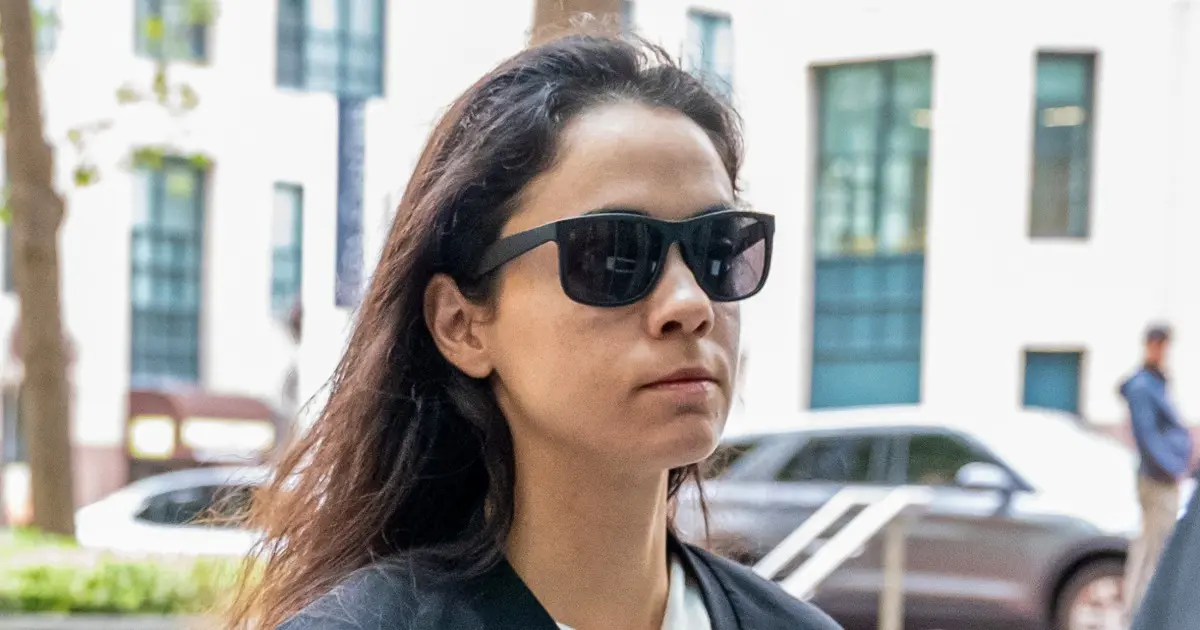
OAKLAND, Calif. — The high-stakes legal battle between Elon Musk and the founders of OpenAI took a deeply personal turn on Wednesday when Shivon Zilis, a former board member of the artificial intelligence company and the mother of four of Musk's children, took the witness stand. Her testimony provided an unprecedented window into the intertwining of personal relationships, corporate governance, and the intense rivalry that has come to define the AI industry.
Zilis, a longtime adviser to Musk who has also worked at Tesla and Neuralink, testified on the sixth day of the trial. Musk, a co-founder of OpenAI who later left and started his own AI firm, xAI, is suing OpenAI CEO Sam Altman and President Greg Brockman. He alleges the two are enriching themselves from what was originally intended to be a nonprofit charitable endeavor focused on safely developing artificial general intelligence (AGI).
Zilis's unique position in the Musk-OpenAI ecosystem
Zilis joined OpenAI in 2016, working closely with both Musk and the other co-founders. She later served on the board of directors for several years, acting as a kind of bridge between Musk and Altman and Brockman even after the relationship between the men soured. She left the board in 2023, around the time Musk launched xAI. Her testimony was seen as crucial to understanding the internal dynamics of OpenAI during its formative years and the extent to which Musk remained influential even after stepping away.
Under questioning from a Musk lawyer, Zilis detailed the evolution of her personal relationship with the billionaire. She described the beginning as "a one-off" at a corporate off-site event. Later, when she decided to have children as a single mother, she said Musk "offered to make a donation" as a platonic sperm donor. But she said their relationship later developed into a romantic partnership. "We now have a romantic partnership," Zilis stated, though she was quick to add that this did not affect her decisions as an OpenAI board member. "I had an allegiance to the best outcome, AI for humanity," she said.
Loyalty and the "trust game"
A significant portion of Zilis's testimony focused on questions of loyalty and potential conflicts of interest. She faced pointed questions about whether she acted as a conduit of information between Musk and the OpenAI board. Asked by Musk lawyer Jennifer Schubert whether it was her job "to funnel information to Elon," Zilis responded, "Funnel? Absolutely not."
Schubert also highlighted a message Zilis sent to Musk in which she said the "trust game is about to get tricky" regarding her interactions with other OpenAI board members. Zilis acknowledged the phrasing but testified that she was not being duplicitous. "I would have preferred it if I'd written 'trust framework,'" she explained. She added that back in 2017, the OpenAI co-founders were going through a "weird half-breakup," and she was trying to navigate her role as a facilitator or a bridge.
Background on the trial and OpenAI's origins
The trial, which began last week, stems from a lawsuit originally filed by Musk in 2024. Musk was one of OpenAI's earliest backers and co-chairs of its board when it was founded in 2015 as a nonprofit. He contributed millions in initial funding. However, he left the board in 2018, and OpenAI later transitioned to a for-profit structure capped at earning 100 times its investment—a move Musk argues betrayed the founding mission. The case has drawn intense interest from the tech world, as it delves into the governance of one of the most valuable and rapidly advancing AI companies.
Zilis was originally a plaintiff alongside Musk in the claims against Altman and Brockman. She dropped out of the case last year, but her testimony remains critical. Her close ties to Musk and her front-row seat to OpenAI's internal battles make her a key witness for both sides.
Brockman's earlier testimony about Zilis
Earlier in the trial, Greg Brockman testified about his friendship with Zilis, which he said dated back to at least 2013. They worked together at OpenAI and served on the board together. Brockman revealed that Zilis told him in 2021 that she was pregnant with twins but did not disclose the father's identity at the time. He said he learned who the father was through media reports and later spoke with her about it. "She said it was via IVF and that it was entirely platonic with Elon," Brockman testified.
Brockman also stated that after the relationship became known, "many board members" wanted to remove Zilis from the board. "We actually had a board vote and decided to let her stay. We trusted her to keep the Elon conflict under control," he said. Zilis, however, testified that she only informed the OpenAI board about her relationship with Musk after Business Insider discovered it and planned to publish a story. She said she and Musk initially agreed on complete confidentiality about the sperm donation due to security concerns, adding "If he was indeed just a donor, it didn't seem fair to put that burden on them."
Zilis's public profile and ongoing involvement with Musk
Although she keeps a relatively low profile and rarely grants media interviews, Zilis has become an increasingly visible part of Musk's public image. She has 276,000 followers on X, the social media platform owned by Musk, where she regularly posts about technology and family. Last year, she announced that she and Musk had welcomed a fourth child, bringing Musk's total known children to 14.
Zilis has appeared with Musk in high-profile settings. In February, she was photographed holding his hand as they arrived at Mar-a-Lago, President Donald Trump's Florida club. And during Musk's service in the Trump administration last year, Zilis accompanied him to a meeting with India's Prime Minister Narendra Modi. These public appearances underscore the deepening ties between the two, even as Musk's legal team relies on Zilis's testimony to build its case against OpenAI's leadership.
Throughout her testimony, Zilis peppered her speech with unusual phrases and occasional sarcasm. At one point, when she could not recall a detail, she said, "It's not in my neurons." At another, she described working on "seven zillion" projects, calling it "a precise, technical term." Her demeanor on the stand was a mix of earnestness and deflections, as she sought to navigate a minefield of questions about her loyalties and her intimate ties to one of the world's most powerful men.
The trial, expected to last several more weeks, continues to reveal the messy human dynamics behind the race to build artificial general intelligence. Zilis's testimony has provided a rare glimpse into the personal relationships that have shaped—and continue to shape—the trajectory of one of the most important companies in the world.
Source: NBC News News