

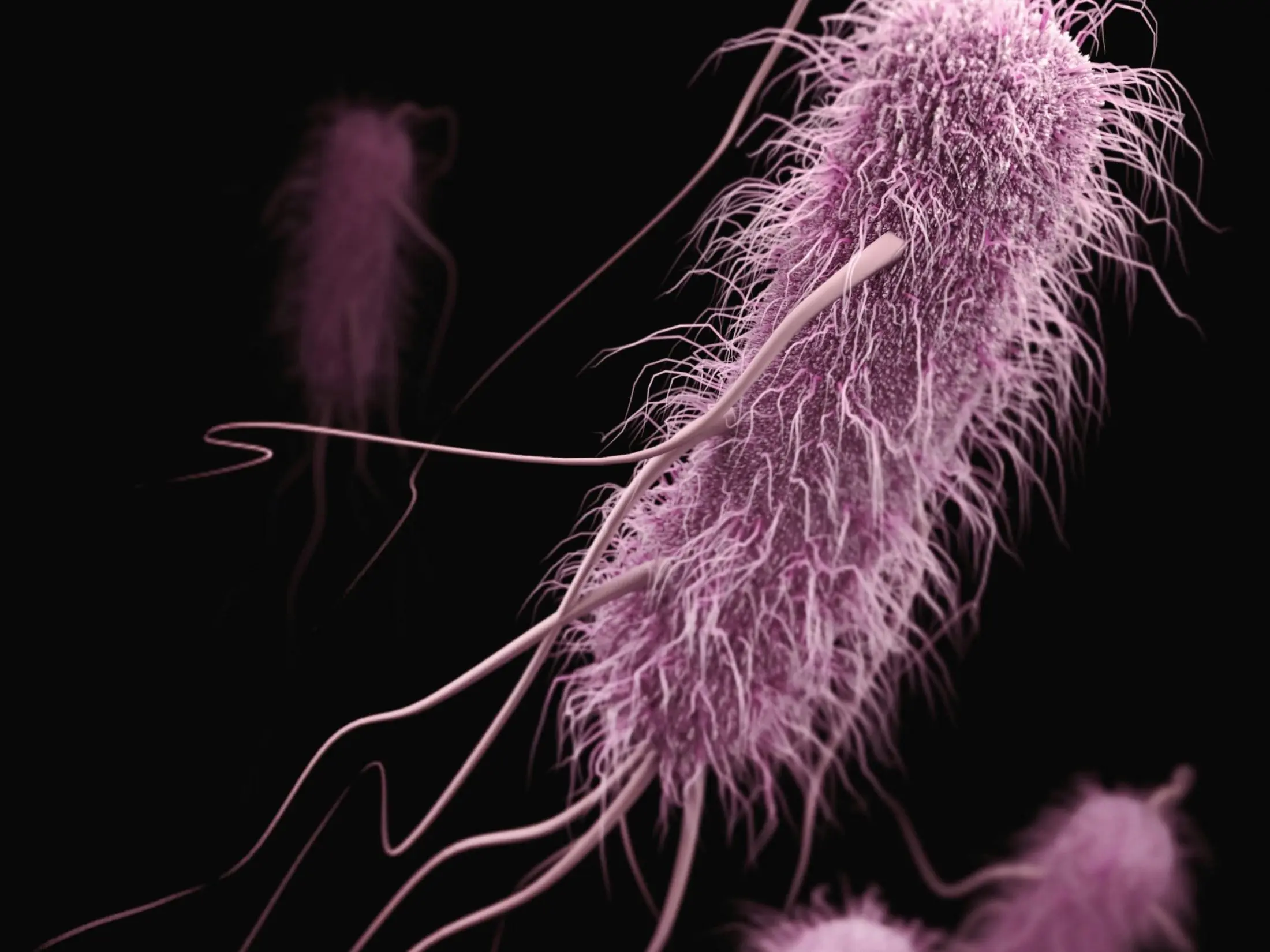
Stanford University researchers have unveiled a groundbreaking application of their Evo 2 artificial intelligence model: generating bacteriophages that specifically attack Escherichia coli. The work, reported recently, demonstrates how large language models trained on genomic data can be used to design functional biological entities, potentially opening new avenues in the fight against antibiotic-resistant bacteria.
The Growing Threat of Antibiotic Resistance
Antibiotic resistance has become one of the most pressing public health challenges of the twenty-first century. Bacteria such as E. coli, a common cause of urinary tract infections, food poisoning, and bloodstream infections, are increasingly resistant to multiple drugs. The World Health Organization has classified antibiotic resistance as a global health emergency, warning that without new therapeutic strategies, routine medical procedures could become life-threateningly risky. Phage therapy—the use of viruses that infect and kill bacteria—is a promising alternative that dates back over a century but fell by the wayside in the West with the rise of antibiotics. With resistance on the rise, researchers are turning back to phages, yet developing them for specific bacterial targets is time-consuming and laborious.
What Is Evo 2?
Evo 2 is a state-of-the-art AI model developed by the Arc Institute, Stanford University, and chipmaker NVIDIA. It is a 7-billion-parameter model trained on a massive dataset of more than 2.7 million microbial genomes, encompassing over 300 billion nucleotides. The model learns the patterns and grammar of genomic sequences, similar to how ChatGPT learns language. This allows it to generate new DNA sequences, predict the effects of mutations, and even design entire genomes from scratch. Unlike earlier protein-focused models, Evo 2 operates across the full spectrum of genomic elements, including regulators, noncoding regions, and the complex interplay between genes. This holistic understanding enables the model to propose designs that are not only biologically plausible but also functionally relevant.
Designing Phages with AI
Phages are viruses that infect bacteria, and they are exquisitely specific—each type usually targets a particular bacterial species or even strain. To create phages against E. coli, the Stanford team used Evo 2 to generate candidate phage genome sequences. The model was prompted with existing phage genomes and then iteratively refined its outputs to match the characteristics of a viable and lytic phage—one that replicates inside the host and bursts the cell to release new viral particles. The AI-generated sequences were then synthesized in the lab and assembled into functional phages using yeast recombination, a technique that stitches together large DNA fragments efficiently.
The researchers generated hundreds of candidate genomes, but only a fraction were expected to be functional. After synthesis, they tested each candidate against several strains of E. coli, including pathogenic variants. They observed that a significant number of the AI-designed phages were able to infect and kill their targets. Some candidates achieved efficiency comparable to naturally occurring phages, a striking outcome given that the sequences had never been seen in nature. This demonstrates that the model has internalized fundamental principles of viral survival and bacterial recognition.
How Phages Target Bacteria
The specificity of phages is largely determined by tail fiber proteins that recognize receptors on the bacterial cell surface. Evo 2 appears to have learned how to design these protein structures to bind to particular bacterial receptors. The generated phages showed a preference for E. coli over other bacterial species, indicating that the model correctly predicted the molecular interfaces required for attachment. This level of precision is crucial in phage therapy, as a therapeutic phage must attack only the harmful pathogen while leaving beneficial bacteria untouched.
Implications for Medicine and Biotechnology
This breakthrough could revolutionize the way phage therapies are developed. Currently, new therapeutic phages take months or even years to isolate and characterize. With Evo 2, researchers can generate candidate phages in a matter of days, then rapidly screen them in the lab. The speed of design enables a personalized approach, where a patient's specific bacterial infection is sequenced, and a custom phage is engineered on demand. This is particularly valuable for treating chronic infections and infections in patients with compromised immune systems, where antibiotics fail.
Beyond medicine, the ability to generate functional phages on demand has applications in agriculture, food safety, and environmental monitoring. Phages can be used to control bacterial contamination in food processing facilities, treat bacterial infections in livestock, and even design microbial communities for bioremediation. The Evo 2 platform provides a foundational tool that can be adapted to any bacterial target, not just E. coli.
Challenges and Ethical Considerations
While the results are promising, significant challenges remain. Not all AI-generated phages work, and the synthesis process is still expensive and error-prone. The researchers note that the model's success rate, while impressive, suggests room for improvement in the algorithms that predict viral assembly. Additionally, any therapeutic use of AI-designed phages will require rigorous clinical trials to ensure safety and efficacy. Questions about off-target effects, long-term stability, and the potential for phages to transfer antibiotic resistance genes to other bacteria must be addressed. Ethical guidelines for the use of AI in designing live organisms are also under discussion among regulators and bioethicists.
A New Era in Synthetic Biology
The success of Evo 2 in generating functional phages is a milestone for synthetic biology. It demonstrates that AI can move beyond predicting protein structure or suggesting mutations and instead create complex biological systems with thousands of interacting parts. The model's ability to handle entire genomes represents a leap forward in our capacity to engineer life at the multicellular level. This same approach could be used to design beneficial bacteria for industrial fermentation, yeast strains for drug production, or even minimal genomes for scientific study.
The Role of Open Science
The developers of Evo 2 have made their model weights and code publicly available, allowing researchers worldwide to explore its capabilities. This open-access philosophy accelerates scientific progress by enabling independent validation and innovation. Already, labs in various countries are using Evo 2 to design enzymes, predict pathogen mutational escape, and optimize gene regulatory networks. The generation of phages against E. coli is only the beginning of what this technology can accomplish.
Looking ahead, the Stanford team plans to refine Evo 2 to improve the success rate of generated phages and expand the range of target bacteria. They are also exploring ways to integrate additional biological constraints, such as the ability to evade bacterial CRISPR systems, into the model. As the tool evolves, it may become an indispensable part of the biotechnological toolkit, helping scientists respond rapidly to emerging bacterial threats.
The intersection of artificial intelligence and molecular biology is producing unprecedented capabilities. By learning the language of life at the whole-genome scale, Evo 2 challenges our assumptions about what machines can create. The ability to generate phages on demand not only provides a new weapon in the fight against deadly bacteria but also signals the dawn of an era where AI is as essential in the laboratory as the microscopes and pipettes that preceded it.
Source: AI News News