

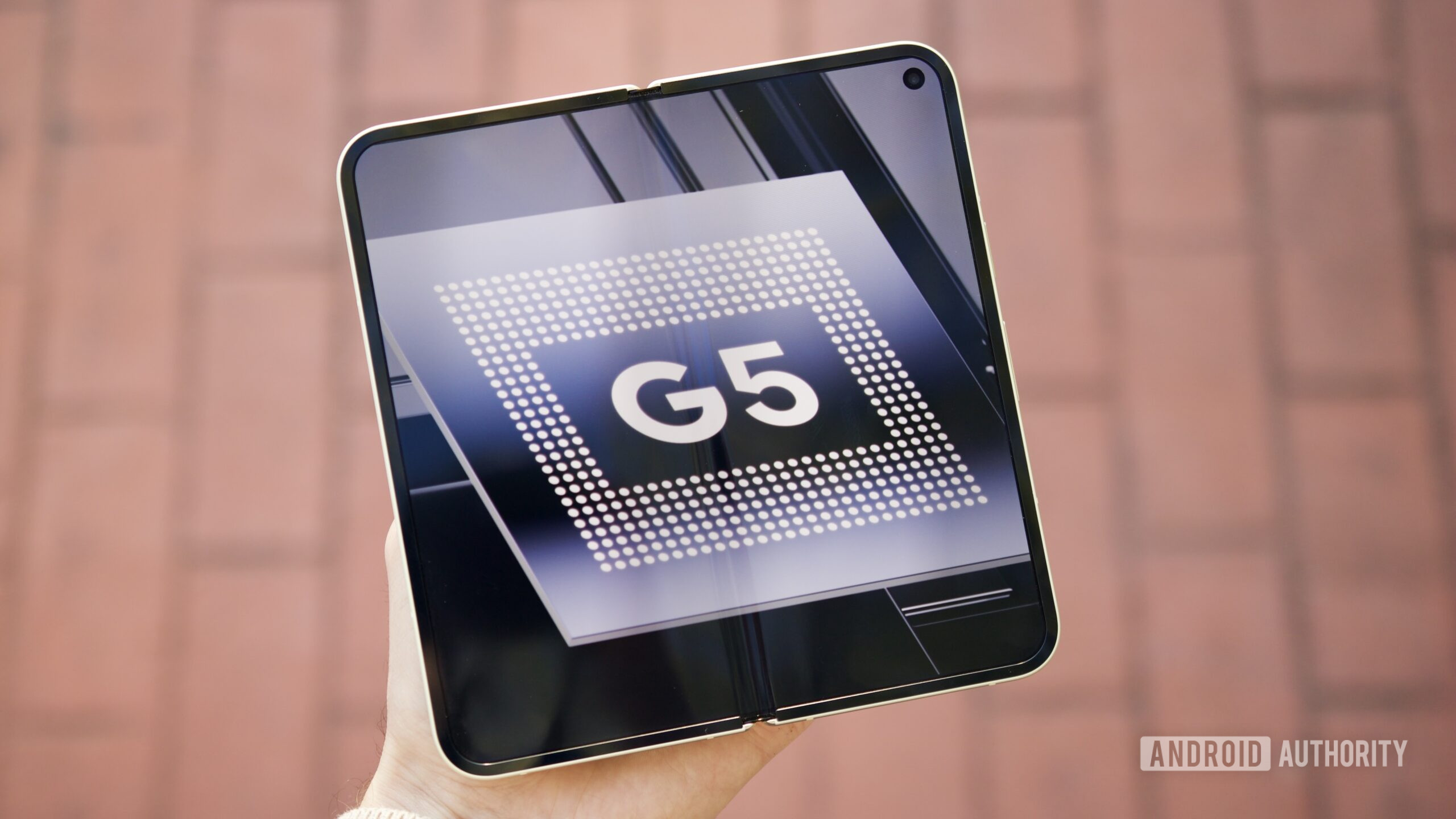
It has been almost five years since Google introduced its custom Tensor system-on-chip (SoC) lineup, a bold move designed to give Pixel phones a competitive edge in artificial intelligence and machine learning. The Tensor line was supposed to be Google's answer to Apple's A-series and Qualcomm's Snapdragon, focusing on on-device AI tasks such as real-time language translation, computational photography, and voice recognition. However, as a recent survey conducted by Android Authority reveals, the majority of Pixel fans are losing faith in Google's silicon ambitions.
Over 1,700 readers voted in the poll, and the results are stark: 69.2% of respondents believe Google should cancel the Tensor project altogether, citing that the company has not been able to make it work effectively. Only 30.8% of voters feel that Google should continue developing Tensor, arguing that the benefits—particularly in AI—still outweigh the negatives.
The Core Complaints: Battery, Heat, and Performance
The criticisms leveled against Tensor chips are not new. Since the first Tensor chip debuted in the Pixel 6 series, users have reported subpar battery life compared to rivals, excessive heat generation even during light tasks, and a noticeable drop in performance over time. While Google has made incremental improvements with each generation—Tensor G2, G3, G4, and the rumored G5—many feel the progress has been too slow.
Reader comments from the survey offer a deeper look into the frustration. One user, identified as rafaelnevesf, expressed disillusionment with Google's software support practices, stating: "Not that I care about this specific feature, but the company's behaviour towards new software features made me decide that my current phone will be my last Pixel. Google's level of enshitification it's just too much for me, it feels immoral to pay more than one thousand in a phone for that to happen so soon." This sentiment echoes a broader concern about Google's tendency to limit new AI features to newer Pixel models, leaving older—but still capable—devices behind.
Another highly upvoted comment from reader M highlights the competitive gap: "The absolutely pathetic thing about Tensor is it is supposed to be the absolute best in AI power on mobile chipsets. Yet, both the top Snapdragon and iPhone SoCs have equal AI performance and absolutely crush Tensor on the CPU and GPU side of things, all while also having better battery life." Indeed, benchmarks consistently show that even mid-range Snapdragon chips often outperform Tensor in raw CPU and GPU tasks, while drawing less power.
The AI Promise That Fell Short
Google's pitch for Tensor was always about AI. By designing its own chip, the company aimed to optimize neural engine performance for its own software, enabling features like Magic Eraser, Live Translate, and advanced HDR processing. In some ways, Tensor has succeeded—Pixel phones do offer unique AI-driven camera features and seamless voice recognition. However, as competitors like Apple and Qualcomm catch up, the advantage is shrinking. Moreover, the thermal and power efficiency issues undermine the very experience these AI features are supposed to enhance.
Stephen Radochia, a colleague who originally wrote the article that sparked the survey, argued that even the AI ambitions fall short for users of older but capable phones. The Tensor G1 and G2, for instance, are missing some of the latest AI capabilities that are exclusive to Tensor G4 and later, making the device feel obsolete sooner than expected. This strategy of gating features behind new hardware has left many Pixel veterans questioning their loyalty.
The Minority Voice: Why Some Still Believe in Tensor
Despite the overwhelming negativity, a resilient minority of 31% still see value in Tensor. Their arguments often draw a parallel to Apple's early A-series chips, which initially lagged behind competitors but eventually became industry leaders through years of iterative improvement. Reader Mars Tseng commented: "Google should stick with Tensor chips, just like Apple stuck with their A-series chips early on. But I'm not saying you should stick with it too."
Supporters note that custom silicon allows Google to tightly integrate hardware and software, potentially enabling features that wouldn't be possible with off-the-shelf chips. They also point out that Tensor's AI performance, while not the best in benchmarks, is often more than sufficient for real-world tasks. The hope is that with each new generation, Google will close the gap in efficiency and raw power.
Another reader pointed out that Google has a record of persistence—consider how long it took for the Pixel camera to become consistently top-tier through computational photography, even with mediocre sensors. They argue that Tensor should be given the same commitment.
Looking Ahead: Tensor G6 and the Pixel 11
Leaks and rumors about the upcoming Pixel 11 series suggest that Google has no intention of abandoning its custom chip strategy. The Tensor G6 is expected to feature more powerful Arm cores, potentially bridging the performance gap with Snapdragon. However, the same leaks also hint at a middling GPU sidegrade, which could disappoint gamers and heavy users.
In a separate poll about what users want most from the Pixel 11 series, battery life topped the list with 52% of 1,623 votes, followed by improved performance at 23%. Faster charging, versatile cameras, and other features received single-digit percentages. This data underscores that the core issues with Tensor—battery and performance—are precisely what users care about most. If the Tensor G6 cannot meaningfully improve these areas, the already waning user confidence may drop further.
It's also worth noting that the mobile silicon landscape is evolving rapidly. Qualcomm's Snapdragon X-series cores, based on ARM's reference designs, are delivering stunning efficiency and performance. Apple's own chips continue to set the standard for power efficiency. Google's Tensor, built on a mix of ARM cores and Google-designed components—with some manufacturing on Samsung's foundry—has struggled to keep pace. A potential shift to TSMC for future Tensor chips, as some rumors suggest, could be a game-changer, but that may not happen until at least the Tensor G7.
Historical Context: Google's Silicon Journey
Before Tensor, Google relied on Qualcomm Snapdragon chips for its Nexus and early Pixel phones. The decision to develop a custom SoC was driven by a desire for more control over hardware-software integration and AI capabilities. Google's first foray into custom silicon was actually the Pixel Visual Core in 2017, an image signal processor that accelerated HDR+ processing. This was followed by the Titan security chip and then the full Tensor SoC in 2021.
Each Tensor generation has brought incremental improvements: Tensor G2 improved modem efficiency and added some AI features, Tensor G3 introduced a more capable GPU but still lagged in CPU, and Tensor G4 refined power management but did not close the gap. The Tensor G5, rumored to be the first to use TSMC manufacturing, might finally address thermal issues, but it's still not expected to surpass Snapdragon 8 Gen 3 in raw performance.
By comparison, Apple's A-series chips were already class-leading by the third generation. Qualcomm's Snapdragon 8-series has also maintained a consistent lead in CPU and GPU performance. Google's Tensor has never led a single benchmark category, except perhaps in NPU (neural processing unit) benchmarks for specific AI tasks. This has left many wondering whether Google's investment in custom silicon is paying off.
The survey results paint a clear picture: the vast majority of Pixel fans are ready to give up on Tensor. They want Google to either return to using Snapdragon or partner with another chip maker. Yet the 31% who remain hopeful represent a significant base. Google must decide whether to listen to the majority or bet on long-term loyalty. The Pixel 11 series, likely arriving in 2026, will be a crucial test. If the Tensor G6 fails to impress, the backlash could be final.
What has been your experience with Tensor chipsets thus far? Have you noticed a steady progression or a spate of unmet promises from Google? Would you be more likely to purchase a Pixel with another chipset? The debate continues, and your voice matters.
Source: Android Authority News