
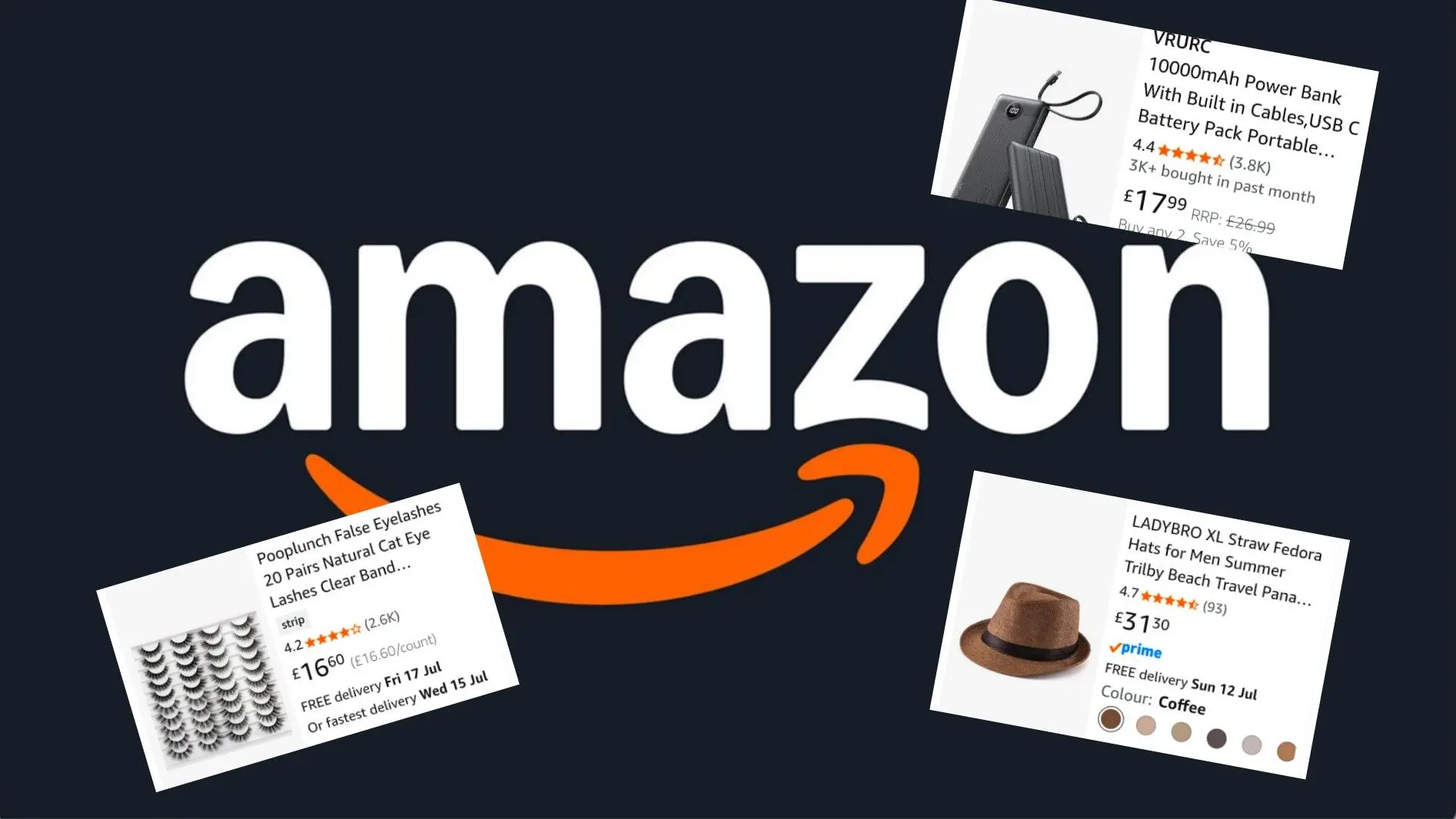
Amazon, the world's largest online retailer, faces a growing problem: a flood of low-quality, often deceptive products that many shoppers now call 'slop'. These items, frequently generated by AI or sold by fly-by-night sellers, clutter search results, waste user time, and erode trust in the platform. But a new browser extension, aptly named 'Clean Amazon', promises to cut through the noise and restore the shopping experience.
The term 'slop' has gained traction in tech circles to describe content—whether text, images, or products—that is produced with minimal effort and quality, often using generative AI. On Amazon, this manifests as product listings with generic descriptions, obviously Photoshopped images, reviews that sound bot-written, and brands that appear and disappear overnight. For shoppers, finding a genuine, quality item requires sifting through pages of such dross.
The scale of the problem
Amazon's marketplace model, which allows third-party sellers to list products directly, has been a key driver of its growth. However, it also opens the door to abuse. In 2023 alone, Amazon reported blocking over 6 million suspected counterfeit products before they could be listed. Yet many more slip through. A 2024 study by the nonprofit Consumer Reports found that nearly 40% of electronics accessories on Amazon had either misleading descriptions or signs of fake reviews. The 'slop' problem is especially acute in categories like phone chargers, kitchen gadgets, and novelty items.
The rise of generative AI has exacerbated the issue. Sellers can now use tools like ChatGPT to write product descriptions, DALL·E to create images, and automated systems to generate thousands of reviews in minutes. This creates a veneer of legitimacy around products that are often poorly made or even dangerous. For example, recalled items sometimes reappear under new seller names with AI-generated branding.
How 'Clean Amazon' works
The extension, developed by a small team of independent engineers, operates on a dual-pronged approach: community curation and algorithmic filtering. Once installed, it adds a toggle to Amazon's search results page. When activated, the extension hides listings that match a set of criteria associated with slop:
- Low rating with high review count: If a product has an average rating below 3 stars but more than 100 reviews, it’s likely a poorly made item that generated complaints.
- Non-verified purchase reviews: Listings where a significant percentage of reviews lack the 'Verified Purchase' badge are flagged—these are often paid or fake reviews.
- Generic brand names: Items from brands with names like 'TechGadgetPro' or 'HomeSolution2024' are hidden, as these are often temporary seller fronts.
- Common image patterns: Using computer vision, the extension detects if product images appear stock-like or are reused across multiple unrelated listings.
Users can also manually report listings as 'slop', which feeds into a community database. Over time, the extension learns which sellers and product types tend to produce low-quality goods. The developers emphasize that the tool is not perfect—some legitimate small sellers might be incorrectly flagged—so users can always reveal hidden items with a click.
Why existing Amazon filters fall short
Amazon already offers filters, such as 'Average Customer Review' and 'Brand', but they are blunt instruments. Sorting by highest average rating often elevates products with few reviews but a perfect score—a classic sign of manipulation. The 'Amazon's Choice' badge, once a trusted hallmark, has been criticized for being awarded to items that meet sales speed, not necessarily quality. Moreover, Amazon’s own AI moderation has been inconsistent. In 2025, a Wired investigation found that the company's automated systems approved over 70% of test product listings that contained deliberate errors like 'free iphone' for a $5 cable.
Clean Amazon’s advantage is its independence. Not beholden to seller revenue, the extension can apply stricter standards. It also addresses the information asymmetry between shoppers and sellers. As one early user put it: 'I spent 45 minutes comparing charging cables. With Clean Amazon, I found a good one in under 30 seconds.'
Broader implications for e-commerce
The rise of tools like Clean Amazon signals a growing distrust in platform curation. Amazon, eBay, and other marketplaces have long relied on a 'let the buyer beware' model, but the explosion of AI-generated slop is eroding that foundation. If third-party tools become necessary for a decent shopping experience, platforms risk losing user loyalty. Some experts argue that Amazon should adopt similar measures itself—perhaps by requiring sellers to prove product quality through independent testing or by using advanced anomaly detection to flag suspicious listings.
However, Amazon faces a conundrum: stricter quality controls could reduce the number of sellers and products, potentially lowering revenue. In 2024, third-party sellers contributed over 60% of Amazon's paid units. Many of those sellers are legitimate, but the bad actors impose a 'slop tax' on everyone—time wasted, returned products, and environmental waste from shipping cheap items that end up in landfill.
Community and developer response
Clean Amazon has quickly gained traction on social media and tech forums. On Reddit's r/Amazon, users share before-and-after screenshots showing drastically cleaner search results. The extension's GitHub repository has amassed over 5,000 stars, and volunteers have contributed translations into eight languages. The developers have resisted monetizing the tool, instead accepting donations via Open Collective. They have also published a transparency report detailing which products they have flagged most frequently.
Of course, there are limitations. The extension works only on Amazon’s desktop website, not the mobile app or mobile site. Some users have reported that it sometimes hides products from well-known third-party sellers that simply have a few bad reviews. The developers are working on a machine learning model that can differentiate between a poorly made product and one that just received unfair negative reviews. Another challenge is the arms race: as the extension becomes popular, slop sellers may adapt by changing their tactics.
Still, the initiative has inspired similar projects for other marketplaces. A spin-off called 'Ebay Clean' is in beta testing, and a community-driven plugin for Etsy is under discussion. The broader movement toward user-empowered filtering reflects a shift in how people interact with large platforms: rather than relying on the platform to fix its problems, users are taking matters into their own hands.
For now, Clean Amazon remains a niche but powerful tool. It has processed over 2 million flagged products and claims to have saved users an average of 15 minutes per shopping session. Whether it can scale and maintain accuracy in the face of adversarial sellers is an open question. But it has already highlighted a fundamental issue: in the age of AI-generated abundance, quality becomes a premium that cannot be guaranteed by the marketplace alone.
Source: Windows Central News