

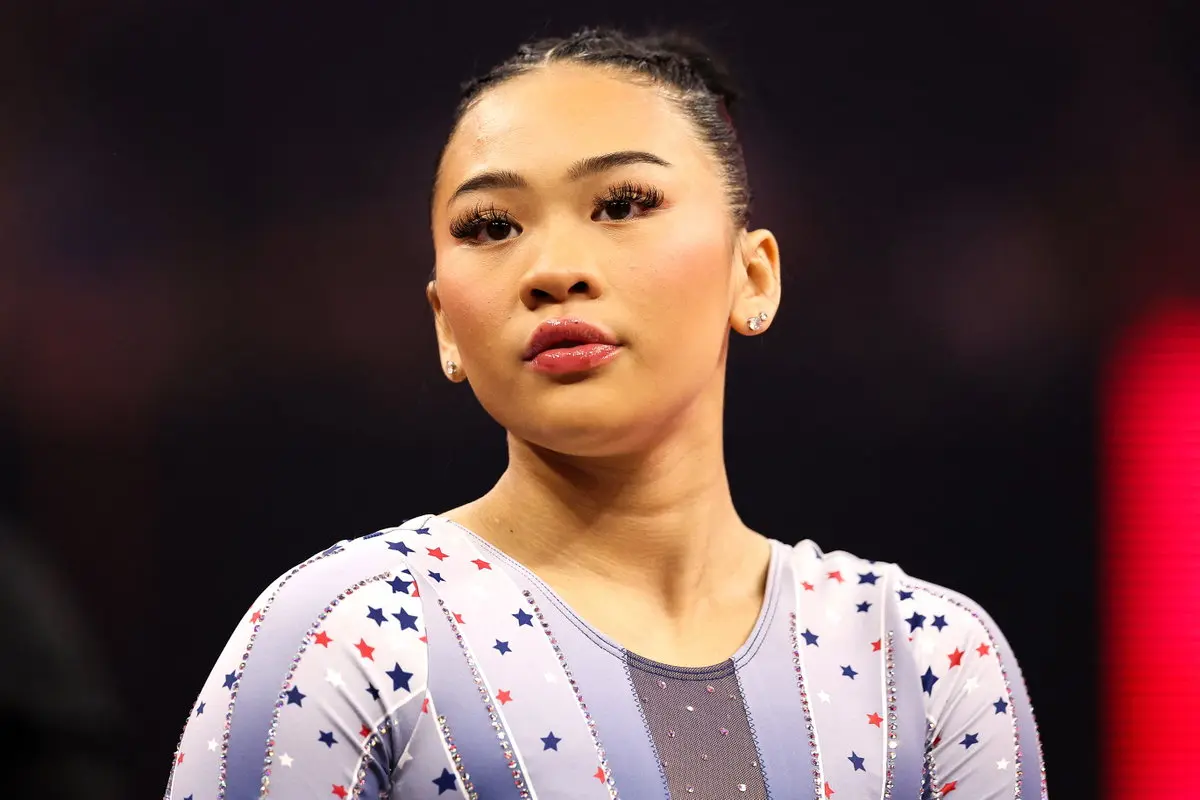
Five years after her stunning performance at the Tokyo Olympics, Suni Lee has pulled back the curtain on the psychological toll of competing at the highest level. In a candid interview with FOX 9 Minneapolis-St. Paul on June 24, 2026, the 23-year-old gymnast admitted that she “definitely have blacked out a couple of times” during competitions, unable to remember entire routines because of the overwhelming stress. The revelation offers a rare glimpse into the mental battlefield that elite gymnasts navigate behind their seemingly effortless performances.
Lee’s journey began long before Tokyo. Born Sunisa Lee in 2003 in St. Paul, Minnesota, she started gymnastics at age six at Midwest Gymnastics Center in Little Canada. Her Hmong-American heritage made her a trailblazer, and her rise through the junior ranks culminated in a spectacular senior debut. By 2019, she was already a national champion on floor exercise and a world silver medalist on uneven bars. But when the Tokyo Olympics arrived, she carried not only the weight of expectations but also a lingering foot and ankle injury that had plagued her for months.
The Tokyo Turning Point
Few predicted that the 18-year-old Lee would become the face of Team USA in her first Olympic Games. That changed when Simone Biles withdrew from the team final after the vault due to the “twisties,” a mental block that made it dangerous for her to compete. Suddenly, the United States found itself trailing the Russian Olympic Committee (ROC). Lee, who had been scheduled to perform on uneven bars, had no time to process the shift. She stepped onto the apparatus and delivered a 15.400, the highest score of the event, helping the U.S. secure a silver medal.
To the world, it looked like a textbook moment of courage under fire. But Lee’s recent comments paint a different picture. “I remember when I was competing, I definitely have blacked out a couple of times and not remembered what’s happened because it’s just so stressful in the moment,” she said. “So hard to feel anything else.” This admission aligns with broader conversations about athlete mental health, following Simone Biles’s own struggles and the subsequent shift in sports culture toward prioritizing psychological well-being.
Health Struggles and a Comeback
Lee’s path after Tokyo was not a straight line of success. In 2023, she was diagnosed with two rare kidney diseases, causing severe swelling in her face, hands, and legs. She stepped away from training as her body failed to respond normally. For months, she could not even do basic gymnastics drills. The condition forced her to reconsider everything—her career, her identity, and her future.
Slowly, she regained strength through a careful regimen of medication, rest, and modified exercise. She worked her way back into competition, eventually qualifying for the Paris 2024 Olympics. There, she helped Team USA win another team gold, proving her resilience. She also earned bronze medals in the individual all-around and on uneven bars, cementing her legacy as one of the most decorated American gymnasts of her generation.
College Career and Life Beyond Gymnastics
Between Olympics, Lee had forged another remarkable path: she became the first reigning Olympic all-around champion to compete in NCAA gymnastics. She joined Auburn University from 2021 to 2023, winning an NCAA title on balance beam in 2022 and an SEC title on uneven bars in 2022, racking up multiple perfect 10.0 scores. Her college career demonstrated that elite gymnasts can thrive outside the national team system, and it endeared her to a new generation of fans.
After Paris, Lee has expanded her portfolio beyond the gym. She has collaborated with brands like Lululemon and American Eagle and graced the 2025 Sports Illustrated Swimsuit Issue at age 22. She is now 23 and has entered fashion, media, and ambassadorial roles. Yet gymnastics remains a part of her life. She continues light training at her childhood gym in Minnesota, keeping the door open for a potential return at the 2028 Los Angeles Olympics.
The Weight of the Moment
Lee’s admission of blacking out is not an isolated phenomenon. Many elite athletes have described similar dissociative experiences under extreme pressure. In gymnastics, where routines are performed in seconds and mistakes can lead to injury, the mind sometimes checks out to protect itself. Lee’s openness helps normalize these experiences and encourages younger athletes to speak up about mental health.
During her visit to the Special Olympics USA Games on June 23, she spent time with athletes, watching events and offering advice. She emphasized the importance of breathing, trusting confidence, and seeking mental health care—resources that she says she needed when she was competing. “I feel like it’s something I needed when I was competing,” she noted, reflecting on the constant health checks and mental health support available at the Special Olympics.
Lee’s own battles with kidney disease, combined with the pressure of two Olympic cycles, have given her a unique perspective. She understands that success is not measured solely by medals but by well-being. Her uncertain stance on LA 2028 reflects that wisdom: she wants to see how her body and mind feel before committing.
Legacy and What Comes Next
Whether Lee returns to elite competition or not, her impact on gymnastics is undeniable. She bridged the gap between Olympic glory and college athletics, she overcame a severe illness, and she now uses her platform to advocate for mental health. Her story is one of triumph, but it is also one of vulnerability—a reminder that behind every perfect routine is a human being grappling with immense pressure.
As she trains lightly at Midwest Gymnastics Center, the same place where she first tumbled as a six-year-old, Lee embodies the balance between ambition and self-care. Her blackout story will undoubtedly become part of the larger conversation about athlete welfare, and it may inspire the next generation to prioritize their mental health as much as their physical performance.
For now, Suni Lee continues to navigate two worlds: the quiet life outside the gym and the possibility of one more Olympic moment. She has earned the right to take her time, and the gymnastics world will be watching—but this time, not with expectations, but with understanding.
Source: Yahoo Sports News