

Lizzo's Defiant Response to Album Flop Reports
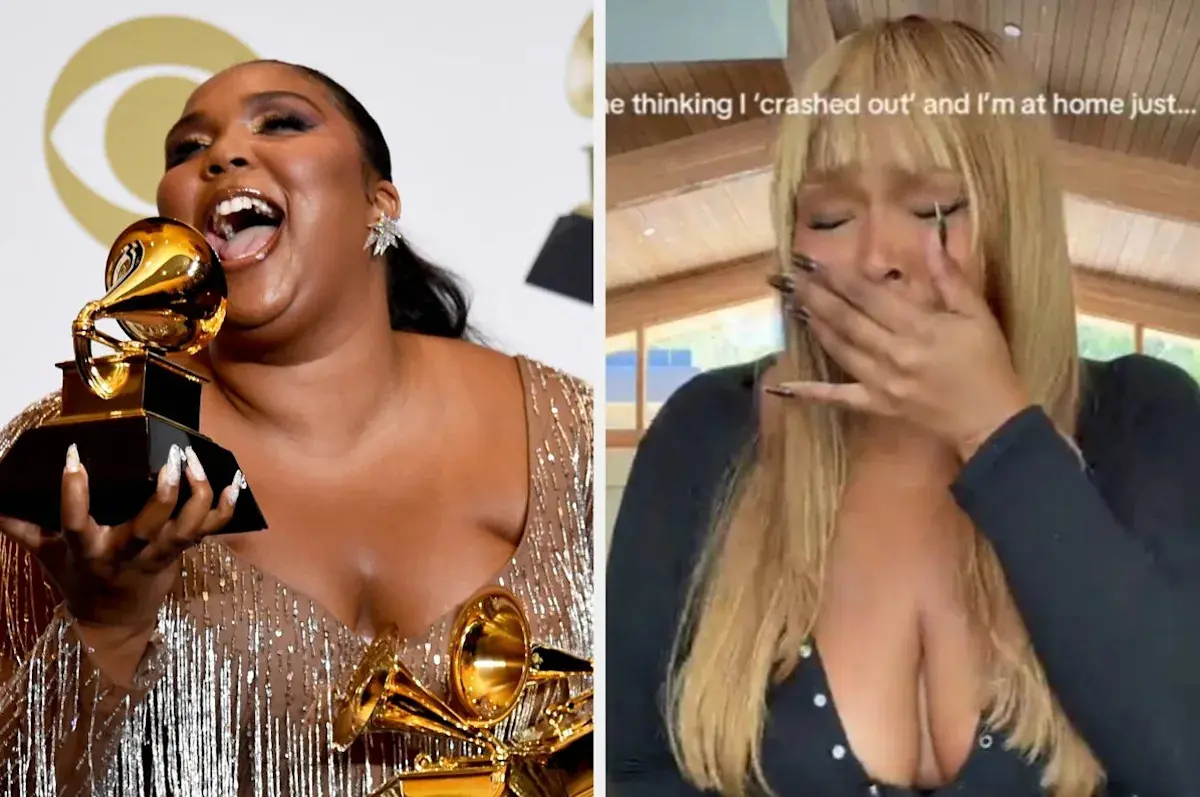
Lizzo has once again found herself at the center of a media firestorm, this time following a report that scrutinized the commercial performance of her fifth studio album, Bitch. The singer, who rose to fame with smash hits like 'Truth Hurts' and 'About Damn Time,' responded with a characteristically defiant TikTok video, dancing to one of her new songs with the caption: 'Imagine thinking I crashed out and I'm at home just…' The move drew mixed reactions, with some praising her resilience and others accusing her of pretending to be unbothered.
Background: Lizzo's Meteoric Rise
Lizzo's career exploded in 2019 when her 2017 single 'Truth Hurts' finally reached mainstream success, topping the Billboard Hot 100 for seven weeks. She followed up with hits like 'Juice' and 'Tempo,' and her 2016 single 'Good As Hell' also climbed the charts years after its release. At the 2020 Grammys, she received eight nominations—the most of any artist that year—and won three awards. In 2023, she made history by becoming the first Black female singer since Whitney Houston to win Record of the Year for 'About Damn Time.' She was selling out arenas worldwide and seemed unstoppable.
The Downfall Begins
However, the tide began to turn in 2023 when three former backup dancers filed a lawsuit against Lizzo, her production company, and her dance captain, accusing them of sexual, religious, and racial harassment, disability discrimination, assault, false imprisonment, and body-shaming. Lizzo denied all allegations, but the legal drama severely damaged her public image. A second lawsuit followed, though it was later dismissed because the plaintiff technically worked for Lizzo's tour company, not Lizzo herself. The first case remains ongoing, with some counts thrown out—including the body-shaming claims—but no final verdict yet.
The controversy had an immediate impact on her career. Her 2025 single 'Love in Real Life' and the mixtape My Face Hurts From Smiling failed to replicate her earlier chart success. By the time she released her album Bitch in June 2026, public interest had waned dramatically.
The Rolling Stone Report and Its Findings
Recently, a prominent music publication published a scathing article analyzing why Lizzo's career had fizzled. According to the report, Bitch sold only 2,649 copies in its first week and generated less than 2.7 million streams. In its second week, streaming numbers dropped below one million, and sales plummeted to just 650 copies. The article interviewed several record executives, who theorized that Lizzo never had a core fanbase, that her music no longer resonated, and that the lawsuits had eroded public trust.
The report also noted that her lead single, 'Don't Make Me Love U,' released in March, did not chart on the Billboard Hot 100, nor did the follow-up single 'Bitch.' This starkly contrasted with her peak years, when every release seemed to dominate the charts.
Lizzo's Earlier Explanation
Before the detailed report, Lizzo had already addressed the decline. In early June, a viral tweet asked where her fans had gone, and Lizzo responded: 'I actually can answer this: the industry changed so much in the last 3 yrs. streaming replaced radio & I was a radio darling. That’s how my fans discovered my music. Not to mention the very obvious & public attack on my career changed things. But I’m out here doing my absolute best and u can’t knock a bitch for that 🫶🏾' Her explanation highlighted a genuine shift in how music is consumed—shifting from radio play to streaming algorithms. However, many critics argued that other artists have made similar transitions successfully, suggesting that her legal troubles were the real culprit.
The TikTok Response and Public Reaction
After the detailed report was published, Lizzo took to TikTok to share a video of herself dancing joyfully to one of her new songs. The video's caption read: 'Imagine thinking I crashed out and I’m at home just…' The post immediately went viral, attracting millions of views. Comments were sharply divided. One of the top comments read: 'How she got more likes than album sales,' while another user said: 'Not you trying to convince us you are unbothered.' However, many fans leaped to her defense, asking: 'Y'all are bullies. What's your goal by telling her her album flopped?' and 'Hating is so normalized these days.'
The mixed reaction underscores the polarized public perception of Lizzo. Some view her as a victim of cancel culture and a changing industry, while others see her as a performer who has failed to adapt or take accountability for the allegations against her.
Industry Context: Streaming vs. Radio
Lizzo's point about the shift from radio to streaming is valid. In the early 2020s, radio still played a significant role in breaking new music, and Lizzo benefited heavily from being a 'radio darling.' As streaming platforms like Spotify and Apple Music have increasingly dominated, the methods of music discovery have changed. Artists now need to work with playlists, social media virality, and constant content creation to maintain visibility. Lizzo has a strong social media presence, but her music may no longer fit the algorithmic preferences of streaming platforms, which often favor new or trending sounds.
Additionally, the public attack from the lawsuits is undeniable. While the legal cases remain unresolved, the allegations have tarnished her brand. Many fans and industry insiders are still waiting for a resolution or a clearer explanation from Lizzo herself. Her refusal to engage deeply with the criticism may further alienate those who want accountability.
Comparisons to Other Artists
Several other musicians have faced similar career dips after controversies or industry changes. For example, R. Kelly and Chris Brown continued to have fans but faced significant commercial declines after legal troubles. However, some artists have managed to bounce back by reinventing their sound or public image. Lizzo has so far stuck to her signature style of upbeat, body-positive pop and hip-hop, but the market for that sound might have shifted. The record executives in the report suggested that her music simply isn't as compelling as it once was.
Another factor is the oversaturation of the market. Since 2020, numerous new female pop stars have emerged—Olivia Rodrigo, Doja Cat, Ice Spice, and others—each capturing the zeitgeist with fresh sounds. Lizzo's last major hit was in 2022, and she hasn't evolved her style enough to compete in this new landscape.
The Legal Battles Continue
The lawsuits, though partially dismissed, continue to cast a shadow over her career. The second suit, filed by a former tour employee, was thrown out because the plaintiff was not directly employed by Lizzo herself but by her touring company. However, the first lawsuit from the three backup dancers is still active. Some claims of harassment and retaliation remain. Without a final verdict, the public remains split on whether Lizzo is guilty or being unfairly targeted. Her legal team has consistently denied all allegations and has accused the dancers of trying to extort money.
Until the cases are fully resolved, the cloud of controversy will likely persist. In the entertainment industry, unresolved lawsuits often lead to a loss of endorsements, fewer tour bookings, and reduced streaming numbers. Lizzo's decision to dance on TikTok rather than issue a detailed statement could be seen as either a sign of confidence or an avoidance tactic.
The Future of Lizzo's Career
It's uncertain what the future holds for Lizzo. She continues to release music and engage with fans online, but the numbers suggest a significant decline. Whether she can rebuild her fanbase depends on several factors: the outcome of the lawsuits, her ability to produce chart-topping songs, and whether the industry gives her another chance. Some artists have made comebacks after years of being blackballed, but it often requires a strategic pivot—something Lizzo has not yet demonstrated.
Her TikTok video may be an attempt to show that she is unfazed, but the audience's response indicates that many are not convinced. The top comment mocking her album sales versus likes shows that her detractors are still loud. However, the supportive comments also show a loyal base that may grow if she can deliver a hit that resonates beyond her established fans.
As the music industry continues to evolve, Lizzo's case serves as a cautionary tale about the fragility of fame in the streaming era. Even artists with massive success can fall if they fail to adapt or if their reputation is tarnished. For now, Lizzo remains defiant, but whether that defiance translates into a career resurgence remains to be seen.
Source: Yahoo Entertainment News