

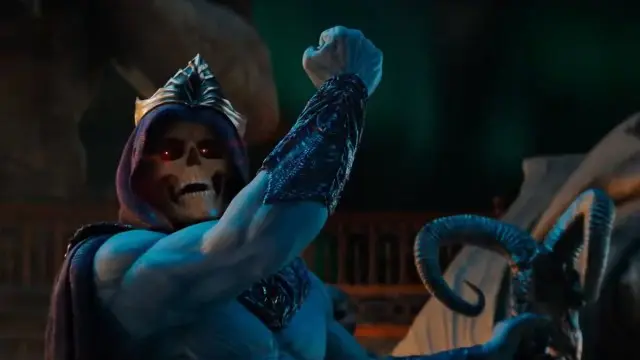
Jared Leto's tenure as the Joker in the DC Extended Universe has long been a subject of debate among fans and critics. Many argued that his performance was hampered by severe cuts to his screen time in Suicide Squad (2016). However, his recent portrayal of Skeletor in Masters of the Universe (2026) suggests otherwise. The new film gives Leto far more time to develop his character, yet he fails to capture the essence of the iconic villain, proving that his earlier failure was no fluke.
The Joker Controversy
When Suicide Squad was released, Jared Leto's Joker appeared in only a handful of scenes. Director David Ayer had originally planned a more substantial role, including a subplot where the Joker teams up with Enchantress in the final act. Most of this material was left on the cutting room floor. Fans of Leto and the Snyder-verse insisted that given the opportunity, Leto could have delivered a performance rivaling Heath Ledger's iconic turn in The Dark Knight. They pointed to his method acting commitment—including sending used condoms and dead animals to co-stars—as proof of his dedication. Yet audiences largely found his portrayal off-putting, a grimy gangster who occasionally laughed but rarely inspired true menace or humor.
Leto's defenders held onto the belief that more screen time would have salvaged his Joker. The release of the Zack Snyder's Justice League cut in 2021 included additional Joker footage, but it did little to change public opinion. The character remained an awkward fit within the broader DCEU. Now, with Masters of the Universe, Leto has been given not just more minutes on screen but also a character with a rich tradition of campy villainy. Skeletor, like the Joker, thrives on a blend of menace and theatrical humor. Leto, however, doubled down on the grimness, neglecting the comedic aspects that make these villains memorable.
Skeletor's Legacy and Leto's Misstep
Skeletor has been a beloved antagonist since the original Masters of the Universe franchise debuted in the 1980s. Voiced by Alan Oppenheimer in the classic Filmation cartoon, Skeletor was a cackling, scheming sorcerer who reveled in his own villainy. Later iterations, including Mark Hamill's portrayal in the 2002 series, maintained that balance of sinister and silly. The live-action Masters of the Universe film directed by Travis Knight aimed to honor that legacy while updating it for modern audiences. The cast, including Nicholas Galitzine as He-Man and Camila Mendes as Teela, understood the assignment: play the material with earnestness but allow the inherent camp to shine through. Leto, however, approached Skeletor as a purely dramatic figure.
In the film, Skeletor delivers soliloquies about the nature of power and his desire to conquer Eternia, only to pause awkwardly before attempting a punchline. The shift in tone jars viewers, disrupting the flow of scenes. Critics have noted that Leto's performance feels disconnected from the rest of the movie. The CGI team worked hard to give Skeletor expressive facial animations, but Leto's vocal choices undermine their efforts. He speaks in a guttural whisper that lacks the flamboyant energy audiences expect. This is a far cry from the playful yet threatening mannerisms of previous Skeletors.
Leto's problems with both characters stem from a fundamental misunderstanding of what makes them compelling. The Joker and Skeletor are, at their hearts, showmen. They seek to provoke a reaction—laughter, fear, or both. Leto's Joker was a silent predator; his Skeletor is a brooding schemer. Both neglect the performative aspect that has made these characters endure for decades.
Background on Jared Leto's Acting Style
Jared Leto is no stranger to transformative roles. He won an Academy Award for Dallas Buyers Club and earned praise for his performance in Requiem for a Dream. His method acting has become legendary; he lived as his character Rayon during Dallas Buyers Club and lost significant weight for The 27 Club. Yet that same approach has backfired when applied to larger-than-life comic book villains. The dark, immersive style that suited drug addicts and AIDS patients does not translate to the operatic world of superheroes and fantasy.
In contrast, actors like Heath Ledger and Joaquin Phoenix found ways to blend method preparation with inherent theatricality. Ledger locked himself in a hotel room for a month to develop the Joker's voice and mannerisms, but his performance still included moments of unhinged humor. Even Mark Hamill, a classically trained actor, uses his voice to convey both evil and mirth. Leto's approach has been too one-note, stripping away the complexity that makes villains interesting.
Masters of the Universe Reception and Implications
Masters of the Universe received mixed to positive reviews upon its release. Critics praised the film's visuals and the performances of the supporting cast but singled out Leto as a weak link. The film's box office performance was modest, and many attributed its lack of breakout success to the lackluster villain. Comparisons to other recent comic book films—such as The Batman with Paul Dano's Riddler or Joker with Phoenix—highlighted what Leto missed. Those villains were terrifying precisely because they felt unhinged yet coherent. Leto's Skeletor simply felt like a bad impression.
The film's production had its own challenges. Leto reportedly insisted on method acting on set, wearing prosthetics and makeup for hours and staying in character between takes. This created tension with his co-stars, who found the approach disruptive. Director Travis Knight had to work around Leto's demands, which sometimes limited the spontaneity needed for the film's action sequences. The result is a performance that feels rehearsed rather than organic.
For the DCEU, Leto's Skeletor performance puts a final nail in the coffin of his Joker legacy. No longer can fans claim that he needed more time. With abundant screen time and a role that allowed for both sinister and campy moments, Leto proved that his interpretation was fundamentally flawed. This realization might influence future casting decisions for villainous roles in major franchises. Studios may now prioritize actors who can embody the full range of a character, not just the dark aspects.
Comparative Analysis with Other Leto Roles
It is worth noting that Jared Leto has succeeded in other eccentric roles. His performance as Paolo Gucci in House of Gucci was widely praised for its flamboyance. He played the role with a theatricality that fit the film's tone. Similarly, his turn in Blade Runner 2049 as Niander Wallace was chilling and memorable, thanks to a controlled, quiet menace. The difference lies in the material: those characters were written with a consistent tone. The Joker and Skeletor require a balance of humor and threat that Leto has not been able to achieve.
This pattern suggests that Leto is best suited for roles that allow him to disappear into realistic, often tragic figures. When asked to inhabit a cartoonish villain, his instincts fail him. He cannot pivot from grim to playful, and the result is a performance that feels like a parody of method acting rather than a genuine portrayal.
Future of the Masters of the Universe Franchise
Despite the criticism of its villain, Masters of the Universe has laid groundwork for potential sequels. The film ended with a tease of Skeletor's return, but fan enthusiasm for seeing more of Leto's version is tepid. Some have speculated that future installments might recast the role, though no official announcements have been made. The film's box office performance will likely determine whether the franchise continues. If a sequel is greenlit, the producers may opt for a different approach to the character, perhaps drawing on the Warner Bros. Animation experience that succeeded with Mark Hamill's Skeletor.
In the meantime, Masters of the Universe stands as a case study in what happens when an actor misreads the tone of a project. It also puts to rest the decade-long argument that Jared Leto's Joker was a victim of editing. With a fair chance to showcase his talent, Leto delivered a performance that confirms his DCEU failure was no fluke—it was a fundamental mismatch between actor and role. The lesson for Hollywood is clear: not every serious actor can play a comic book villain, and no amount of uncut footage can fix a performance that misses the character's core.
Source: Yahoo Entertainment News