

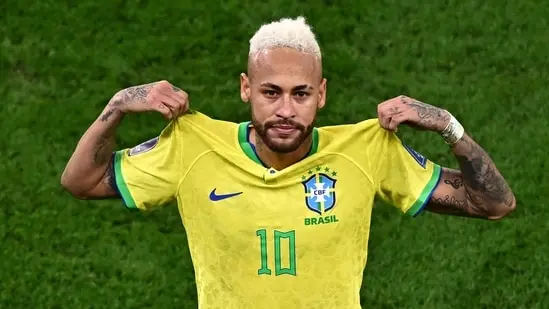
In a move that has captured the attention of football fans worldwide, Brazil's national team coach Carlo Ancelotti has included Neymar in the squad for the 2026 FIFA World Cup. The announcement comes amid widespread speculation over the star forward's physical condition, following a series of injuries that have plagued his recent seasons. Ancelotti, known for his pragmatic approach, has opted to bank on Neymar's immense experience and proven ability to change games at the highest level.
A controversial selection
Neymar's inclusion in the 26-man roster is not without its detractors. Critics point to his limited playing time over the past two years, with the 34-year-old having missed significant portions of club and international action due to recurring muscle problems and a serious ankle injury. His most recent setback occurred during a crucial Copa America qualifier, raising questions about his ability to withstand the rigors of a month-long tournament. However, Ancelotti defended his decision, stating, "Neymar is a generational talent. Even at 80% fitness, he possesses qualities that few players in the world can match. We are building a squad that can win the World Cup, and Neymar is a key part of that plan."
The Brazilian Football Confederation (CBF) released a statement confirming that Neymar had undergone extensive medical assessments in the weeks leading up to the squad announcement. According to team doctors, the player has made significant progress in his rehabilitation and is expected to be fully fit by the start of the tournament. Nevertheless, the risk remains, and Ancelotti has prepared contingency plans, including the inclusion of younger forwards like Vinicius Junior and Rodrygo, as well as experienced alternatives such as Gabriel Jesus.
Neymar's legacy on the line
For Neymar, this World Cup represents a critical juncture in his storied career. Having debuted for Brazil in 2010, he has amassed over 120 caps and scored 79 goals, placing him second on the all-time scoring list behind Pelé. Yet, his tenure with the national team has been marked by near-misses and heartbreaks. The 2014 World Cup ended in a devastating semifinal loss to Germany, a match Neymar missed due to injury. In 2018, Brazil fell to Belgium in the quarterfinals, and in 2022, they were eliminated by Croatia on penalties, despite Neymar scoring a sensational extra-time goal. The 2026 tournament offers a chance at redemption, but the clock is ticking.
Ancelotti, who took over as Brazil's head coach in early 2024, has emphasized the importance of blending youth with experience. "Neymar is not just a player; he is a reference point for the younger generation," the Italian tactician said during the squad announcement press conference. "His vision, dribbling, and creativity are unmatched. When he is on the pitch, opponents have to adjust their entire defensive structure. That kind of influence cannot be replicated easily."
The supporting cast
Brazil's squad for 2026 is packed with talent across all positions. Alongside Neymar, the attack features Vinicius Junior, who has emerged as a Ballon d'Or contender after stellar seasons with Real Madrid, and Gabriel Martinelli, whose pace and work ethic have made him a fan favorite. The midfield is anchored by Casemiro, now a veteran presence, and rising star Bruno Guimaraes, while the defense boasts the experience of Marquinhos and the emerging talent of Gabriel Magalhaes. Goalkeeping duties will likely be shared between Alisson Becker and Ederson, both world-class shot-stoppers.
Despite the depth, questions remain about Brazil's tactical balance. Ancelotti has historically favored a structured, possession-based approach, but incorporating Neymar's free-spirited style requires careful planning. In recent friendlies, the coach has experimented with a 4-2-3-1 formation, positioning Neymar as a central playmaker behind a lone striker. This role allows him to drift into wide areas and create overloads, reducing his defensive responsibilities and preserving his energy for attacking bursts.
Injury management and preparation
One of the key factors behind Neymar's selection is the advancement in sports science and medical care. Brazil's team doctors have designed a personalized training regimen that focuses on strength conditioning and load management. Neymar has been working with the same physiotherapist who oversaw his recovery from the ankle surgery in 2023, and reports indicate that his body fat percentage and muscle mass are at optimal levels. However, the real test will come during the tournament's group stage, where Brazil faces a tough group including France, Cameroon, and South Korea. The intensity of matches will demand full physical commitment.
Ancelotti has already indicated that he will rotate his squad during the group phase to keep players fresh. "Neymar might not start every game," the coach admitted. "But if we need a moment of magic, he will be there. That is the luxury of having a player of his caliber on the bench." This strategy mirrors the approach used by many successful teams in recent World Cups, where impact substitutions have often decided crucial matches.
Reactions from the football world
The announcement has divided opinion among pundits and former players. Legendary Brazilian striker Ronaldo Nazário voiced his support, saying, "Neymar carries the hopes of a nation. He has earned the right to play in this World Cup through years of dedication. I believe he can silence the critics." On the other hand, former Brazil captain and current TV commentator Cafu expressed caution. "We have to be realistic. Neymar's body has endured a lot. If he breaks down during the tournament, it could cost us dearly. Ancelotti must have a backup plan."
Bookmakers initially shortened Brazil's odds slightly after the squad announcement, reflecting cautious optimism. Fans worldwide have taken to social media to express their excitement and anxiety. Many recall Neymar's stunning performances in the 2014 group stage, where he scored four goals in three games before his infamous injury. There is a sense that this could be his final opportunity to lead Brazil to a sixth world title.
Historical context
Brazil's relationship with injured or aging stars is not new. In 1994, Romário was selected despite injury concerns and went on to become the tournament's top scorer, leading Brazil to victory. In 2002, Ronaldo's inclusion was heavily debated after knee injuries, but he finished as top scorer and lifted the trophy. Ancelotti is likely drawing from these precedents, trusting that Neymar can emulate their success. However, the modern game is faster and more physically demanding, and the margin for error is smaller.
The 2026 World Cup will also be the first to feature 48 teams, expanding the tournament to 104 matches. This increases the workload for players, especially those who advance deep into the knockout stages. Ancelotti's experience in tournament football—with multiple Champions League titles—will be invaluable in managing the squad's fitness. He has already implemented a sports data analytics system to monitor player load in real time.
Looking ahead
As Brazil prepares for their opening match against Cameroon, all eyes are on Neymar. Will he justify Ancelotti's faith and deliver a performance for the ages? Or will fitness issues resurface and derail Brazil's campaign? The answers will unfold on the grandest stage of them all. For now, the football world watches with bated breath, aware that this could be the last dance for one of the game's most mesmerizing talents.
The squad will assemble at the Granja Comary training complex in Teresópolis next week for a preparatory camp before flying to the host nation. Ancelotti has promised a "competitive but nurturing" environment, emphasizing unity and collective responsibility. He concluded the press conference with a confident smile: "We are Brazil. We have the talent, the spirit, and the belief. Now, let's go and write history."
Source: Hindustan Times News