

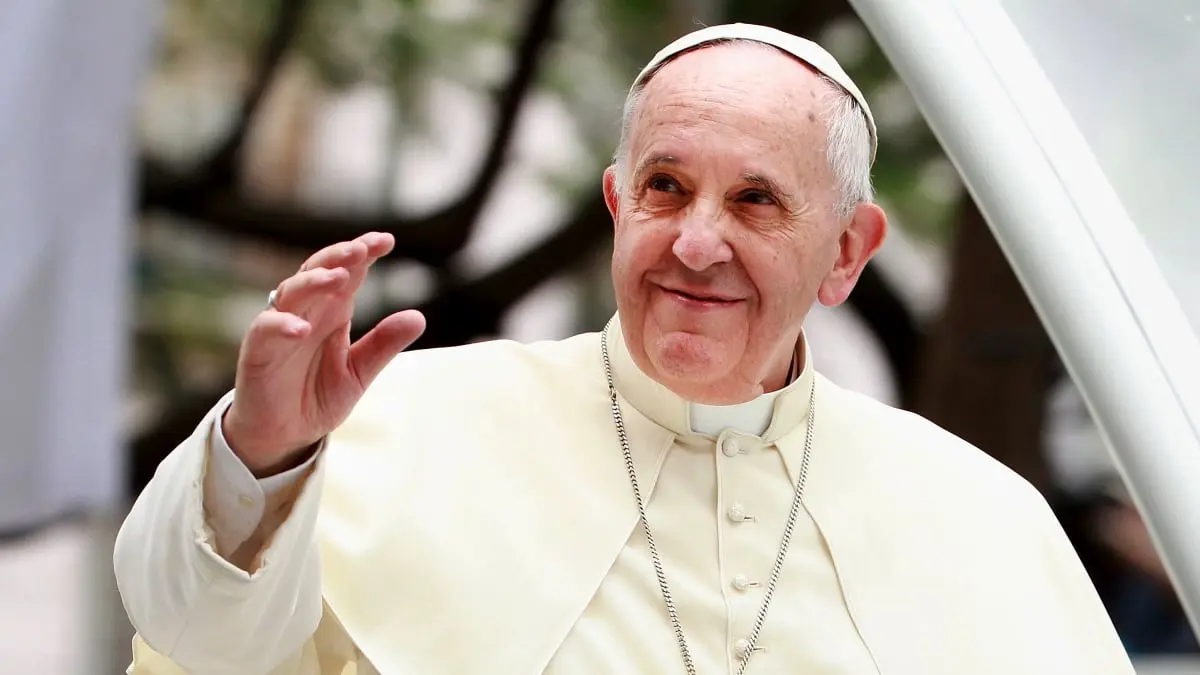
Pope Francis, the head of the Catholic Church, passed away on Easter Monday at the age of 88. Known as the first Latin American pontiff, he was celebrated for his progressive ideals within a traditionally conservative institution, advocating tirelessly for social and economic justice. In the weeks preceding his death, he shared a deeply prescient message about the role of new technology in modern life—a warning that continues to echo around the world.
A Final Warning on Technology
“How I would like for us to look less at screens and look each other in the eyes more!” Pope Francis said in an official video message translated from his native Spanish. “Something’s wrong if we spend more time on our cell phones than with people.” This prayer was part of the Pope’s “Monthly Intentions” for 2025, a tradition where each month the Holy Father invites the global Catholic community to join him in prayer on a specific topic. April’s intention, the final monthly intention before his death, was focused squarely on new technology. The intention and related reflections posted to the Pope’s Worldwide Prayer Network specifically mentioned artificial intelligence, video calls, smartphones, and screen time in general.
“It's true, technology is the fruit of the intelligence God gave us but we need to use it well,” Pope Francis said in his April video address. “It can't benefit only a few while excluding others.” He called on the faithful to use technology to “unite, not to divide.” He emphasized that technology should serve the poor, the sick, and persons with different abilities. In keeping with his environmentally-conscious messaging throughout his papacy, Pope Francis also urged using technology to “care for our common home” and to connect with one another rather than isolate.
The Pontiff’s Broader Legacy
Pope Francis, born Jorge Mario Bergoglio in Buenos Aires, Argentina, was elected in 2013 following the resignation of Pope Benedict XVI. He quickly earned a reputation for humility—choosing to live in a simple guesthouse rather than the apostolic palace—and for his commitment to the marginalized. His 2015 encyclical Laudato Si' on care for the environment became a landmark document, urging action against climate change and consumerism. Throughout his papacy, he also focused on economic justice, condemning unfettered capitalism and calling for a more equitable distribution of resources. His 2020 encyclical Fratelli Tutti promoted universal brotherhood and social friendship, especially in a polarized world.
Yet his stance on technology was equally forward-thinking. In various addresses and writings, Pope Francis recognized the immense potential of digital tools for evangelization and community-building, while consistently warning of their dangers. He spoke about the risk of algorithms creating echo chambers, the spread of fake news, and the erosion of empathy when human interactions are mediated by screens. The April 2025 prayer intention crystallized these concerns into a simple but powerful plea: that technology would not replace human relationships.
“The screen makes us forget that there are real people behind it who breathe, laugh, and cry,” Pope Francis said. His April prayer highlighted hope that “technology does not replace 'person-to-person' contact, that the virtual does not replace the real, and that social networks do not replace social settings.” He concluded with a call to pray “that the use of the new technologies will not replace human relationships, will respect the dignity of the person and will help us face the crises of our times.”
Irony in a Digital Age
Ironically, many social media users underlined Pope Francis’s point about technology immediately after his death, albeit unintentionally. Once the news broke, social networking platforms exploded with memes, many referencing the 2024 film Conclave, a drama about the secretive meeting of cardinals following a pope’s death. Others joked about how Vice President JD Vance was among the final people to see the Pope before his death, having met Pope Francis on Easter Sunday. The very screens the Pope urged us to look away from became the primary vehicle for reaction, commentary, and sometimes irreverence.
This phenomenon underscores a deeper tension: even as we mourn and celebrate a figure who warned against digital excess, we rely on digital platforms to share that mourning. Pope Francis understood this duality. He consistently engaged with modern media, using Twitter, Instagram, and video messages to reach millions. Yet he sought to steer that engagement toward authentic connection rather than superficial scrolling.
Context and Historical Perspective
The Catholic Church has a long history of grappling with technological change. From the printing press to radio and television, each new medium has been evaluated for its potential to spread the Gospel and its risk of distraction or manipulation. Pope Francis updated these concerns for the 21st century, especially with the rise of artificial intelligence and the ubiquity of smartphones. In 2024, he met with tech leaders to discuss the ethical implications of AI, urging them to ensure that machines serve human dignity and not the other way around. His 2025 April intention can be seen as the capstone of that dialogue.
Moreover, the Pope’s warning resonates beyond religious circles. Psychologists and sociologists have documented the negative effects of excessive screen time on mental health, social skills, and community cohesion. The Pope aligned himself with these secular findings while adding a spiritual dimension: that true human flourishing requires presence, eye contact, and shared silence. In a world where video calls replaced coffees and social media likes substituted for handshakes, his message feels urgent.
Pope Francis also highlighted the digital divide—a concern that technology should not benefit only a few while excluding others. This reflects his lifelong commitment to the poor and marginalized. He pointed out that access to technology is not equal, and that those on the wrong side of the digital divide are further isolated. At the same time, he challenged the wealthy to use their technological power for good, not for exploitation or surveillance.
In his final weeks, the Pope continued to work despite his frail health. He met with world leaders, issued statements on global conflicts, and recorded his monthly intentions. His voice, though weak, carried the same pastoral urgency. The video for April was recorded in his residence at the Casa Santa Marta, with a simple background, allowing his words to take center stage.
The text of that intention asks people to pray “that the use of the new technologies will not replace human relationships.” It is a prayer that transcends faith, speaking to anyone who has ever felt lonely while scrolling through a crowded feed. It challenges the assumption that more connectivity automatically means more connection. And it invites reflection on how we allocate our time and attention.
As the world remembers Pope Francis—his smile, his humility, his bold stands—this final intention may become one of his most enduring teachings. It is a call to put down our phones and truly see one another. It is a reminder that behind every screen is a person who laughs, cries, and breathes. And it is a hope that, even in a digital age, we can choose to be human.
Source: Mashable News