

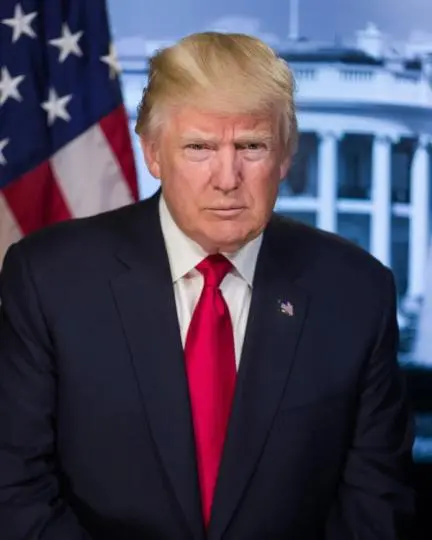
Quantum computing has long been viewed as a potential existential threat to Bitcoin and other cryptocurrencies, largely because of its ability to crack the cryptographic algorithms that secure digital assets. Now, in a dramatic policy pivot, the White House has signed twin executive orders that aim to make the United States a global leader in large-scale quantum computing while simultaneously hardening federal systems against the very risks these machines pose. The orders, issued by President Donald Trump on June 23, 2026, reflect a nuanced approach that seeks to harness quantum power without leaving critical infrastructure vulnerable.
The first order: Building quantum might
The first executive order is squarely focused on advancing U.S. quantum capabilities. It directs the Department of Energy (DOE) to host at least one advanced quantum computer at a national laboratory, providing a foothold for cutting-edge research and development. The Pentagon is also ordered to prioritize and field next-generation quantum sensors by 2028, a move that could revolutionize everything from navigation to battlefield reconnaissance. The order further calls for accelerated collaboration between government agencies, private industry, and academic institutions, effectively creating a national quantum ecosystem.
This push is not happening in a vacuum. China has already invested billions of dollars in quantum research, operating some of the world's most powerful quantum processors. The European Union has launched its own quantum flagship program, and companies like Google, IBM, and IonQ are racing to achieve quantum supremacy. By issuing this executive order, the White House is signaling that the United States will not cede leadership in a technology that could redefine computing, materials science, and artificial intelligence.
The second order: Defending against quantum threats
The second executive order takes a more defensive posture. It mandates a strict migration to post-quantum cryptography (PQC) across all federal agencies, requiring that key establishment be secured by 2030. This means replacing current public-key algorithms like RSA and ECDSA with new mathematical schemes that are believed to be resistant to attacks from both classical and quantum computers. The deadline is aggressive, but the administration argues it is necessary given the rapid pace of quantum development.
For Bitcoin and other cryptocurrencies, this migration is critical. Bitcoin relies on the SHA-256 hashing algorithm for proof-of-work and the elliptical curve digital signature algorithm (ECDSA) for transaction verification. A sufficiently powerful quantum computer could, in theory, reverse-engineer private keys from public keys, allowing attackers to spend coins without authorization. While the threat is not immediate—current quantum computers are still far too small and error-prone to break Bitcoin's encryption—the White House's action underscores a growing consensus that the window for preparation is closing.
Implications for Bitcoin and cryptocurrency
The tension between quantum development and Bitcoin security is palpable. On one hand, Trump's push for quantum computing could accelerate the arrival of a machine capable of breaking current cryptographic standards. On the other hand, the simultaneous mandate for post-quantum cryptography could push the entire digital economy—including cryptocurrencies—to upgrade their defenses. Some blockchain projects, such as Ethereum, have already begun exploring quantum-resistant signature schemes, while Bitcoin developers have debated the feasibility of a hard fork to introduce such changes.
Yet there is a silver lining. Quantum computing may also offer benefits to the crypto space, such as faster transaction processing, improved security through quantum key distribution, and more efficient mining algorithms. Some researchers envision a future where quantum computers help secure blockchain networks rather than undermine them. The Trump administration's orders do not explicitly address cryptocurrency, but the ripple effects will be felt across the industry.
Historical context and global race
The White House's action builds on decades of U.S. investment in quantum information science. The National Quantum Initiative Act, signed into law in 2018, laid the groundwork for coordinated federal research. Under the Biden administration, the Office of Science and Technology Policy published a national strategy for quantum computing. Trump's executive orders take these efforts a step further by coupling development with hard deadlines for cryptographic migration.
China's parallel efforts are arguably more ambitious. The country has launched the world's first quantum satellite, built a quantum communication network spanning thousands of kilometers, and demonstrated quantum computational supremacy with its Zuchongzhi processor. European nations, meanwhile, are pooling resources through the Quantum Flagship, a €1 billion initiative. The United States still leads in overall research output and private-sector investment, but the margin is narrowing. Trump's orders are designed to maintain that edge.
Technical challenges ahead
Building a large-scale, fault-tolerant quantum computer remains an enormous engineering challenge. Current quantum processors, such as those based on superconducting qubits or trapped ions, suffer from high error rates and limited coherence times. The path to millions of qubits—the number needed to break RSA-2048—will require breakthroughs in error correction, cryogenics, and quantum control. The DOE's mandate to host an advanced quantum computer likely refers to a system with a few thousand logical qubits, still far from the threshold needed for cryptanalysis.
The migration to post-quantum cryptography is equally daunting. The National Institute of Standards and Technology (NIST) has been running a multi-year competition to select PQC algorithms, with final standards expected in 2024. The White House's 2030 deadline for federal agencies to secure key establishment will force rapid adoption of these new algorithms, a process that involves updating hardware, software, and protocols across countless systems. For the private sector, including cryptocurrency exchanges and wallet providers, the timeline is even tighter.
Economic and political dimensions
The executive orders also carry significant economic implications. Quantum computing is expected to unlock new industries in drug discovery, materials design, logistics optimization, and climate modeling. By directing federal agencies to invest in quantum computing, the Trump administration is effectively stimulating a multi-billion-dollar sector. Venture capital funding for quantum startups has already surged, and public-private partnerships are flourishing.
Politically, the move aligns with Trump's broader agenda of technological sovereignty and American competitiveness. It also mitigates criticism from those who view quantum computing as a threat to national security. By pairing development with defense, the White House can claim a balanced approach. However, some cybersecurity experts worry that the pace of defensive migration may lag behind offensive capabilities, leaving a window of vulnerability.
In the crypto community, reactions have been mixed. Bitcoin maximalists argue that the network's decentralization and immutability make it resilient to any threat, while others call for immediate action to harden the protocol. Ripple CEO Brad Garlinghouse recently expressed optimism about Bitcoin's long-term survival, but criticized aspects of Michael Saylor's strategy. The quantum threat, he said, is real but manageable.
Ultimately, Trump's executive orders represent a watershed moment for both quantum computing and digital assets. They acknowledge that the United States must lead in a technology that promises to reshape the global economy, while also preparing for the disruptions that such leadership entails. For Bitcoin and other cryptocurrencies, the clock is ticking—but the rules of the game are being rewritten.
Source: Coindesk News