

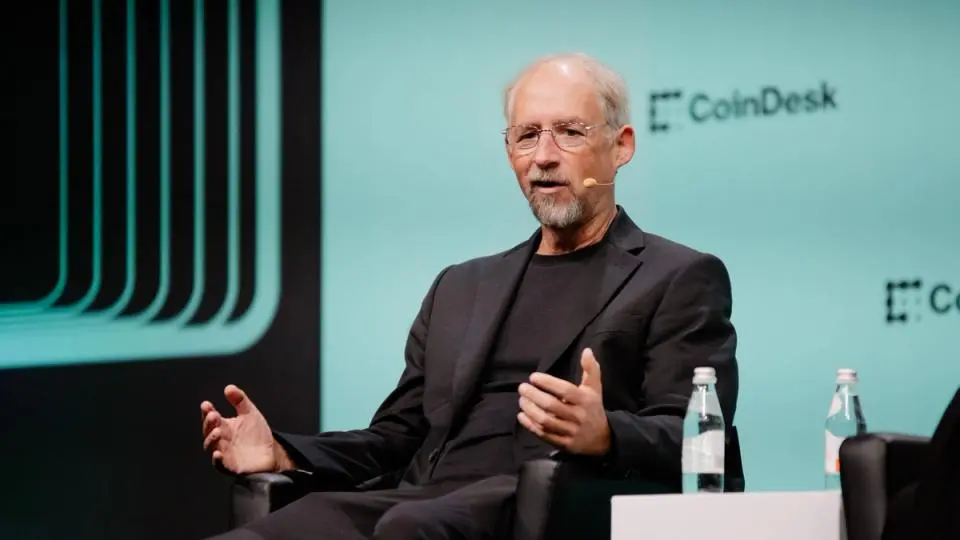
At Consensus Miami 2026, Blockstream CEO Adam Back delivered a compelling argument for why Bitcoin is quietly winning the decentralized finance (DeFi) security war. Speaking before an audience of industry leaders, Back contrasted Bitcoin's minimalist, battle-tested security model with the complex and often vulnerable smart contract platforms that have suffered billions in losses. He insisted that recent exploits in the broader DeFi space are not merely growing pains but fundamental flaws that reinforce institutional preference for Bitcoin's simpler infrastructure.
The DeFi Security Crisis
The DeFi sector has seen a dramatic rise in high-profile hacks and exploits over the past several years. From cross-chain bridge attacks to devastating flash loan manipulations, the total value lost to DeFi breaches has soared into the tens of billions of dollars. According to industry reports, 2024 alone witnessed over $3 billion stolen across various protocols, with 2025 trending even higher. Many of these incidents stem from the complexity of smart contract interactions, opaque transaction approvals, and the sheer number of moving parts in multi-chain ecosystems. Back argues that this pattern is not accidental but inherent to design philosophies that prioritize feature velocity over security.
Ethereum, the dominant smart contract platform, has attempted to address these issues with initiatives like the Ethereum Foundation's new Clear Signing standard announced at the same conference. Clear Signing aims to replace confusing bytecodes with human-readable transaction explanations to prevent users from unknowingly approving malicious transfers. While praised as a positive step, Back and other industry observers note that this reactive approach underscores a systemic vulnerability. The need for such a standard reveals that many users and even experienced developers struggle to verify what they are signing, especially when interacting with complex DeFi protocols.
Bitcoin's Conservative Design Philosophy
Bitcoin, by contrast, has never prioritized programmability at the base layer. Its scripting language is intentionally limited—allowing only basic transactions and a few additional functions. This conservatism is by design, championed by Satoshi Nakamoto and reinforced by early developers like Adam Back. The Bitcoin blockchain's security budget comes from proof-of-work, which, though energy-intensive, provides unmatched settlement finality and resistance to reorganization. The base layer is not intended for complex financial logic; instead, it serves as a robust settlement network for higher-level applications.
Back, who invented Hashcash—the proof-of-work algorithm that inspired Bitcoin—has long advocated for this layered approach. In his view, security must be baked into the foundation, not added as an afterthought. 'Bitcoin's simplicity is its greatest strength,' Back stated at the event. 'Every function you add at the base layer increases the attack surface. We've seen what happens when you push too much complexity into the consensus layer.' This philosophy has kept Bitcoin remarkably secure: the network has never been successfully attacked at the protocol level, despite being the most valuable cryptocurrency.
Layer-2 Systems: Extending Functionality Without Sacrificing Security
While Bitcoin's base layer remains minimal, its ecosystem has developed a rich set of layer-2 solutions that bring programmability and scalability while inheriting Bitcoin's security. The Lightning Network enables instant, low-cost payments by opening off-chain channels that settle on the main chain only when needed. Liquid, a sidechain operated by a federation of block-signers including exchanges and financial institutions, allows for asset issuance and confidential transactions. RGB and Taproot Assets enable smart contracts and tokenization on top of Bitcoin, using client-side validation to avoid bloating the main ledger.
Back emphasized that these layer-2 systems are where the DeFi action will happen on Bitcoin. They allow developers to build decentralized exchanges, lending protocols, and tokenized securities without compromising the base layer's conservatism. For instance, Liquid already supports the issuance of stablecoins and tokenized gold, and several projects are experimenting with Bitcoin-based lending and derivatives. The key, according to Back, is that each layer-2 preserves the security properties of Bitcoin while adding only the specific functions needed—no more, no less.
- Lightning Network: Instant payments, scalable micro-transactions.
- Liquid: Asset issuance, confidential transactions, federation-based security.
- RGB/Taproot Assets: Smart contracts, tokenization via client-side validation.
Institutional Preference Shifts to Bitcoin
The talk's most forward-looking theme was the impending wave of institutional adoption. Back argued that sovereign wealth funds, pension funds, and corporate treasuries are beginning to allocate capital to Bitcoin not just as a speculative asset but as a foundational component of their digital asset strategies. However, these institutions demand security above all else. They cannot afford the reputational risk of losing client funds to a bridge hack or a protocol exploit. Bitcoin’s track record of 15+ years with zero downtime and zero successful attacks at the base layer makes it the obvious choice.
Back pointed to recent moves by nation-states and major corporations. Countries like El Salvador and Bhutan have already integrated Bitcoin into their reserves, and more are exploring similar paths. Pension funds in Canada and the United States have started allocating small percentages to Bitcoin ETFs. Treasury companies such as MicroStrategy and Block have demonstrated that holding Bitcoin on corporate balance sheets is not only feasible but advantageous. What will accelerate this trend, Back said, is the ability to earn yield on Bitcoin holdings through secure, regulated platforms built on layer-2 networks.
The institutional appetite for DeFi returns is real, but only if those returns come with institutional-grade security. Bitcoin layer-2 solutions are emerging as the preferred venue because they do not require trusting smart contract code that might contain subtle bugs. 'Sovereigns won't deploy billions into a system that can lose it all in a second due to a reentrancy bug,' Back noted. 'Bitcoin layer-2s offer a compromise: yield generation with a security guarantee that matches the base layer.'
Adam Back's Credibility and Vision
Adam Back’s voice carries unique weight in the cryptocurrency community. He was one of the first to receive an email from Satoshi Nakamoto about Bitcoin in 2008, and his Hashcash algorithm is cited in the Bitcoin whitepaper. For nearly three decades, he has worked on cryptography and digital cash, from his early work on Hashcash to founding Blockstream, which focuses on building Bitcoin infrastructure. His perspective on security is shaped by a career spent studying the mathematical foundations of trustless systems.
At Consensus Miami 2026, Back also touched on the regulatory landscape. He noted that clarity is improving, with the United States moving toward a more defined digital asset framework. Bitcoin's classification as a commodity, rather than a security, is beneficial for its use in DeFi because it avoids the complex securities registration requirements that burden many altcoins. This regulatory clarity, combined with its security, makes Bitcoin the natural candidate for tokenized real-world assets like bonds, real estate, and commodities.
The conversation then shifted to the Ethereum Foundation's Clear Signing announcement. Back acknowledged that any effort to improve user safety is welcome, but he cautioned that such measures are band-aids on a deeper design issue. 'Clear Signing is like teaching people to check their locks before leaving the house, but the problem is that the door is made of cardboard,' he said. In contrast, Bitcoin's door is steel reinforced—simple, solid, and with few moving parts to fail.
Back doubled down on his prediction that the next major adoption wave will come through institutional portfolio allocations, sovereign entities, and pension funds gaining bitcoin exposure. He cited internal Blockstream research showing that even a modest 1% allocation by global pension funds would represent over $500 billion in new demand. Combined with the growing tokenization of real-world assets, where security is paramount, Bitcoin's network effect could become overwhelming.
As the session ended, Back left the audience with a final thought: 'Bitcoin doesn't need to be everything to everyone. It just needs to be the most secure settlement layer for the rest of the financial world to build upon. That's why we're winning the security war, and that's why institutions are paying attention.' The applause was lengthy, reflecting the growing consensus that Bitcoin’s conservative design is not a limitation but a competitive advantage in the maturing crypto ecosystem.
Source: Coindesk News