

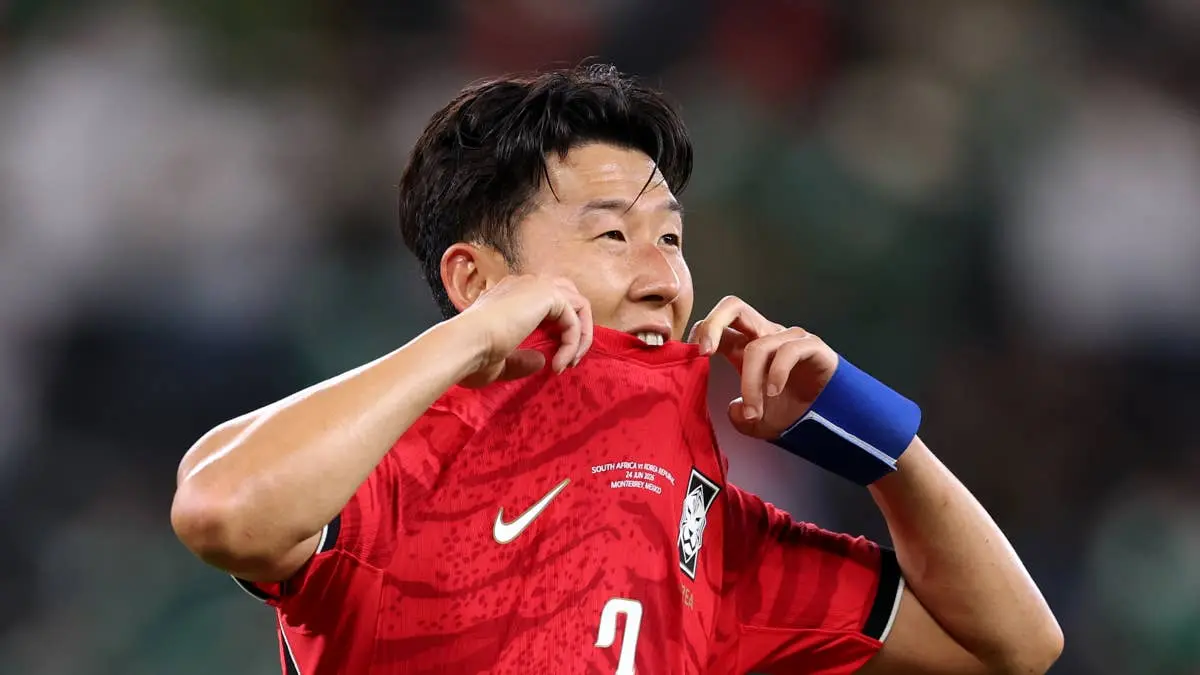
South Korea's journey in the 2026 FIFA World Cup ended in disappointment as they finished third in Group A with a record of one win and two defeats, missing out on a spot in the expanded Round of 32. The team's early exit has triggered a wave of public reaction that spilled over at Incheon International Airport, where two prominent figures received starkly different receptions: captain Son Heung-min was applauded by fans, while former head coach Hong Myung-bo was met with boos, drum beats, and angry chants.
Son, the Tottenham Hotspur forward and national team captain, arrived at the airport alongside several teammates after the tournament. Supporters gathered to welcome the players, clapping and shouting messages of encouragement such as "You worked hard" and "Don't bow your heads." The warm reception was a stark contrast to the hostility directed at Hong, who had returned a day earlier accompanied by players like Kim Min-jae, Hwang Hee-chan, and Lee Kang-in. Hundreds of fans booed the former coach, beat drums, and held banners that read "Korean Football Is Dead" and "Hong Myung-bo, Get Out!" while calling for his immediate resignation. Hong had already stepped down from his position following the elimination, but the fury of the fans did not subside.
The scene at the airport was tense, with over 160 police officers deployed after online threats were made against Hong. The Korea Football Association (KFA) canceled the planned public welcome ceremony for the first time since the 2002 World Cup, a sign of the unprecedented anger among supporters. Most of the criticism was aimed at Hong and the KFA leadership, while players were generally spared from the vitriol. Son, in particular, had taken to Instagram before returning to South Korea to apologize to the nation, writing, "I honestly don't know where to begin. First of all, I want to sincerely apologize to the people of South Korea and to everyone who loves football." He also urged fans not to direct their frustration at the players after President Lee Jae-myung ordered an investigation into the team's World Cup exit and the KFA's leadership.
The contrasting reactions highlight the deep emotional investment of South Korean fans, who have high expectations for their national team, especially after reaching the semifinals of the 2002 World Cup co-hosted with Japan. Since then, the team has consistently qualified for the tournament but has struggled to replicate that success. The 2026 campaign was seen as an opportunity to break new ground, but the team's performance fell short. South Korea opened Group A with a narrow win over a lower-ranked opponent, but consecutive defeats to more established football nations sealed their fate. Son, who has been the face of South Korean football for nearly a decade, was visibly emotional after the final match, reflecting the weight of the disappointment.
Hong Myung-bo, a legendary figure in South Korean football as a former player who captained the 2002 semifinal run, took over as head coach in 2024. His tenure was short-lived and marked by tactical struggles, player selection controversies, and inability to gel the squad during World Cup qualifiers and the tournament itself. Upon his return, Hong was subjected to a barrage of criticism not only for the results but also for his perceived lack of accountability. The incident at the airport has sparked a broader conversation about the culture of football management in South Korea, the role of the KFA, and the immense pressure placed on national team figures.
In the aftermath, President Lee Jae-myung's investigation aims to scrutinize the KFA's operations, including financial management, selection processes, and the handling of the World Cup campaign. This political involvement adds another layer of complexity to an already charged situation. The KFA has faced criticism for years over allegations of mismanagement and cronyism, and the World Cup exit has provided a flashpoint for public anger. Fans have taken to social media to express their views, with many calling for a complete overhaul of the football governing body. The airport protests, which were largely peaceful but emotionally charged, underscore the deep frustration felt by a nation that dreams of football glory.
Son Heung-min's career has been nothing short of remarkable. Born in Chuncheon, he rose through the youth ranks of FC Seoul before moving to Germany as a teenager to join Hamburger SV. His breakthrough in the Bundesliga led to a transfer to Bayer Leverkusen, where his performances caught the eye of Tottenham Hotspur. Since joining Spurs in 2015, Son has become one of the Premier League's most prolific wingers, known for his pace, finishing, and versatility. He has scored over 150 goals for club and country, won the Premier League Golden Boot in 2022, and was named Asian Footballer of the Year multiple times. His leadership of the national team has been exemplary, often shouldering the burden of expectations with grace. The apology he issued after the World Cup was typical of his humility and sense of responsibility.
Hong Myung-bo, on the other hand, is a symbol of South Korea's golden era. He captained the team to fourth place in 2002, the best ever finish by an Asian team, earning a bronze Ball for his performances. After retiring, he moved into coaching, managing the national team from 2013 to 2014, including the 2014 World Cup, where South Korea also exited in the group stage. His second stint was intended to bring experience and tactical discipline, but it ended in similar fashion. The boos at the airport reflect a sense of betrayal among fans who revered him as a player but now see him as a symbol of stagnation. The KFA's decision to cancel the welcome ceremony was a recognition of the volatile mood.
The police presence at Incheon was significant, with officers forming cordons to separate Hong and his security detail from the crowd. Despite the tension, there were no major incidents, and the players managed to leave without physical harm. The scenes were widely shared on social media, drawing international attention to the passionate Korean fan base. Many observers noted the stark contrast between the treatment of Son and Hong, which could be seen as a reflection of broader societal attitudes toward success and failure. Son, who has consistently performed at the highest level, was viewed as a tragic hero who could not overcome systemic issues, while Hong, the manager, was held directly accountable for the team's shortcomings.
Looking ahead, the future of South Korean football is uncertain. The KFA is under pressure to implement reforms, and the investigation ordered by the president may lead to significant changes. The team will now focus on rebuilding for the 2027 AFC Asian Cup and the 2030 World Cup cycle. Son, now 33, may not be part of that long-term plan, but his influence on the younger generation is undeniable. Players like Kim Min-jae, Hwang Hee-chan, and Lee Kang-in have emerged as talents who can carry the torch, but they will need better support from the federation and coaching staff. The contrast at the airport serves as a microcosm of the challenges facing Korean football: the love for the players and the intolerance for perceived mismanagement.
As the dust settles, the airport reception will be remembered as a defining moment of the 2026 World Cup for South Korea. It was a public expression of a nation's heartbreak, frustration, and enduring passion for the game. The players, particularly Son, received the empathy of the fans, while the coach bore the brunt of the anger. This dichotomy may offer lessons for how football associations worldwide handle similar crises, balancing accountability with respect for individual contributions. For now, South Korea's football community must reflect on what went wrong and how to move forward, ensuring that the next generation does not experience the same painful homecoming.
Source: Yahoo Sports News