

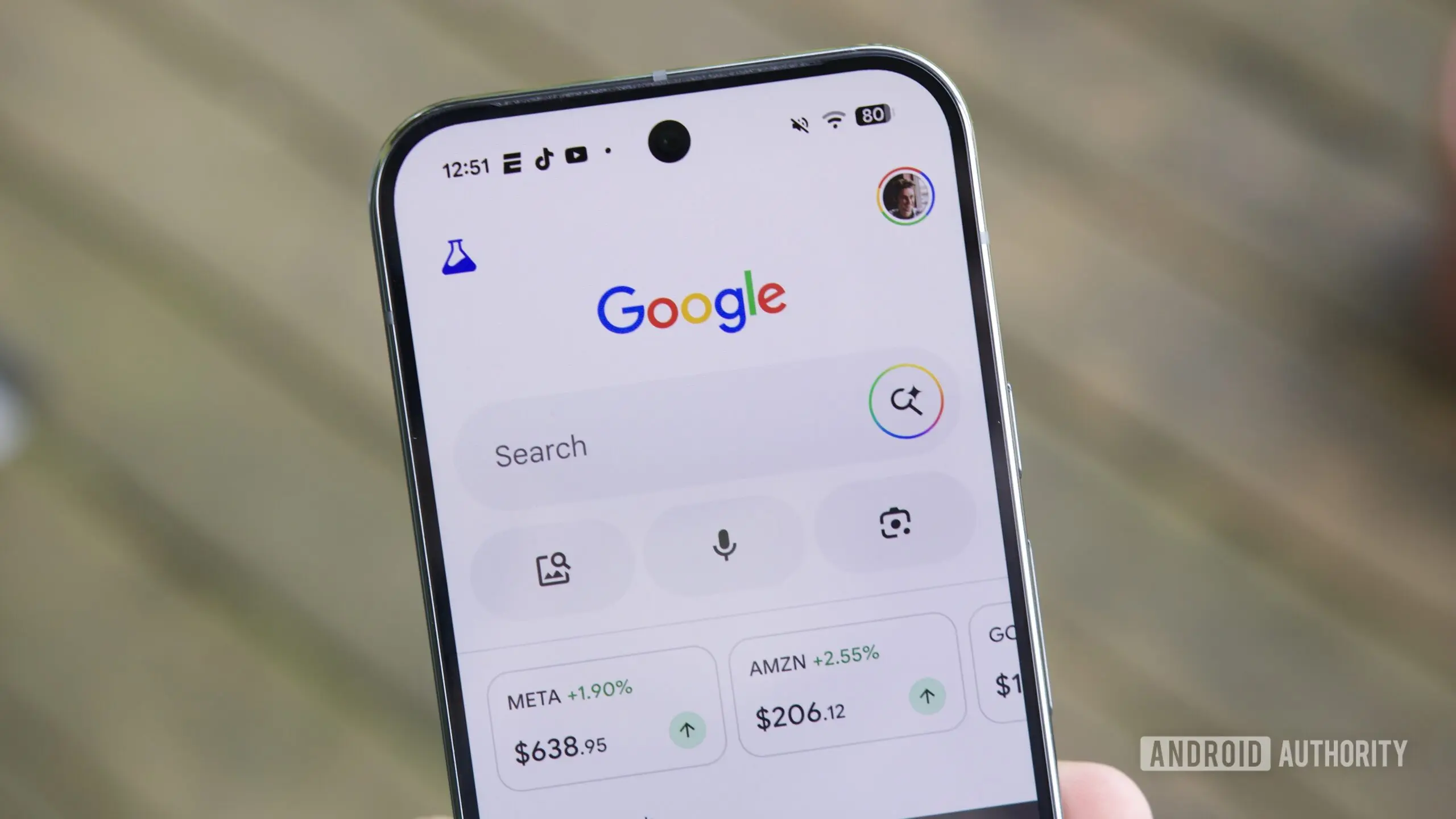
Google Search's AI Mode has taken a significant step forward by enabling integration with third-party applications. Starting today in the United States, users can link their accounts for Canva, YouTube Music, and Instacart directly within the AI Mode interface. This update transforms AI Mode from a purely informational tool into a task-completion assistant that can handle real-world activities without leaving the search page.
The move mirrors capabilities already seen in Google's Gemini assistant when connected to Gmail or Calendar, but now brings that functionality to the core Search experience. By allowing AI Mode to interact with apps, Google aims to reduce what it calls “app-hopping” — the tedious process of switching between multiple tools to accomplish a single goal.
How AI Mode Works with Third-Party Apps
AI Mode is a feature within Google Search that uses advanced language models to understand complex queries and provide comprehensive answers. With the new app integrations, users can now issue prompts that go beyond information retrieval. For example, instead of searching for birthday party invitation ideas and then manually opening Canva to create one, you can simply tell AI Mode: “Make a colorful invitation for a party next Saturday with a tropical theme.” If your Canva account is connected, AI Mode will process the request, send it to Canva, and return a ready-made design within moments.
Behind the scenes, Google uses its secure data-sharing frameworks to ensure that user permissions are respected. You must explicitly link each app from the AI Mode settings, and you can revoke access at any time. The actual task execution happens through the app's API, meaning Google does not store the designs, playlists, or shopping cart contents beyond what is necessary to complete the request.
Real-World Examples and Use Cases
The initial batch of integrations covers creative, entertainment, and shopping tasks. Here are some practical scenarios:
- Canva: Design invitations, social media graphics, or presentations using natural language prompts. For instance, “Create a minimalist flyer for a garage sale” will produce a design that you can then customize further in Canva.
- YouTube Music: Build playlists without manually selecting songs. You can ask for “a relaxing playlist for studying” or “an upbeat workout mix with 90s rock.” AI Mode will generate the playlist and let you save it directly to your YouTube Music library.
- Instacart: Fill a shopping cart with items based on a meal plan or party needs. For example, “I need snacks, drinks, and dessert for a barbecue for 10 people” will populate your Instacart cart. You still have to confirm the order, but the tedious selection process is automated.
These use cases demonstrate how AI Mode is evolving into an action-oriented assistant. Rather than just providing information about how to do something, it can now do parts of the task for you.
Background and Context
Google Search's AI Mode was first introduced in early 2026 as an experimental feature to compete with emerging AI-powered search tools from Microsoft Bing and the rise of standalone assistants like ChatGPT. The initial version focused on answering complex questions and summarizing information from multiple sources. However, Google recognized that users often want to complete tasks, not just find answers.
The integration with third-party apps is a natural progression. Google has been building out its AI ecosystem through products like Gemini, which already works with Google Workspace apps. Now the company is extending that capability to external services. This approach is similar to what Apple is doing with Siri and Shortcuts, but Google's advantage lies in the massive scale of its search engine and the familiarity users have with its interface.
Industry analysts see this as a strategic move to keep users within Google's ecosystem while also offering flexibility. By supporting popular third-party services, Google avoids building its own versions of Canva or Instacart, which would be costly and time-consuming. Instead, it acts as a smart intermediary that orchestrates multiple services behind a single search query.
Expansion Plans and Future Potential
Google has confirmed that it is working with additional partners to bring more app integrations to AI Mode. While the company has not disclosed specific names yet, categories likely include travel booking, food delivery, productivity tools, and note-taking apps. For example, being able to say “Book a flight to New York for next weekend” and have AI Mode pull up options from Expedia or Kayak directly in Search would be a logical extension.
Another area of potential growth is in business and professional use cases. Integrations with tools like Slack, Asana, or Microsoft 365 could allow AI Mode to set reminders, create tasks, or draft emails without opening each app. This would make Google Search a central command center for work-related activities.
Privacy and data security will remain critical as these integrations expand. Users must trust that their personal information, such as shopping preferences or design choices, is not misused. Google has stated that it follows strict data usage policies and that all app interactions are encrypted. Users can also see a log of AI Mode actions and revoke app permissions at any time via their Google Account settings.
Impact on User Behavior and the Search Industry
This update could fundamentally change how people use search engines. Traditionally, search has been about finding links to other websites. With AI Mode, Google is transforming search into an execution platform. Users may begin to think of the search bar not just as a way to find information but as a way to get things done. Over time, this could reduce the number of separate app openings and streamline daily routines.
Competitors are likely to respond. Microsoft Bing has already integrated ChatGPT capabilities but has not yet offered such deep third-party app connections. Apple’s Siri can execute Shortcuts, but those are limited to iOS devices and often require pre-configuration. Google’s advantage is that its AI Mode works across platforms — web, Android, and soon iOS — and requires minimal setup from the user.
However, challenges remain. The initial app selection is limited to three services, and each requires a separate linking process. Users who are not comfortable with granting access may hesitate to enable these features. Moreover, the quality of task execution depends on how well the integrated app understands the prompt. For instance, a vague request like “make something nice” for Canva might produce disappointing results. Google will need to refine its natural language understanding to handle ambiguous requests effectively.
Despite these hurdles, the direction is clear. Google wants AI Mode to become an indispensable assistant that lives inside the search bar. By gradually adding more app integrations and improving its ability to coordinate between them, the company is betting that convenience will drive adoption. For now, the update is limited to the US and to the three launch partners, but a broader rollout is expected later this year.
As AI Mode continues to evolve, it will be interesting to see how users adopt these capabilities and whether they fundamentally change the role of search in our digital lives. For the first time, Google Search is not just answering questions — it is taking action on your behalf.
Source: Android Authority News