

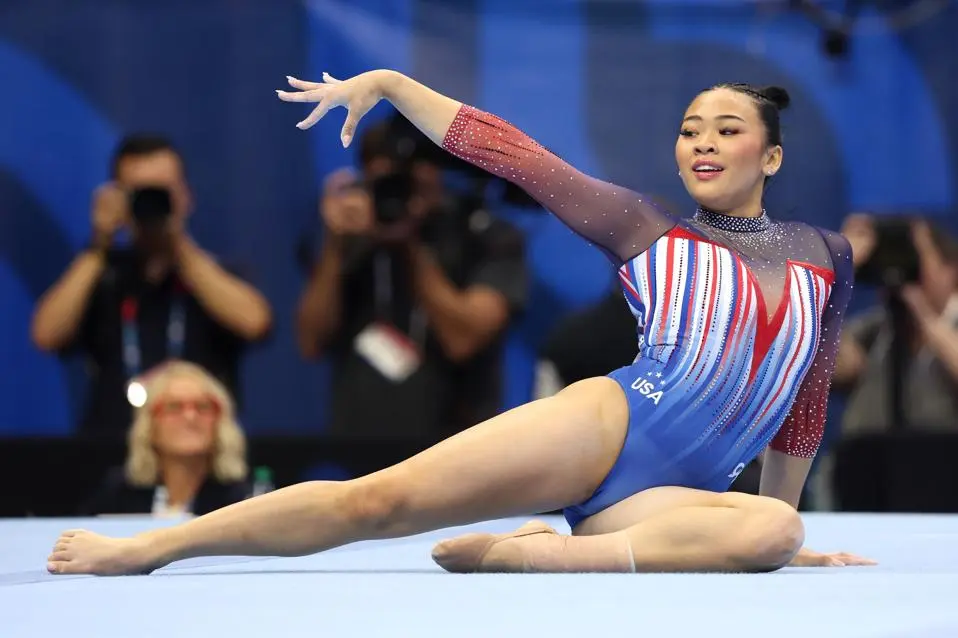
Suni Lee Announces Return for 2028 Los Angeles Olympics
American Olympic gold medalist Sunisa “Suni” Lee has officially declared her intention to compete in the 2028 Los Angeles Olympics, approximately two years ahead of the Games. In an Instagram video posted on Tuesday, Lee showcased her recent training sessions and past competition highlights, stating, “I know what I’m capable of and I’m willing to do whatever it takes to get there.” This announcement marks a significant development in the buildup to the LA Games, as Lee joins a growing cadre of elite gymnasts eyeing a return to Olympic competition.
The Growing Contingent of Returning Stars
Lee is not alone in her comeback. Jade Carey, who also competed in both the Tokyo and Paris Olympics, announced her own return three months ago and has already claimed two gold medals at the American Classic in late June. Katelyn Ohashi, a collegiate gymnastics sensation known for her viral perfect 10 floor routine at UCLA, has also returned to elite gymnastics after more than a decade away. Ohashi, now 29, competed at the American Classic alongside Carey and earned a bronze medal on the balance beam. Her comeback has been particularly remarkable given her past injuries and the long hiatus from the highest level of the sport.
The potential for a powerhouse U.S. women’s gymnastics team in Los Angeles is tantalizing. With Lee, Carey, and Ohashi already in the mix, the door remains open for the most decorated American gymnast of all time—Simone Biles—who has stated there is a 50% chance she will attempt to compete in 2028. Biles, who will be 31 for the LA Games, has been coy about her plans but has not ruled out a return. Jordan Chiles, a teammate of Biles and Lee in both Tokyo and Paris, has also left the door open for a possible comeback.
Historical Context: The Legacy of U.S. Women’s Gymnastics
The U.S. women’s gymnastics team has been a dominant force in the sport for over a decade. The “Final Five” of 2016—consisting of Simone Biles, Aly Raisman, Gabby Douglas, Laurie Hernandez, and Madison Kocian—captured team gold in Rio de Janeiro and introduced Biles to the world as a breakout star. At the Tokyo 2020 Olympics, held in 2021, Biles was the only member of that team to return, and together with Suni Lee, Jordan Chiles, and Grace McCallum, the U.S. earned team silver. Carey competed as an individual and won gold on floor exercise after Biles withdrew from several events due to the “twisties,” a mental block that temporarily affected her spatial awareness in the air.
In Paris 2024, Biles made a triumphant return after a two-year hiatus, leading a team that included Lee, Carey, and Chiles to another team gold medal. Now, with the 2028 Games on home soil in Los Angeles, the U.S. is poised to build on that legacy. The possibility of assembling a team that includes multiple Olympic gold medalists is a dream scenario for fans and officials alike.
What We Know About the 2028 Team Selection
The official roster for the 2028 U.S. women’s gymnastics team will be determined on June 19, 2028, after two days of competition at the U.S. Olympic Team Trials. Based on current trends, Lee, Carey, and Ohashi are considered front-runners, along with 2024 alternate Hezly Rivera. If Biles and Chiles return, they will be strong competitors for spots, as will Skye Blakely, a seasoned elite gymnast who has set her sights on LA 2028. The selection process is likely to be fiercely competitive, given the depth of talent returning to the sport.
Ohashi’s comeback is particularly compelling. She was one of the last gymnasts to defeat Biles in an all-around competition, winning the 2013 American Cup when both were 15 years old. However, a series of back and shoulder injuries soon forced her to transition from elite to collegiate gymnastics. At UCLA, she built a massive following, and her 2019 NCAA floor routine—a perfect 10—has been viewed over 250 million times online. Now, at 29, she is defying age expectations and returning to the elite level.
Jade Carey’s return has already been rewarded with success. Her two gold medals at the American Classic demonstrate that she has maintained her elite form since Paris. Carey has consistently been one of the most reliable all-around gymnasts for the U.S., and her experience will be invaluable in Los Angeles.
Key Background and Implications for the Sport
The U.S. women’s gymnastics program has been a powerhouse for over a decade, but the buildup to the 2028 Olympics marks a unique moment. The Games are being held in Los Angeles, the first time the Olympics have returned to the United States since the Salt Lake City Winter Games in 2002. For gymnastics, the LA Forum and the Staples Center (now Crypto.com Arena) are expected to host events, providing a home-field advantage that could boost the team’s performance.
The return of these athletes also highlights a trend of older gymnasts extending their careers. Traditionally, female gymnasts peaked in their teens or early twenties, but advances in training, nutrition, and mental health support have allowed athletes like Biles, Lee, and Ohashi to compete well into their late twenties or even thirties. This shift is reshaping the sport and inspiring a new generation of gymnasts.
Beyond the core group, other names are emerging. Hezly Rivera, who served as an alternate in Paris, has been training intensively and could be a dark horse for the team. Skye Blakely, known for her powerful vault and floor routines, is also aiming for Los Angeles. The depth of talent ensures that the U.S. will field a highly competitive team, regardless of who makes the final cut.
The 2028 Olympics also represent a symbolic milestone for gymnastics. The sport has faced challenges in recent years, including the fallout from the Larry Nassar abuse scandal and the increasing pressure on young athletes. The return of veterans like Lee, Carey, and Ohashi—who have spoken openly about mental health and body image—could signal a new, healthier era for the sport.
In addition, the Los Angeles Games will be the first Olympics since the International Olympic Committee (IOC) waived Rule 40 restrictions that previously limited athletes’ ability to earn money from personal sponsors during the Games. This change could benefit gymnasts who have built strong personal brands, like Biles, Lee, and Ohashi, allowing them to capitalize on their Olympic participation without fear of sanction.
As the gymnastics world watches the countdown to Los Angeles, the excitement is palpable. Suni Lee’s announcement is just the beginning of what promises to be a thrilling journey toward 2028. With a mix of seasoned champions and rising stars, the U.S. women’s gymnastics team is poised to make history once again.
Source: Yahoo Sports News