

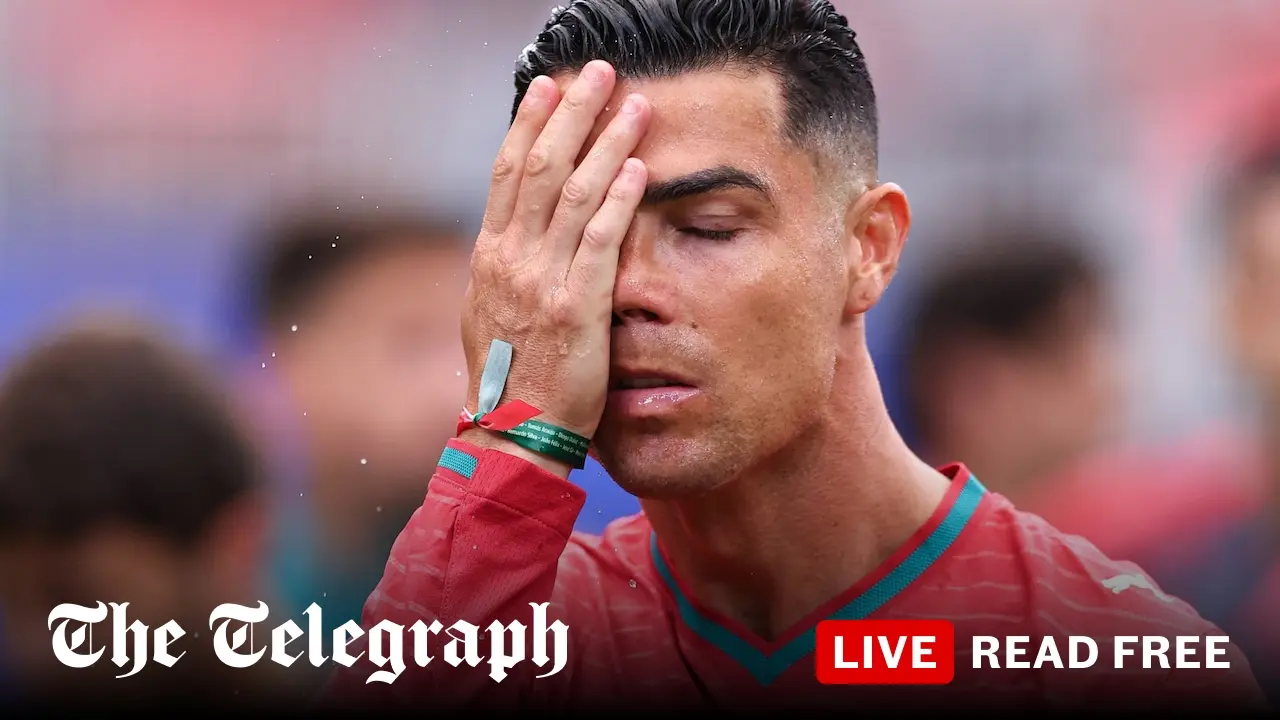
Cristiano Ronaldo has been described as “the manager of Portugal” after Roberto Martinez, the head coach of the national team, refused to substitute the struggling forward during a disappointing 1-1 draw with Democratic Republic of Congo in their World Cup opener.
The 41-year-old Ronaldo was ineffective in Houston, failing to score and contributing little to Portugal's attacking play. The result leaves Portugal two points behind group leaders Colombia after the first round of matches.
Ronaldo's goalless run continues
Ronaldo has now gone 10 consecutive major tournament games without scoring for Portugal, a drought that includes 33 shots with only 11 on target. His 25 touches in the match were the fewest in a major tournament game where he played the full 90 minutes.
The criticism came swiftly. Former World Cup winner Thierry Henry, working as a pundit for Fox Sports, delivered a cutting analysis of Ronaldo's impact on his teammates. “The team needs to score, not you need to score,” Henry said, highlighting a moment when Ronaldo ran into the path of Bruno Fernandes instead of creating space.
Even harsher was BBC 5 Live co-commentator Chris Sutton, who called Martinez an “embarrassment” for keeping Ronaldo on. “That’s embarrassing from Roberto Martinez. Are we all watching a different game? The game is passing Ronaldo by. Martinez is scared. He’s not the manager,” Sutton said, later adding on social media: “Embarrassingly weak from Roberto Martinez. He should have hooked Ronaldo off but he’s too scared of upsetting him. Ronaldo is essentially the manager of Portugal.”
A frustrating afternoon for the veteran
Portugal took an early lead through Joao Neves's header, but rather than building on that, they became complacent. DR Congo grew in confidence and equalized through Yoane Wissa's historic goal—the first ever World Cup goal for the nation.
Ronaldo's performance was summed up by his inability to influence the game. Playing against a three-man defence designed to crowd him out, he had two half-chances in the second half but stabbed both wide. His frustration was evident as he disappeared straight down the tunnel at full-time while his teammates remained on the pitch.
The statistics paint a grim picture. Ronaldo, who broke the record for the oldest outfield player to start a World Cup match at 41 years and 132 days, looked every bit his age. Once a superhuman athlete, he now conserves energy, but against a well-organized DR Congo side, that approach left Portugal playing with ten men off the ball.
Martinez under pressure
Roberto Martinez's decision to keep Ronaldo on the pitch for the full 90 minutes has been widely criticized. Many believe the manager is afraid to upset the superstar, who remains Portugal's all-time leading scorer but has become a divisive figure in the national team setup.
Former France full-back Gaël Clichy, analyzing the match for the BBC, suggested that Ronaldo's presence can be inhibiting. “We said at the beginning of the game that Ronaldo will be helping young players because of his character and experience, but sometimes unconsciously those kinds of players can take too much light. I've lived it with some players at Arsenal and Manchester City, where you feel that the player is such an important player, subconsciously he's taking everything from every player.”
Portugal have an abundance of creative talent around Ronaldo—Bruno Fernandes, Joao Neves, Vitinha, Bernardo Silva, and Pedro Neto all started. Yet their attacking fluidity was stifled by Ronaldo's reluctance to move off the ball and his desperation to score himself rather than create for others.
DR Congo's historic moment
For DR Congo, the draw was a triumph. Playing in their first World Cup since 1974 (when they competed as Zaire), they showed tremendous discipline and character. Yoane Wissa, who endured a difficult season at Newcastle United due to injury, scored the equalizer with a powerful header from a corner routine.
Wissa's goal was the first ever World Cup goal for DR Congo, and his performance was a reminder of the quality that prompted Newcastle to pay £55m for him. He was a constant threat, making dangerous runs even in the closing stages when others tired.
DR Congo manager Sebastian Desabre set his team up in a 5-3-2 formation that frustrated Portugal throughout. The three centre-backs—Chancel Mbemba, Axel Tuanzebe, and Kapuadi—effectively nullified Ronaldo's threat, while wing-backs Aaron Wan-Bissaka and Arthur Masuaku restricted Portugal's full-backs.
What next for Portugal?
Portugal have plenty of time to recover. They still have two group games remaining, and their squad depth is formidable. However, the question of how to manage Ronaldo will not go away. With Goncalo Ramos, Diogo Jota, and Joao Felix all waiting in the wings, Martinez has alternatives if he is willing to make a bold decision.
The Nations League champions were expected to be among the favourites for this World Cup, but this performance raised concerns. Their midfield trio of Neves, Vitinha, and Fernandes is technically superb, but it needs a mobile striker to run in behind and stretch defences. Ronaldo no longer provides that.
Lionel Messi, Ronaldo's great rival, began his own sixth World Cup with a magnificent hat-trick against Algeria. The contrast was stark. While Messi continues to defy age, Ronaldo looks increasingly like a player living on past glories.
“It would be foolish to write the great man off, just as it would be premature to dismiss Portugal’s credentials as potential tournament winners,” the match report noted. “They have too many good players but it was damning that, on this occasion, it looked like the game meant more to their opponents.”
DR Congo's fans celebrated wildly, and they have every right to be optimistic. For Portugal, the alarm bells are ringing, and Roberto Martinez must decide whether he is brave enough to ring the changes.
Source: The Telegraph News