

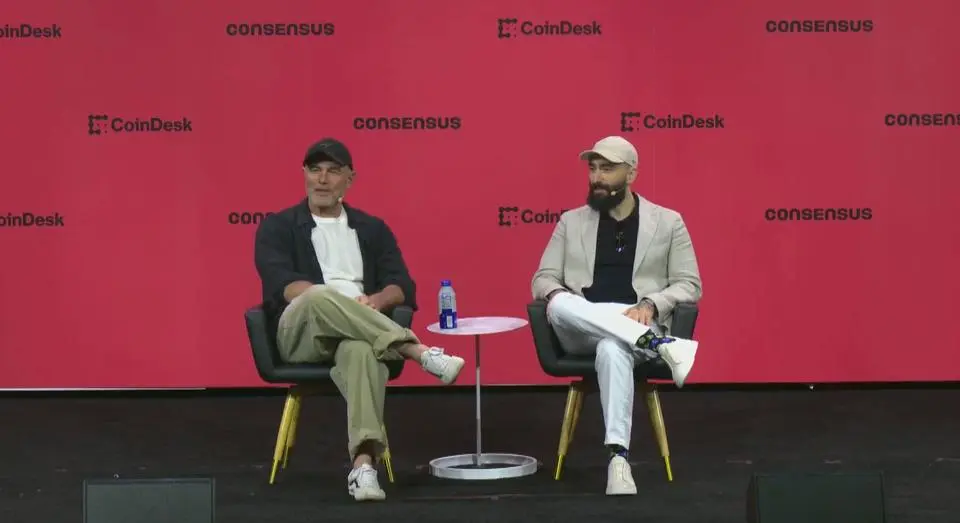
Zcash, the privacy-focused cryptocurrency, is taking a major leap toward quantum resistance. In a recent announcement, Zooko Wilcox, the project's founder, revealed that Zcash will roll out quantum-recoverable wallets within the next month and aims to become fully post-quantum by 2027. The move positions Zcash as a trailblazer in preparing for the eventual threat that quantum computing poses to existing cryptographic systems.
What Are Quantum-Recoverable Wallets?
Quantum-recoverable wallets are a new type of wallet that can withstand attacks from quantum computers. Unlike traditional wallets that rely on elliptic curve cryptography (ECC), which quantum computers could break, quantum-recoverable wallets use lattice-based or hash-based signatures that are believed to be resistant to quantum attacks. Zcash's implementation will allow users to recover their funds even if the underlying cryptography is compromised, providing a safety net during the transition period.
Wilcox explained that the first phase will involve enabling users to create wallets that can recover their funds in a quantum-adversarial scenario. This is seen as a critical first step before the network itself adopts quantum-secure protocols. The full transition to post-quantum cryptography is expected to be completed within 12 to 18 months after the wallet rollout, meaning Zcash could be quantum-proof by mid-2027 at the latest.
Scaling for Mass Adoption
In parallel with the quantum efforts, Zcash is pushing toward Visa- and Mastercard-level throughput. This scaling push involves increasing transaction speeds and reducing costs, making the network viable for everyday payments. The team is exploring various layer-2 solutions and consensus optimizations to achieve this, while maintaining the strong privacy guarantees that define Zcash.
Market Response and Investment
The announcement has been met with enthusiasm from the crypto community. ZEC, the native token of Zcash, has surged over 110% in the past 30 days. A significant catalyst was a major investment from Multicoin Capital, a prominent venture firm known for backing privacy and infrastructure projects. The investment has renewed interest in privacy-focused cryptocurrencies, which had lagged behind the broader market rally in recent months.
The rally also reflects growing demand for assets that can withstand quantum threats. As quantum computing advances, the risk to Bitcoin and other ECC-based cryptocurrencies becomes a pressing concern. Zcash's proactive stance is attracting investors who are looking for long-term resilience.
Adoption Driven by Cross-Chain Swaps
Adoption of Zcash's shielded transactions is accelerating, thanks to integrations like Near Intents that enable cross-chain swaps directly into shielded ZEC. The shielded pool, which ensures transaction privacy, now holds approximately 30% of the circulating supply of ZEC. This is a significant increase from previous years, indicating that users are actually using the privacy features rather than just holding the token for speculation.
The ease of swapping assets from other chains into shielded ZEC has lowered the barrier to entry. Users can now move funds from Ethereum, Solana, and other networks into Zcash without leaving their preferred interfaces, all while preserving privacy from the moment of arrival.
Proposed Upgrades: Shorter Block Times and Token-Holder Voting
To further enhance network performance and governance, the Zcash community is discussing several proposals. One proposal aims to reduce block times from 75 seconds to as low as 15–20 seconds, which would make the network more responsive for decentralized applications and payments. Another proposal would introduce token-holder voting, allowing ZEC holders to have a direct say in protocol upgrades and treasury management.
These governance changes are part of a broader effort to make Zcash more decentralized and community-driven. The current model relies heavily on the Zcash Foundation and the Electric Coin Company, but token voting would empower individual holders.
Background: Why Quantum Resistance Matters
The need for quantum-resistant cryptography arises from the rapid development of quantum computers. While current quantum processors are too small to break RSA or ECC, experts predict that within a decade, quantum machines could factor large integers and solve discrete logarithms efficiently. This would compromise the security of Bitcoin, Ethereum, and most existing blockchains.
Zcash's approach is to migrate from its current BLS12-381 (and Sapling/Bling) to a post-quantum scheme. The team has been researching this for years, and the wallet rollout marks the first practical deployment. Other projects, such as Bitcoin, are also exploring quantum resistance but have not yet committed to a timeline.
Zcash's advantage lies in its ability to upgrade more quickly, given its smaller size and more agile development community. The project has successfully implemented major upgrades in the past, such as the Sapling and Bling upgrades, which improved performance and privacy.
Challenges Ahead
Despite the progress, challenges remain. Post-quantum cryptographic algorithms tend to require larger key sizes and more computational resources, which could impact network performance. Zcash will need to carefully optimize these algorithms to maintain fast transaction times and low fees. Additionally, the transition must be backward-compatible to ensure that existing funds are not lost. The quantum-recoverable wallets address this by allowing users to move funds to new addresses if a quantum attack is detected.
Another challenge is education. Many users are not aware of the quantum threat or the importance of upgrading their wallets. Zcash will need to conduct extensive outreach to ensure that holders understand the steps they need to take.
Meanwhile, the price rally has attracted short-term speculators, which could lead to volatility. The team remains focused on long-term development rather than short-term price movements.
Broader Implications for Crypto
Zcash's quantum-proof roadmap could set a precedent for the entire cryptocurrency industry. If successful, it will demonstrate that privacy and quantum security are compatible, and that migration is feasible. This could pressure other major cryptocurrencies to accelerate their own quantum resistance plans.
Central banks and financial institutions are also watching closely. Central bank digital currencies (CBDCs) are being designed with post-quantum cryptography in mind, and Zcash's implementation could serve as a real-world testbed. The cross-chain compatibility features, such as Near Intents, also show how privacy coins can be integrated into the broader DeFi ecosystem without sacrificing their core values.
Zcash's Unique Position
Zcash was launched in 2016 as a privacy-focused alternative to Bitcoin, using zero-knowledge proofs (zk-SNARKs) to shield transactions. Over the years, it has faced competition from Monero and other privacy coins, but has maintained a strong developer community and institutional partnerships. The quantum-resistance initiative is a natural extension of its commitment to long-term security.
The investment from Multicoin Capital is a vote of confidence in the project's technical roadmap. Multicoin has a history of backing projects that solve fundamental infrastructure problems, such as Solana and Arweave. Their involvement could attract further institutional interest.
With the quantum-recoverable wallets launching within a month and the full post-quantum transition on the horizon, Zcash is positioning itself as the most future-proof privacy cryptocurrency. The next 12 to 18 months will be critical as the team executes on both the quantum and scaling fronts.
Source: Coindesk News